Products
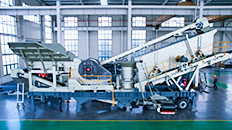
Mobile Crusher
Crushing Equipment
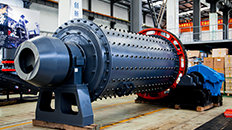
Grinding Mills
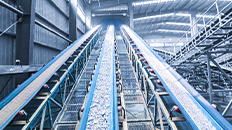
Screening&Conveyor
Feeding&Washers
Complete Crushing Plant
Sand Making Plant
Grinding Mill Plant
Gypsum Powder Plant
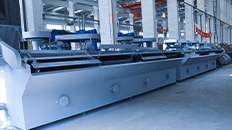
Mining Benefication
Underground Jaw Crusher installtion

Jaw Crusher with simple structure, reliable operation, convenient maintenance, low cost is widely used in mining industry.

Minerals mining techniques can be divided into two excavation types: Open mining and underground mining. Open mining is much more ordinary, and produces are divided into two general categories of materials: placer deposits, consisting of valuable minerals contained within river gravels, beach sands, and other unconsolidated materials; and lode deposits, where valuable minerals are found in veins, in layers, or in mineral grains generally distributed throughout a mass of actual rock. Both types of ore deposit, placer or lode, are mined by both surface and underground methods.

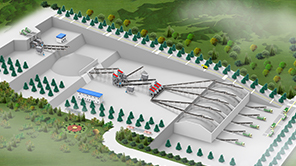
To fix a primary crushing plant that has been excavated and built underground is complicated and costly; therefore, careful planning pays good dividends. This page looks at different points of plant design including capacity, installation, layout, maintenance and safety.

This page focuses on hard rock applications, however, some of the findings will apply also to crushing softer minerals using other than compression crushers, for instance, impact crushers, sizers, etc...

Sizing a Crushing Plant:

Real estate in an underground mine is usually at a prime cost; therefore, the design of primary crushing plants faces more limita- tions than on surface where you could say the sky is the limit. However, the primary crushing and transportation of the ore to surface are often dimensioned so that they define the capacity of the mine; whatever limits the functionality of the plant may limit the output of the mine.

Capacity:

Required capacity defines the size and type of crushing equipment and also the number of parallel crushers or plants required to meet the mine production rate. Most suppliers and EPCM providers have simulation and calculation tools for the basic equipment and capacity selection, however, especially underground, the selection criteria gets wider, usually in the direction of securing production capacity with a larger safety margin.

Jaw crushers are the most common solution when the throughput is less than 1000 tonnes per hour, depending a bit on the scalping solutions, which will be discussed later. Above 1000 tph, primary gyratory crushers begin to look interesting; there are no exact boundaries but above 2000 tph, jaw crushers get rare except in a parallel plant layout. Generally jaw crushers are in the clear majori- ty in underground crushing.

Capacity depends also on the feed size and material type intro- duced to the plant and required product curve. In most cases, the first stage of crushing really has two functions:

• To get the material small enough for transporting out of the mine
• To get a suitable product curve for the next stage of comminution

In either case, the top size of the material ends up typically in the range of 300 – 350 mm, which is good for belt conveyors and fits into most secondary crushers without causing process risks, to achieve this top size, the crusher setting is in the range of 200 mm or below, depending on rock characteristics. The belt may be the means of transporting the crushed ore out of the mine but even when it's not, there is usually a conveyor somewhere in the materi- als handling process, so the requirements need to be met.

There are mines where more than one stage of crushing takes place underground but mostly the lower cost and higher flexibility of surface construction result in only primary crushing being done underground.

Most underground mining methods produce a feed that is finer than in a typical open pit mine, resulting in higher capacity through-plant; however, surprises do happen and there needs to be a way to handle oversize feed material when the requirement occurs.

Installing the Machinery and Plant Layout:

The primary crushing plant is most commonly built close to the deepest part of the mine, getting the machinery to the final location can be quite challenging. The most demanding unit is the crusher itself; feeders, bins and platework are easier to handle for size and weight.

MOBILE SOLUTIONS:

Most underground mines try to keep their infrastructure as compact as possible and use gravity where they can. In practice, this means locating the primary crushing plant close to the bottom of the mine with ore passes coming down towards it and a silo under the crushing plant to buffer capacity fluctuations. If ore is hoisted through a shaft the crusher is close by to shorten belt conveyors.

  • CQC: ISO9001:2000
  • Certificate: CE
  • Brand Name: SBM
  • Model Number: PE/PEX Series
  • Port: Shanghai
  • Delivery Time: 30 days
  • Place of Origin: Shanghai China
  • Rating:
Page Tools Print