




Summary: リボ・ファン氏は、2025年6月に中国骨材協会の新会長に就任し、業界の重要な動向を次のように強調しています。大規模な破砕・ screening 装置への着実な移行、超大型鉱山の減少に伴う超大型から中型・大規模生産ラインへの移行、そして積載・輸送機械の規模、カスタマイズ、電動化、自動化の継続的な成長……
China’s aggregates industry has spent the last decade transitioning to a greener, more technologically minded approach to business. However, a myriad of factors have been reducing product demand in recent years. 集約体 ビジネス spoke to Hu Youyi, a 15-year president now honorary president of China 集約体 Association, and his recent successor, newly appointed president of the 8th Council of the China 集約体 Association, Libo Fang, CEO of SBM Group, one of China’s major crushing and screening plant manufacturers, to learn more about the changing make-up of the world’s biggest national aggregates market.

Quoting the latest data from the China 集約体 Industry Operation Report published by the China 集約体 Association (CAA), Hu Youyi notes that China’s aggregates production was 15.2 billion tonnes in 2024 and 7.3 billion tonnes in the first half of 2025. The numbers, explains Hu, represent year-on-year declines of 9.4% and 4%, respectively, reflecting a phase of cyclical adjustment in market demand.
“Current aggregate production has dropped by approximately 24% compared to five years ago, primarily due to reduced investment in property development and slower growth in infrastructure investment,” says Hu.
He adds: “The Chinese government has recently introduced policies to accelerate a new real estate development model. These measures include promoting the construction of safe, comfortable, green, and ‘intelligent quality housing’, advancing urban renewal initiatives, and facilitating the renovation of urban villages and dilapidated buildings. This policy package is helping stabilise the real estate market while creating new demand for aggregate products in China.
“Going forward, traditional aggregates demand will gradually decline, while new construction markets—driven by urban renewal projects, quality, affordable housing programs, and shantytown transformations—will generate increased demand.”
Asked about the biggest challenges facing Chinese aggregate producers and how the CAA is helping its members address them, Hu says: “While China’s push for high-quality development is accelerating investment in quality and affordable housing, urbanisation, urban renewal, and infrastructure like water conservancy and hydropower, it places higher demands on both the quality of aggregates and the service provided by producers. Consequently, energy-efficient aggregate equipment holds greater development potential.
“In this industry climate, the China 集約体 Association has proposed new concepts and development models aligned with national priorities for real estate and infrastructure. This aims to steer the industry towards green, low-carbon, and sustainable development.
“CAA is also actively conveying industry needs to relevant government departments to promote supportive policies, organising technology forums and international conferences to foster enterprise exchange, cooperation, and the sharing of best practices, and driving innovation in aggregates production and equipment manufacturing to enhance product quality and technical standards. The Association is also accelerating the formulation and revision of relevant standards in response to new demands and carrying out targeted personnel training. Finally, the CAA is conducting in-depth enterprise research and providing technical consulting services.”
米国大統領のドナルド・トランプのグローバル貿易関税が中国の骨材業界に影響を与えているかどうか尋ねられ、胡は次のように答えた。「中国の輸出入量は依然としてわずかです。そのため、最近の米国の関税調整は中国の骨材製品にほとんど影響を与えません。」
“However, exports of Chinese crushing and screening equipment to the US face a significant impact. This equipment export has grown substantially in recent years, driven by its compelling value proposition and growing global appeal.
“However, this challenge presents opportunities: It will accelerate technological advancement and green transformation within China’s aggregates sector. Furthermore, it acts as a catalyst, pushing equipment manufacturers to refine their global footprint and enhance international operations.”
Commenting on notable trends in the Chinese aggregates industry, Libo Fang, who became CAA president in June 2025, says: “The trend toward large-scale crushing and screening equipment remains unchanged. However, as the market gradually sees fewer super large aggregate mines, production lines will shift from ultra-large-scale to medium-to-large-scale. Meanwhile, loading and transportation machinery will continue its trend toward larger sizes while also advancing further in customisation, electrification, and unmanned mine operations.
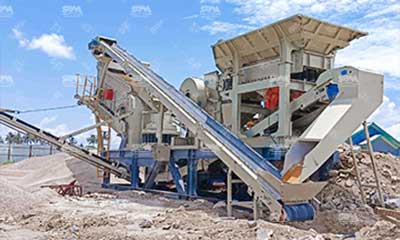
“While there has not been a significant increase in the deployment of tracked mobile crushers and screeners at aggregate production sites in China, mobility is the future trend.”
Asked what it means to become CAA president, Libo responds: “It is both an honour and a recognition of my fifteen years of work in this industry, but more importantly, a greater responsibility toward the future development of the sector.
“During this challenging [aggregates industry] transformation phase, we will leverage national and local industrial policies and advances in green and digital/intelligent technologies to drive sustained, high-quality industry growth.”
Libo says that through his CAA leadership platform, SBM — a major global supplier of quarrying and mining equipment and turnkey solutions, with self-operated quarries and clients in more than 180 countries — will share its proven expertise in equipment, processing technology, quarry and mine management, and international operations. “This will foster greater supply-chain collaboration and global partnerships within the sector,” he stresses.
Focusing on the Chinese aggregates industry's impressive sustainability journey over the past decade and how it plans to further advance in this key part of its work, Hu says: “In 2019, the Guiding Opinions on Promoting High-Quality Development of the Manufactured 集約体 Industry issued jointly by ten departments, including the Ministry of Industry and Information Technology (MIIT), explicitly called for coordinated efforts tailored to local conditions to foster an environment conducive to the industry's healthy and sustainable development.
“Both China’s 集約体 Industry 13th Five-Year Plan and its 14th Five-Year Implementation Plan identified sustainable development as a key strategic task and objective.
“To advance sustainable development, CAA has undertaken extensive efforts. Rooted in the philosophy of maximising resource utilisation and ensuring mining benefits local communities, I proposed the ‘China Model’ for sustainable aggregates development, integrating primary, secondary, and tertiary industries.
“Following implementation by numerous Chinese enterprises, this model has achieved optimal resource utilisation, enhanced carbon sequestration, ecological benefits, and significant socioeconomic gains.”
Hu says that through the annual China International 集約体 Conference and the global expansion of Chinese aggregates and equipment manufacturers, the ‘China Model’ has garnered increasing international recognition and high acclaim.
He continues: “In recent years, China’s aggregates industry has made remarkable strides in sustainable development: aggregates production and equipment manufacturing have embraced green, intensive development; green mine construction is now a standard practice among enterprises; high-efficiency, low-consumption equipment and production technologies continue to emerge and are widely deployed; and many enterprises utilise renewable energy sources like wind and solar power.”
胡氏はまた、中国が固体建設廃棄物リサイクリングの特定分野で世界競争力のある専門知識を開発している点を指摘している。彼はまた、中国が固体建設廃棄物リサイクリングの研究と応用において significant な進展を遂げており、一部の取り組みが国際的に先進的な基準に近づいていることを指摘している。胡氏によると、中国の企業数十社が国家グリーン鉱山認証を取得し、10社以上が国家グリーン工場に指定され、多くの他の企業が業界レベルのグリーン生産基地や工場の認証を獲得している。
中国の骨材産業は、2012年には60,000の採石企業が存在していたが、現在では10,000の採石企業と3,000の採石機械メーカーに減少したと胡は指摘する。また、市場も再編成され、天然砂処理の減少により、現在の業界の90%以上の生産が砕石と製造砂になっている。
Throughout this period of industrial and market consolidation, Hu says the Chinese aggregates industry has benefited from digitalisation and the increased automation of production. “Backed by high-level government focus and strong support, coupled with industry-wide collaboration, China’s aggregates sector has transformed over the past decade through rapid development. The industry has now firmly established itself on a path of sustainable, automated, and scaled operations.
“The widespread integration of automation and digital technologies in quarrying and processing has delivered substantial gains: significantly boosting production efficiency, enhancing product quality, and lowering costs. These technologies have also alleviated worker strain and improved working conditions. Most notably, intelligent monitoring systems are redefining traditional operations, transforming once resource-intensive sites into eco-friendly plants operating amid clear skies.”
Looking back on his time as CAA president, Hu is proud of his central role in the evolution of the Chinese aggregates industry. “The greatest breakthrough was shattering the ‘aggregate industry destiny mindset’. Historically labelled as ‘high-pollution, low-tech’, many firms once believed aggregate mining must remain primitive and crude. Yet over the past 15 years, CAA has spearheaded the sector’s transformation through policy advocacy, thought leadership, standardised practices, technological innovation, and self-regulation.
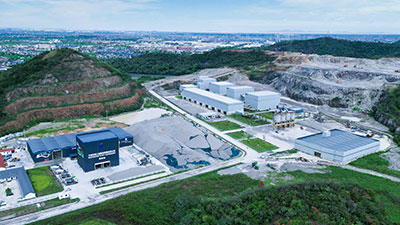
“Today’s industry operates with green, automated, and large-scale ecosystems. Leading enterprises now develop integrated eco-industrial parks spanning the entire value chain – from quarrying and aggregate processing to grinding stations, ready-mix concrete production, precast manufacturing, and ecological restoration. This marks China’s successful industry-wide modernisation.”
Part of Hu’s legacy as CAA president is playing a key role in the Association’s establishment and continued hosting of the China International 集約体 Conference, which alternates its hosting city. “From a modest few dozen attendees at the inaugural event to over a thousand participants at last year’s 9th conference, this remarkable growth reflects the concerted efforts of China’s aggregates industry. We deeply appreciate the global attention and support received from aggregates associations and related organisations worldwide, and we welcome participants from around the globe. The CAA remains committed to collaborating with all stakeholders to drive green, low-carbon, and sustainable development across the global aggregates sector.
“集約体 production is inherently localised. Success requires development models tailored to each region’s specific resources and advantages. Should assistance be needed in this process, CAA is eager to share China’s industry experience and provide advisory support.”
how does Hu see the Chinese aggregates industry in a decade? “China’s aggregates industry will be fundamentally reshaped by policy drivers, technological innovation, and market forces, evolving towards markedly greener, smarter, and more consolidated operations. Green and low-carbon practices will define core competitiveness, while intelligent technologies revolutionise the industrial landscape. Accelerated consolidation will be driven by both policy guidance and market competition, while the recycling of construction & demolition waste, tailings and other industrial by-products will emerge as a major growth engine.”
元の記事リンク: https://www.aggbusiness.com/china-weaker-demand-amid-welcome-industry-evolution/
 解決策を得る
 メッセージを送る