






Summary: We all know there are a lot of waste materials that have to be processed by crushers in metallurgical, mining, chemical, cement and other industrial sectors....

We all know there are a lot of waste materials that have to be processed by crushers in metallurgical, mining, chemical, cement and other industrial sectors. As an indispensable equipment for the production of aggregates, crusher can make the material crushing work easy. But do we really understand the history of the crusher?
As early as the primitive era, there appeared simple crushing equipment. With the development of human civilization, this simple crusher has also experienced the evolution from manual to steam era to mechanical intelligence. That's to say there is a modern industrial evolution on crusher.
As early as 2,000 B.C., China had the most smashing tool — Chu Jiu, a major cereal husking tool. And it evolved into a pedal (200 B.C. to 100 B.C.) later. Although these tools couldn't compare with current electric equipment, they had the prototype of the crusher and their crushing method was still intermittent.
The animal-powered mill was one of the earliest continuous crushing tools used by humans. The other is roll milling (appearing later than animal's).
Until two hundred years later, on the basis of these two tools, Du Yu, an ancient Chinese person, developed a water mill driven by hydraulic power, raising crushing efficiency to a new level. In addition to being used for grain processing, these tools were gradually extended to the comminution of other materials.
The Animal power mill
Before the 19th century, countries around the world still used the original manual methods for material crushing and screening. With the advancement of society and technology, this original manual mode has been far from meeting the needs of production development.
But the arrival of the steam and electrical eras has changed everything.
People began to know about machines, and began to develop crushing and screening equipment to replace manual labor.
In 1806, a roller crusher driven by a steam engine appeared.

The Steam-Era Crusher on the Rise
In 1858, E.W.Black, American, invented a jaw crusher for broken rock.
The world's first jaw crusher designed and manufactured by American E.W. Blake
The jaw crusher's structure is a double bracket type (simple swing type). Since it has the advantages of simple structure, easy manufacture and maintenance, reliable operation, small size and low height, it is still widely used in crushing various materials, such as various ores, solvents, slags, building stones and marble.

By 1878, Americans had invented a rotary crusher with continuous crushing action; its production efficiency was much higher than that of the intermittent crushing action jaw crusher.
The American-invented rotary crusher
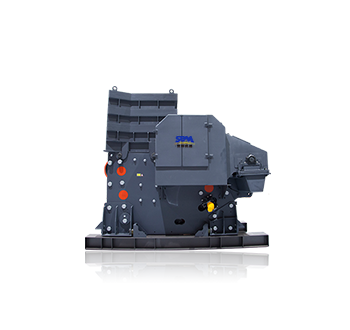
In 1895, American William invented the impact crusher with lower energy consumption.
With the continuous development of productivity, jaw crusher cannot fully meet the needs of crushing technology. Therefore, people have designed a more efficient impact crusher.

The development of the impact crusher can be traced back to the 1950s. At that time, the crusher structure was similar to that of the modern squirrel-cage crusher, and it possesses some impact crusher features in both structure and working principle.
Until 1924, the Germans first developed a single- and double-rotor impact crusher.
In 1942, based on the structural features and working principle of the squirrel cage crusher, Anderson invented the AP series of impact crusher which is similar to the modern impact crusher.
The machine can handle relatively large materials with high production efficiency. Its simple structure is better for maintenance, so this type of impact crusher has been rapidly developed.
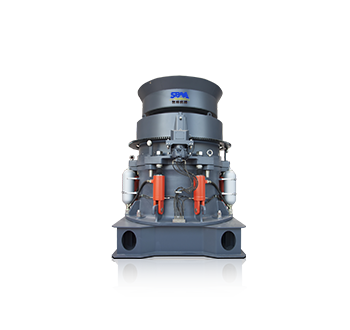
By 1948, an American company developed a hydraulic cone crusher, which has been used in industrial fields ever since.
The world's first cone crusher was originally made by Symons brothers (Symons cone crusher). The spindle is inserted into the eccentric locking collars and driven by the eccentric locking collars to move the movable cone pendulum. By movable cone liner moving back and forth, ore rock is crushed and bent continuously in crushing chamber.
Hydraulic Cone Crusher
With the increasing perfection of crushing theory and the further development of science and technology, various kinds of high performance crushers emerge one after another.They greatly improved crushing efficiency.

Different industries have different product requirements so there has appeared a variety of crushing machinery according to different working principles, such as vibration mill, sand mill, and colloidal mill.
As early as 1970s, large gyratory crushers with an output of 5,000 tons per hour and a material diameter of 2,000 millimeters were developed.

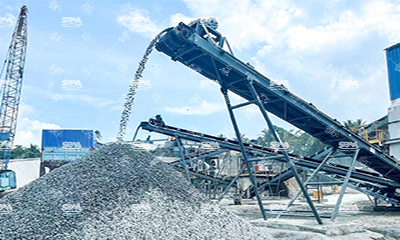
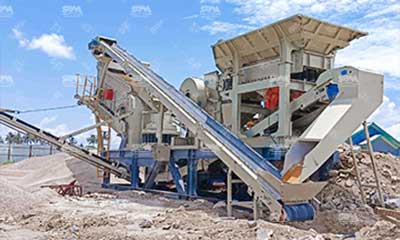
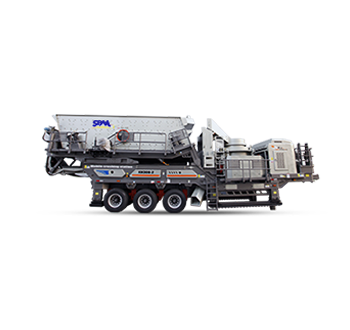
At the same time, to improve the mobility of crushers, mobile crushing and screening plants were developed, which can be flexibly deployed and quickly moved on site, making them extremely popular.
China did not begin to produce crushers until the 1950s. Domestic impact crushers were limited to medium and hard materials such as coal and limestone before 1980s.Until the end of the 1980s, China introduced the KHD-type hard rock impact crusher, which filled the domestic gap in crusher technology. But it's still behind many in developed countries for more than 20 years.
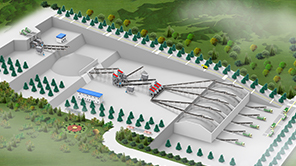
Domestic fixed crushing screening production line
However, after the 21st century, China's crushing equipment ushered in extremely rapid development, and the gap between China and the international advanced level has gradually narrowed. China was basically formed a complete manufacturing system (independent development and production) on crusher which is widely used in mining, road construction, chemical metallurgy and other fields. At the same time, the crushing machinery parts industry is bound to usher in new development.


 Get Solution
 Send Message