






Summary: The screen is a very important part of the vibrating screen. Its correct selection and use directly determine the gradation and quality of the finished products. ...
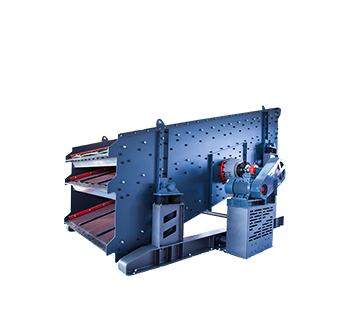
The screen is a very important part of the vibrating screen. Its correct selection and use directly determine the gradation and quality of the finished products. However, when the screen is in use, it often happens that materials block the screen mesh and cause the screen to be damaged, especially when the screen mesh is small, this phenomenon is more obvious.

Common causes of screen plugging
There are mainly the following 5 reasons for blocking holes in the screen:
⑴ The material being screened contains a large number of large material particles (close to the size of mesh). During the sieving process of the stone materials, these particles are stuck in the mesh and cannot pass through the sieve smoothly, cause blockage, which is called critical blockage.
⑵ The material being screened is too mixed.
⑶ There are more flake stone materials in screening. ue to the crusher or the stone itself, a large number of flaky stones are produced. These particles cannot pass through the screen meshes smoothly during screening. At the same time, the flake materials also prevent other materials from passing through the screen and cause hole blocking.
⑷ The diameter of the steel wire for the screen is too thick.
⑸ The material being screened has high moisture and contains viscous substances such as mud and sand. Because there is a lot of mud in stone materials, when materials requires water washing, the fine-grained stone will stick to each other into agglomerates due to the intervention of water, making it difficult to screen the material and causing blockage.
It should be noted that the screen with fixed mesh cannot effectively overcome the blockage of critical material particles on the screen, resulting in the low screening efficiency of vibrating screen. Generally, the screening efficiency of vibrating screen with fixed mesh screen is less than 50%. Even if the amplitude is increased, it cannot effectively solve the blockage. Moreover, increasing the amplitude may affect the service life of the screen.
Solution to screen plugging
In order to effectively solve the above-mentioned blocking problem, we can achieve the effect of anti-blocking by changing the form of the mesh structure of the screen.
⑴ Under the premise of meeting the construction requirements, deform the mesh and adopt a certain proportion of rectangular holes. For example, originally required 3.5mm*3.5mm mesh to changed to 3.5mm*4.5mm rectangular hole (as shown in the picture). But the direction of the mesh is different, which will affect the screening efficiency or the service life of the screen to a certain extent.

⑵ Adopting the anti-blocking screen with diamond-shaped mesh (as shown in the picture). This type of screen consists of two identical screens with slight vibrations, which provides a good anti-blocking effect.

⑶ In order to further improve the anti-blocking effect of the screen, some manufacturers have introduced an anti-blocking screen with triangular hole (shown in the figure below). The feature of this screen is on its two adjacent screen bars — one is a static screen bar and the other is a moving screen bar.

By comparing the performance of the three screens with square meshes, rectangular meshes and triangular meshes, it can be seen from Table 2 that the screen with triangular holes is the preferred small-size screen, featuring high screening efficiency and resistance to blockage.

The screen may block mesh for various reasons during use. The method to solve the blockage is to expand the mesh of the screen from a two-dimensional fixed holes to a three-dimensional variable mesh. Experiments show that this is a very effective method, especially in the screening of materials with particles below 5mm, which can effectively reduce the occurrence of material blockage.
Of course, during the installation of the vibrating screen, attention should be paid to the installation quality of the screens, so that the screens are always kept tight, to avoid slack and secondary vibration.


 Get Solution
 Send Message