











Summary: The Raymond mill is a common grinding device for powder processing in mineral grinding production lines....
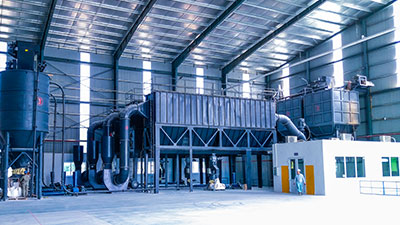
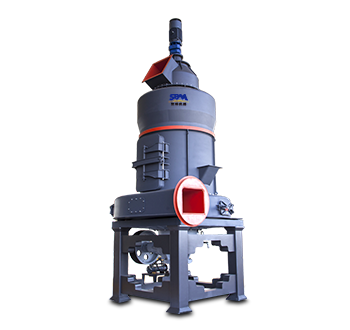
The Raymond mill is a common grinding device for powder processing in mineral grinding production lines. Generally, it is dry grinding technology. The Raymond mill cannot be used for powder grinding of any material. Despite its wide range of applications, the following three major points for attention in the use and operation of mineral Raymond grinding are introduced.
1. attention to abrasive materials
Many users believe that Raymond mill is suitable for grinding some hard ores and minerals, but some fibrous adhesives cannot be processed. The working principle of the Raymond mill is that materials are ground by the rotation of grinding rollers and the extrusion pressure of grinding rings. Once the ground material contains fibers and soft, sticky components, it will agglomerate into cakes and cannot be blown away by the fan airflow. If it is not put into the analyzer, it will directly affect the output.
2. note of material moisture content
Material moisture content must be prudent, Raymond mill equipment requires moisture content of no more than 6%. If it exceeds this standard, even when ground into powder, the material cannot be easily blown upward by airflow and fail to enter the classifier for powder separation. In this case, the material has been grinding in the grinding chamber, but the product powder cannot come out, and the output will be very low. Only by keeping the material dry, will the production of Raymond mill be guaranteed.
3. attention to feed size
The feed size of mineral Raymond grinding is better between 8 and 30 mm, and some finer materials can also be processed. However, some users think that the finer the feed, the higher the output. In the production process of the Raymond mill, granular materials are lifted by shoveling blades and then rolled and ground into powder. Its grinding operation is not affected by raw material particle size, and the feed fineness will never exceed the finished product fineness.


 Get Solution
 Send Message