



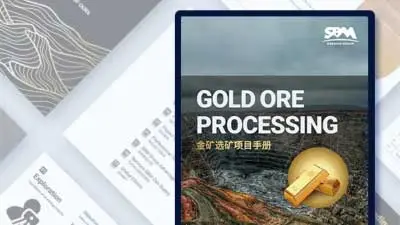

Summary: Explore the complete processing technology of silicon ore. This guide breaks down the equipment and stages required to transform quartz rocks into premium industrial silica....
Silicon ore (primarily silica/quartz) processing involves a strategic combination of physical purification and chemical leaching to remove iron, feldspar, and mica gangue minerals. The core objective is upgrading the SiO₂ purity from raw ore up to semiconductor-grade levels (≥ 99.99%). This technical brief details the mainstream processing flowsheets, grading standards, and equipment configurations required to establish a high-efficiency silica beneficiation plant.
Quick Navigation & Core Entities
- Target Mineral: Silica Ore, Quartz Sand, Quartzite, Vein Quartz.
- Key Process Technologies: Hydraulic Scrubbing, Magnetic Separation, Flotation, Acid Leaching.
- Downstream Applications: Photovoltaic Glass, Semiconductors, Optical Fibers.
- Industry Standards: Ordinary Sand (95%-98%) to Ultra-High-Purity Quartz (≥ 99.99%).

Common Silicon Ore Beneficiation Methods
The core task of silica ore beneficiation is to remove impurities, increase SiO2 purity, and control particle size distribution according to the end-use requirements. Depending on the quality of raw ore and product specifications, several mainstream process routes can be summarized as follows:
1. Physical Beneficiation (Most Common)
Main Methods:
- Scrubbing and Desliming: Removes clayey slimes and film iron adhering to quartz particle surfaces through hydraulic scrubbing. This is the first step in silica sand beneficiation and can significantly improve concentrate quality.
- Classification: Uses screening or hydraulic classification to separate ore into different particle size specifications, while removing oversized or undersized impurity fractions.
- Magnetic Separation: Utilizes high-gradient magnetic separators to remove magnetic minerals from quartz (such as magnetite, ilmenite, biotite, garnet, and other iron-bearing minerals). This is a critical step for improving quartz whiteness and reducing iron content.
- Gravity Separation: Uses equipment such as spiral chutes and shaking tables to remove heavy gangue minerals (such as garnet, zircon, etc.) based on density differences.
- Flotation: Exploits differences in surface physicochemical properties of minerals; through the use of reagents (collectors, modifiers), target minerals or impurities are selectively attached to bubbles and floated out to achieve separation. In silica sand beneficiation, it is primarily used to separate silicate impurities such as feldspar and mica, and is a crucial step for obtaining high-purity quartz sand.

Silicon Ore Process Flow :

Applications:
Physical beneficiation is applicable to the raw ore purification of various quartzites, quartz sandstones, vein quartz and natural silica sands, especially for ores where impurities exist as independent minerals (e.g., feldspar, mica, iron-bearing minerals).
Principles:
Utilizes differences in physical properties of minerals, including density, particle size, magnetic properties, and color, to achieve separation through mechanical means.
Advantages and Disadvantages:
Low cost, large processing capacity, and environmentally friendly (no chemical reagents required for methods other than flotation). However, it has limited effectiveness in removing impurities present in lattice structures or as inclusions.

2. Chemical Beneficiation
Main Methods:
Acid Leaching: Uses one or a mixture of multiple acids including hydrochloric acid, sulfuric acid, nitric acid, and hydrofluoric acid to leach quartz sand at specific temperatures and concentrations, dissolving iron-bearing minerals, carbonates, and some silicate impurities. Acid leaching is the core process for preparing high-purity quartz and can effectively reduce the content of impurities such as iron, aluminum, calcium, magnesium, potassium, and sodium.
Chemical Beneficiation Process Flow:

Applications:
High-purity quartz sand with extremely strict impurity requirements (such as photovoltaic crucible sand, semiconductor-grade quartz sand), crystal raw material purification, and refractory ores that still fail to meet requirements after physical beneficiation.
Principles:
Utilizes chemical reagents to dissolve contaminant iron on quartz particle surfaces, impurity minerals exposed on mineral cleavage planes, or micro-fractures surrounding inclusions, thereby exposing and removing them.
Advantages and Disadvantages:
Can obtain quartz products with purity of 99.99% or even higher, which is the essential path for preparing high-end silicon materials. However, it involves high costs, generates waste acid disposal issues, and requires strict environmental controls.
Post-Beneficiation Value Realization
The core of value realization after silica ore beneficiation lies in transforming low-grade raw ore into high value-added products for downstream industries. Obtaining different grades of silica sand products through beneficiation, where product purity determines its application field and value:
Product Grading:
Ordinary Silica Sand (SiO₂ 95-98%):
Used for ordinary glass, foundry, and construction materials.
Premium Silica Sand (SiO₂ 98-99.5%):
Used for flat glass, container glass, and water glass.
High-Purity Quartz Sand (SiO₂ 99.5-99.9%):
Used for photovoltaic glass, optical glass, lighting equipment, and electronic packaging.
Ultra-High-Purity Quartz Sand (SiO₂ ≥99.99%):
Used for semiconductor quartz crucibles, optical fiber preforms, and photomask substrates.
Market Conversion:
Ordinary silica sand is priced and sold to glass plants, foundries, etc. based on regional markets; high-purity quartz sand is priced based on global markets, with reference to the prosperity of the photovoltaic and semiconductor industries. Silica sand can be converted into higher value-added products such as industrial silicon, polysilicon, and monocrystalline silicon through smelting by downstream enterprises.
Value Addition Recovering:
Associated minerals such as feldspar and mica from ore for sale as ceramic raw materials to increase revenue.
Profit Protection:
Controlling costs through improving beneficiation recovery rates, optimizing reagent/energy consumption, and automation upgrades; meanwhile, ensuring environmental protection and qualification compliance. Achieving a closed value loop by relying on the rigid demand for high-quality silicon materials from emerging industries such as photovoltaics, semiconductors, and electronics.
Project Cases
Case 1: Natural Sand Washing Production Line
- Processed Materials: Quartz sand 70-80%, Kaolin 20-30%
- Production Capacity: 100 tons per hour
- Water Volume: 300 m³/h
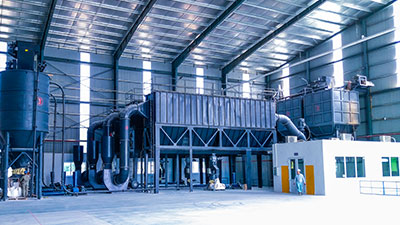
- Equipment Configuration:
- Vibrating Feeder GZG80-120
- Scrubbing Machine CX2
- Multi-functional Screening & Washing Integrated Machine DS-LX11-30-1842D
- Three-Hydrogen Purification Tank S6040
- Chamber Filter Press G500-150

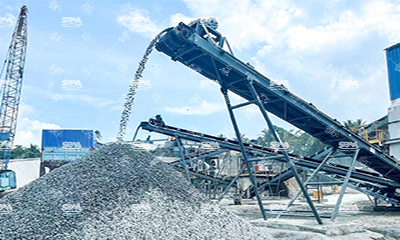
Case 2: Quartz Sand Production Line
- Processed Materials: Quartz Sand
- Production Capacity: 100,000 tons per year
- Water Volume: 300 m³/h
- Equipment Configuration:
- Feeder
- Vibrating Screen
- Sand Washing & Dewatering Integrated Machine
- Fine Sand Recovery Machine
- Chamber Filter Press
- Three-Hydrogen Purification Tank

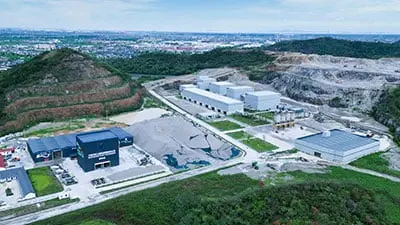
Case 3: Southeast Asia High-Purity Quartz Sand Project
- Processed Materials: Quartz Ore
- Production Application: High-Purity Quartz Sand
- Core Process: Coarse Crushing, Stone Washing, Color Sorting, Acid Washing, Grinding, Drying

Your Roadmap to Successful Silicon Ore Processing
Processing silicon ore is not a one-size-fits-all operation. The choice between a simple sand washing line and a complex acid-leaching plant depends entirely on your target market’s purity threshold.
To recap, your success depends on following a logical progression:
- Start with Physical Beneficiation: For most glass, foundry, and construction sands, a combination of scrubbing, magnetic separation, and flotation is the most cost-effective and environmentally friendly path to achieve SiO₂ purity of 95-99.5%.
- Advance to Chemical Beneficiation for High-End Markets: To enter the lucrative markets of photovoltaic crucibles or semiconductor-grade quartz (≥99.99%), acid leaching is non-negotiable. It is the only method capable of dissolving lattice-bound impurities, though it requires strict waste management protocols.
- Realize Maximum Value: Don't just sell raw sand. Consider the Post-Beneficiation Value Realization pyramid: from ordinary glass sand at the base, up to ultra-high-purity quartz for electronics at the peak. Each step up the purity ladder dramatically increases your profit margin.
Ready to build or optimize your silicon ore beneficiation plant?
Whether you are processing 100 tons per hour of natural sand or planning a 100,000-ton-per-year high-purity quartz project, the right equipment and process design are essential.
At SBM, we provide the complete suite of solutions—from vibrating feeders and scrubbing machines to three-hydrogen purification tanks and filter presses—tailored to your specific ore and purity goals.
[Contact Our Engineering Team Today] for a customized process flow diagram and a quotation for your next high-ROI beneficiation project.


 Get Solution
 Send Message