





Summary: This guide explores 7 essential machines for mineral processing, from primary crushers and ball mills to flotation cells and thickeners, detailing their critical roles....
Mineral processing, also known as mineral dressing or ore beneficiation, is the critical art and science of transforming raw ore from a mine into a valuable concentrate. The journey from a blasted rock to a marketable product involves a series of comminution and separation stages, each reliant on highly specialized equipment: jaw crushers, cone crushers, ball mills, hydrocyclones, flotation machines, magnetic separators and thickeners. Together, these systems enable the key processes of comminution, classification, separation, and dewatering, drastically increasing metal content, reducing volume for transport and smelting, and enhancing overall project efficiency.

1. Jaw Crusher: Primary Crushing
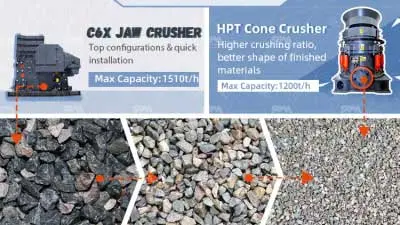
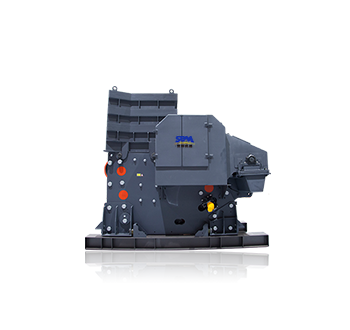
Function and Role: The jaw crusher is the first line of defense in the comminution (size reduction) circuit. Its purpose is robust and simple: to accept the largest lumps of run-of-mine (ROM) ore, which can be over a meter in diameter, and reduce them to a manageable size (typically 100-250 mm) for the next stage of crushing.
How it Works: A jaw crusher comprises a fixed jaw and a swinging jaw. The rock is fed into the top of the machine's chamber. As the swinging jaw moves cyclically towards the fixed jaw, it compresses the rock against it, breaking it. The downward movement of the swinging jaw allows the crushed product to gravitate down the chamber and exit at the bottom.
Why it's Indispensable: Its simplicity, rugged construction, and ability to handle hard, abrasive, and highly variable feed with minimal pre-processing make it the undisputed champion of primary crushing. It is a low-maintenance, high-availability machine that sets the stage for all downstream processes. No other crusher is as reliable for the primary duty of handling raw, uncrushed ore.

2. Cone Crusher: Secondary and Tertiary Crushing
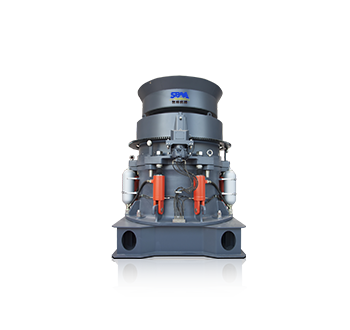
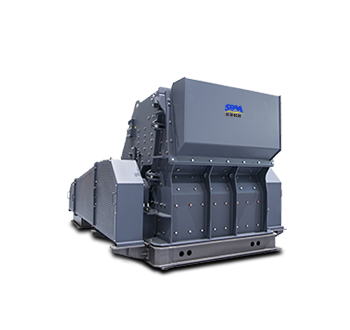
Function and Role: Following the jaw crusher, the cone crusher takes over for secondary (and often tertiary) crushing. Its job is to further reduce the ore size to a finer product, typically between 10 mm and 40 mm, suitable for feeding grinding mills.
How it Works: Ore is fed into the top of a conical chamber. Inside, a motor-driven mantle gyrates within a stationary concave bowl liner. The gyration creates a compressive force that crushes the rock between the mantle and the bowl liner. The gap between the mantle and concave determines the product size.
Why it's Indispensable: Cone crushers offer a remarkable combination of high capacity, fine product size, and low operating costs for their duty. Modern hydroset systems allow operators to adjust the crusher setting under load, optimizing product size and throughput in real-time. They are the most efficient crushers for hard and abrasive ores in intermediate crushing stages.

3. Ball Mill: The Heart of Liberation in Grinding Circuits
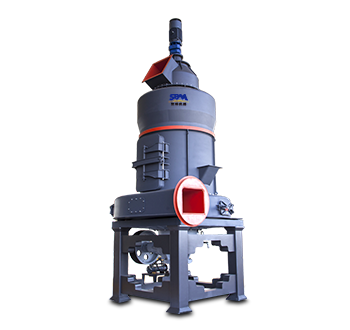
Function and Role: If crushing is about size reduction, grinding is about liberation. The ball mill's critical function is to pulverize the crushed ore into a fine powder, often to the fineness of sand or silt (below 0.1 mm). This process is essential to separate the valuable mineral grains from the worthless gangue (waste rock) to which they are locked.
How it Works: A ball mill is a rotating cylindrical shell partially filled with grinding media—typically hardened steel balls. The ore is fed with water into the mill. As the mill rotates, the balls are lifted and then cascade down, impacting and abrading the ore particles, reducing them to a slurry of fine particles.
Why it's Indispensable: Grinding is the single most energy-intensive step in mineral processing, often consuming over half of a plant's total energy. The ball mill is the workhorse of this stage due to its reliability, ability to achieve a very fine product, and flexibility in handling a wide variety of ore types.

4. Hydrocyclone: The Efficient Classifier
Function and Role: Grinding is inefficient if not controlled. A hydrocyclone is a classification device used in a closed circuit with a ball mill. Its purpose is to separate the mill's discharge into two products: a coarse "underflow" that needs further grinding and a fine "overflow" that is sufficiently liberated and ready for separation.
How it Works: The ore slurry is pumped tangentially into the conical hydrocyclone under pressure. This creates a violent centrifugal vortex. Denser and coarser particles are thrown to the walls and spiral downwards to the underflow apex. Finer, less dense particles are carried towards the center and exit through the top vortex finder as overflow.
Why it's Indispensable: Hydrocyclones have no moving parts, are cheap to install and operate, and can process vast volumes of slurry. They are the primary tool for controlling product size from the grinding circuit, ensuring that energy is not wasted by over-grinding already liberated particles.
5. Flotation Machine: The Master of Selective Separation
Function and Role: Froth flotation is the most widely used method for separating valuable minerals from gangue. It is exceptionally versatile and can be tuned to separate specific minerals from others based on their surface chemistry.
How it Works: Fine ore slurry from grinding is treated with specific reagents that make the desired mineral particles hydrophobic (water-repelling) and others hydrophilic (water-attracting). Air is bubbled through the conditioned pulp. Hydrophobic particles attach to the air bubbles and rise to form a froth layer at the top of the cell, which is skimmed off as concentrate. Hydrophilic particles remain in the slurry and are discharged as tailings.
Why it's Indispensable: Flotation is incredibly selective and efficient, capable of recovering extremely fine particles that other methods cannot. It is the backbone of the base metals (copper, lead, zinc), precious metals, and industrial minerals industries. The flotation machine is where chemistry and physics combine to create economic value.

6. Magnetic Separator: The Force of Attraction
Function and Role: This equipment separates minerals based on their magnetic susceptibility. It is primarily used for processing iron ores (magnetite) but is also crucial for removing magnetic impurities (e.g., iron contamination) or for separating paramagnetic minerals like ilmenite and wolframite.
How it Works: The basic design involves a rotating drum that contains a stationary array of permanent magnets or electromagnets. As the ore passes over the drum, magnetic particles are attracted and pinned to the drum surface, carrying them away from the non-magnetic particle trajectory before being released.
Why it's Indispensable: Magnetic separation is a clean, efficient, and low-cost process that requires no reagents. It is a vital primary concentration method for iron ore and an essential purification step in many other processing flowsheets, from glass sand production to recycling.

7. Thickener: The Guardian of Water and Tails Management
Function and Role: After separation, both the valuable concentrate and the waste tailings are in a slurry form containing 70-80% water. The thickener's role is to perform solid-liquid separation, producing a denser underflow slurry and an overflow of clear water that can be recycled back into the processing plant.
How it Works: Slurry is fed into a large, circular tank. Flocculant chemicals are often added to cause fine particles to clump together. Gravity causes the solids to settle slowly to the bottom of the tank. A rotating rake mechanism helps consolidate the settled solids (the "thickened" underflow), which is then pumped out. Clarified water overflows a weir at the top of the tank.
Why it's Indispensable: In an industry with an immense water footprint, thickeners are vital for water conservation and recycling, reducing freshwater intake by 80-95%. They also reduce the volume of tailings sent to storage facilities, lowering environmental risk and cost. For concentrate, thickening is the essential first step before filtration.

Of course, other important equipment is also required depending on the properties of the ore, such as:
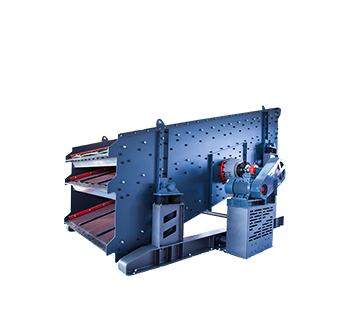
- Vibrating screens: Used for screening and grading materials.
- Belt vacuum filters: It is used to further dehydrate the concentrates, producing filter cakes with lower moisture content.
- Roasting furnaces: Used to process certain specialized ores (such as gold and hematite), altering the mineral structure through heating to facilitate subsequent sorting.
However, the seven types of equipment listed here are essential core equipment for most modern mineral processing plants.
This suite of equipment functions as a synergistic system, where each unit's output optimizes the next. The sequential stages of size reduction, classification, separation, and dewatering form a continuous process loop. This intricate circuit is fundamental to transforming crude ore into a refined concentrate, making modern mining economically viable and environmentally sustainable on a global scale.


 Get Solution
 Send Message