











Summary: In the design of the Raymond mill, the grinding media including rolls and rings with different materials are selected according to user processing requirements....
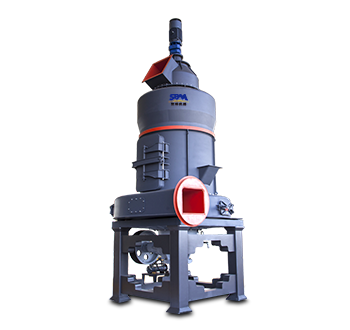
In the design of Raymond mill, the grinding media including rolls and rings with different materials are selected according to user processing requirements. This will not only prolong the service life, but also increase the output. If users change their original intention and process other raw materials, they should replace the rollers and rings of other matching materials.
When Raymond mill users adjust product fineness (especially when switching from low mesh to high mesh), they must thoroughly clean coarse powder and large particles adhering to the inner walls of the classifier, pipelines, cyclone dust collectors and finished product silos; otherwise, large particle contamination will easily occur. The standard cleaning procedure is as follows: clear residual raw materials from the mill chamber and bellows, stop the main engine and cut off feeding, adjust the classifier to the high speed for producing fine powder, run the blower at high speed, and start the wall vibrator on the finished product silo. The equipment shall run under no-load condition for more than 4 hours. During this period, regular tapping of pipelines and the cyclone separator is required. The outer casings of the dust collector and finished product silo help remove residual materials. Do not skip this critical procedure to save trouble, especially when producing ultra-fine powder with strict limits on oversize particles.
In order to ensure the purity of materials processed by the Raymond mill, it is necessary to strictly follow the start-up and shutdown sequence of all equipment on the production line. Ensure that the product fineness classifier is started first and reaches its rated speed before other equipment. The dust removal induced draft fan may be started in advance. For shutdown operations, the classifier and induced draft fan shall be shut down last. This prevents the blower’s post‑shutdown inertia from carrying coarse particles through the classifier and causing contamination.


 Get Solution
 Send Message