




Summary: Hubei Badong's 9M T/Y aggregate project pioneers mining innovation with 67% efficiency gains, 10km smart tunneling, and green energy integration, setting new industry benchmarks....
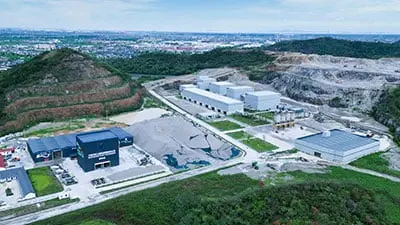
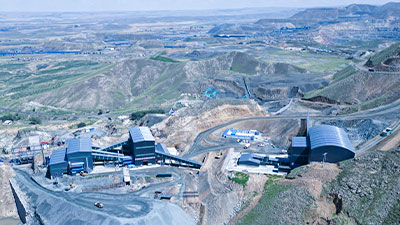
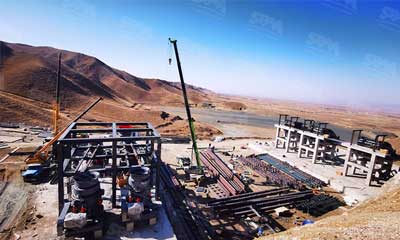
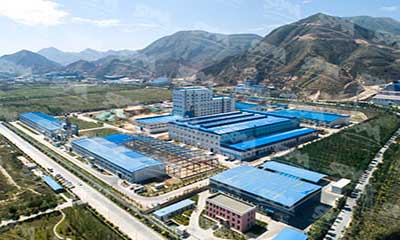
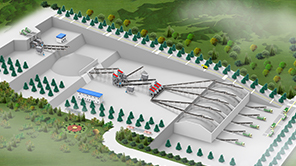
The Hubei Badong 9 million tons per year (T/Y) aggregate project is a key provincial project in Hubei Province. The total investment for this project is 1.6 billion RMB, and it mainly consists of a mining area, an aggregate processing system, and a prefabricated industrial park. Once operational, the mining system is expected to have an annual production capacity of 9 million tons, with a capacity of 3,000 tons per hour, generating an estimated annual output value of 300 million to 500 million RMB.
This project covers the entire industrial chain, including mining, aggregate processing and transportation, and the production of prefabricated concrete components. A key engineering facility restricting the overall production capacity of the project is the 10-kilometer small-diameter transport tunnel connecting the aggregate processing area with the screening and storage area.

Optimized Design to Enhance Construction Efficiency
During the preliminary design phase, the project team invited the owner to visit similar projects for on-site investigations and organized multiple rounds of expert discussions, ultimately leading to a change in the cross-section design. By increasing the cross-section dimensions, the construction efficiency was improved by 67%. This "space-for-efficiency" approach not only facilitates future maintenance of aggregate transportation equipment but also avoids the need for secondary excavation after production begins, thereby saving operational and maintenance costs and creating conditions for efficient construction.
To address the tight schedule for the 10-kilometer long tunnel, the project team adopted a "branch tunnel + main tunnel" three-dimensional construction network, increasing the number of work fronts to enhance construction efficiency. The project team identified four areas with stable surrounding rock and gentle terrain to set up branch tunnels, forming six operational starting points: two main tunnel entrances and four branch tunnel entrances. Each operational front is equipped with a specialized team, implementing a "two-shift" work schedule, with a maximum daily advance of 17 meters. Additionally, each work front is provided with a customized "small equipment package," including small excavators, small dump trucks, custom-made mobile carts, and small loaders, effectively ensuring progress while avoiding resource waste caused by oversized equipment.
Multi-Dimensional Protection to Ensure Construction Safety
In response to the high-risk environment, the project team established a comprehensive safety net involving "monitoring, early warning, and response." A "leadership on duty" system was implemented, requiring on-duty leaders to conduct daily inspections at each working face, focusing on surrounding rock integrity, support structure stability and on-site safety protection facilities. This "problem-solving at the frontline" approach fosters a safety-first culture among team members, encouraging them to prioritize safety over production and creating an atmosphere where management leads in hazard identification and operational teams proactively manage risks.
An expert consultation mechanism was also established, with multiple visits from the company's safety supervision department, technology department, and design institute experts to conduct "safety check-ups." Special plans were developed for eight high-risk sections to ensure smooth construction in these areas.

Process Management to Refresh Project Progress
To further accelerate construction progress, the project team detailed progress management by specifying time allocations for drilling, blasting, mucking, and support. Each work front is equipped with a "cycle timer," and any overtime is analyzed to prompt timely improvements.
To address the excessive time required for shotcrete support, the team replaced single-gun shotcrete machines with dual-gun machines and optimized the concrete mix ratio, reducing support time from 4 hours to 2.5 hours. The number of daily cycles for the three-tier surrounding rock sections increased from 2 to 3, and the daily advance from 6 meters to 9 meters. The project successfully completed the excavation and support of the 10-kilometer tunnel in 18 months, setting a new record and placing it among the top tier in the industry.
Operational Planning for Full-Cycle Value Addition
Cost control and value extraction during the operational phase are crucial for the comprehensive benefits of the project throughout its lifecycle. The project team proactively planned by integrating geological data and equipment operating parameters collected during the construction phase to establish a triad monitoring system comprising "tunnel structure, transportation equipment, and processing units." Comprehensive inspections are conducted quarterly, converting maintenance costs into preventive maintenance investments, thereby reducing costs associated with unexpected failures.
Additionally, a centralized management system for spare parts was implemented, collaborating with equipment manufacturers to establish a "regional shared spare parts library." High-frequency, easily damaged parts are centrally procured and uniformly allocated, reducing inventory backlog and lowering capital costs associated with spare parts.
To lower electricity costs for crushing and screening equipment in the processing system, the project team planned a peak and off-peak electricity pricing strategy in advance, dynamically adjusting equipment start and stop times based on aggregate transportation volumes to optimize energy consumption.
By ensuring seamless coordination between the construction and operational phases, the project team continually promotes cost reduction and efficiency enhancement through systematic thinking, embedding "cost-effectiveness" into the project's management DNA. This meticulous cost control and focus on tangible benefits contribute significantly to the company's high-quality development.
Resource and Energy Integration to Expand Value Space
Leveraging the project's mining resources and regional energy demands, the project team collaborated with the company's energy sector to advance the "mining-energy integration" pilot project. Utilizing idle land in the mining area, a distributed photovoltaic energy storage system was planned to cover electricity needs for processing and office areas, potentially reducing external electricity costs by millions of RMB and achieving dual benefits of "green energy generation and cost reduction."
Considering the heavy downhill transportation characteristics from the mining area to the processing area, along with the cost advantages of electric mining trucks over diesel vehicles, the project plans to adopt electric mining trucks for raw material transportation, significantly lowering operational transportation costs.


 Get Solution
 Send Message