





Summary: How does iron ore beneficiation actually turn raw ore into concentrate? This article introduces the iron ore complete mineral processing flow....
Run-of-mine (ROM) iron ore extracted from mines usually has a low grade and contains a significant amount of gangue and harmful impurities. Therefore, beneficiation process is needed.
This article introduces the iron ore complete mineral processing flow.

The complete iron ore beneficiation process is a combination of various physical and chemical operations, mainly comprising the following stages: crushing and screening, grinding and classification, separation, concentrate dewatering, and tailings treatment.
Step 1: Crushing And Screening
Run-of-mine ore lumps extracted from the mine comes in large lump sizes- up to over one meter in maximum diameter - making it impossible to feed directly into grinding mills. It must first pass through multi-stage crushing to gradually reduce particle size, preparing it for subsequent grinding and separation operations.
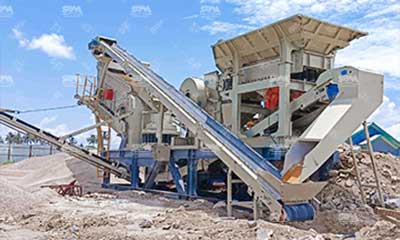
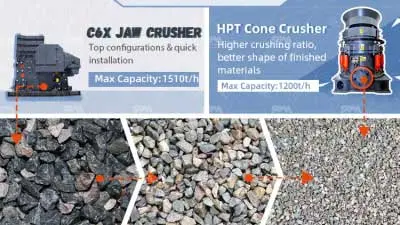
Coarse crushing: Jaw crushers or gyratory crushers are utilized to break down the iron ore to below 200–300 mm. Relying on high compressive and impact forces, they accomplish the initial size reduction of the ore.
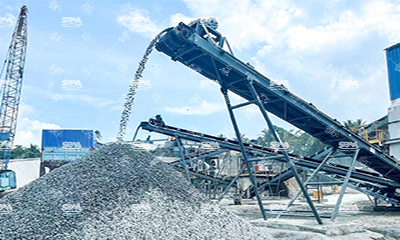
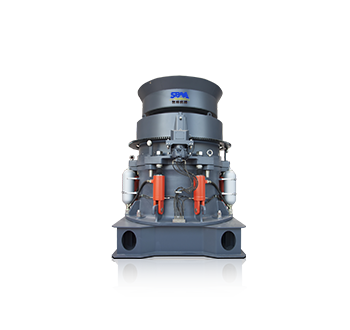
Medium & fine crushing: Given the high hardness of iron ore, cone crushers are used in the secondary and tertiary crushing stages to reduce the particle size to below 10–25 mm. Adopting laminated crushing principle, cone crushers feature high crushing efficiency and produce uniform product particle size distribution.
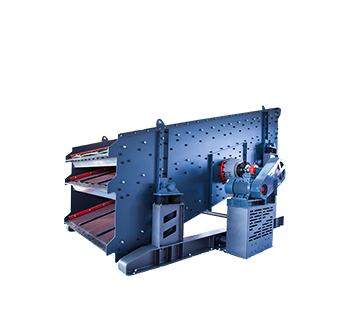
Screening: After crushing, the material is screened; particles meeting the size specifications proceed to the next stage of processing, while oversized particles are returned to the crusher for re-crushing, forming a closed circuit. This closed-circuit configuration effectively controls product particle size and prevents over-crushing, while fully maximizing crushing efficiency.Get Latest Price

Step 2: Grinding And Classification
This is a critical stage for mineral liberation in the iron ore beneficiation process. After crushing, the iron mineral particles remain tightly interlocked with the gangue particles within the ore. To achieve effective separation, the ore must undergo grinding to obtain sufficient degree of monomer liberation.
2.1 Grinding
Grinding is typically conducted in ball mills or semi-autogenous grinding (SAG) mills. The ore usually needs to be ground down to a particle size suitable for mineral liberation (typically 70%–95% passing -200 mesh), laying the necessary foundation for high-efficiency separation.
Grinding is the most energy-intensive stage in the iron ore beneficiation plant, accounting for about 40–60% of the plant’s total energy consumption.
2.2 Classification
The discharge from the grinding mill enters classification equipment- most commonly hydrocyclones- which separates the material into acceptable and unacceptable products based on differences in particle settling velocities in water. The compliant fine fraction (overflow) proceeds to the separation stage, whereas the non-compliant coarse fraction (underflow) is returned to the mill for regrinding, forming another closed circuit. Classification efficiency directly impacts the degree of over-grinding and liberation in the ground product, playing a pivotal role in subsequent separation performance.

Step 3: Separation
This is the core stage of the iron ore beneficiation process, where iron minerals are separated from gangue minerals based on differences in their physical or chemical properties. The selection of the appropriate separation method primarily depends on the characteristics of the ore, particularly the iron mineral species, dissemination grain size, and intergrowth relationships.
The following sections outline the separation methods for four common iron ore types: magnetite, hematite, limonite, and siderite.
| Iron Ore Type | Iron Content |
|---|---|
| Magnetite(Fe₃O₄) | ~72% |
| Hematite(Fe₂O₃) | ~69.94% |
| Limonite(FeO(OH)·nH₂O) | 40%–60% |
| Siderite(FeCO₃) | ~48.2% |
3.1 Magnetite- Magnetic Separation
Because magnetite is strongly magnetic, magnetic separation is the most effective and economical method for its beneficiation.
This process is best suited for simple, easy-to-process single magnetite ores.
Continuous Grinding – LIMS: Depending on the dissemination grain size of the magnetite, the process utilizes one or two stages of continuous grinding. Once the ground slurry meets target fineness, it proceeds directly to LIMS.
Stage Grinding – LIMS: Ideal for fine-grained, low-grade magnetite ores. Primary grinding is followed by rougher magnetic separation to reject a significant portion of early tailings. The resulting rougher concentrate is then fed into secondary grinding before cleaning.
Key Advantage of SBM solution: The primary objective across all three flowsheets is early tailings rejection, which minimizes downstream processing volume, reduces overall energy consumption, and lowers operational costs.

3.2 Hematite Separation
Hematite (Fe2O3) contains up to 69.94% iron and is classified as a weakly magnetic mineral. Currently, the most common separation method for hematite include gravity separation, flotation, and combined separation.
a) Gravity Separation
Based on particle size characteristics, hematite gravity separation is divided into fine-grained and coarse-grained processing:
Fine-Grained Gravity Separation: Suitable for hematite ores with fine dissemination sizes and relatively higher magnetic susceptibility. The ore is crushed and ground to achieve mineral liberation before separating high-grade hematite concentrate using gravity separation equipment (e.g., shaking tables, spiral chutes).
Coarse-Grained Gravity Separation: Ideal for coarse-grained hematite ores. This method typically applies only crushing process, utilizing coarse-grained gravity separation equipment (e.g., jiggers) to discard coarse tailings directly.
b) Flotation
Used to treat fine to ultrafine weakly magnetic hematite ores, flotation includes two primary circuits: direct flotation and reverse flotation. Direct flotation is best suited for simple single-hematite ores while reverse flotation is widely used for higher-grade hematite ores containing readily floatable gangue minerals.
c) Combined Separation
Combined separation is designed for complex hematite ores associated with minor strongly magnetic minerals or non-metallic impurities. Common methods include:
- LIMS - High-Intensity Magnetic Separation (HIMS)
- HIMS - Flotation
- HIMS - Gravity Separation
- Magnetizing Roasting - Magnetic Separation
3.3 Limonite Separation
Limonite consists primarily of hydrated iron oxides with an iron (Fe) content ranging from 40% to 60%, classifying it as a weakly magnetic iron mineral. Common separation methods for limonite include gravity separation, magnetic separation, flotation, and combined separation.
a) Gravity Separation
Best suited for coarse-grained disseminated limonite ores. Washing+ gravity separation process is widely used, which adopts a drum washer washes the raw ore to remove clay, followed by gravity equipment such as heavy medium separators (HMS) or jigs.
b) Magnetic Separation
Although limonite is weakly magnetic, High-Intensity Magnetic Separation (HIMS) can still be effectively applied to process fine-grained disseminated ores.
c) Flotation
Applied to ultrafine-grained limonite ores, incorporating both direct flotation and reverse flotation circuits. Desliming or enhanced slime dispersion is typically required before flotation to eliminate the negative impacts of fine clay minerals.
d) Combined Separation
Tailored for complex limonite ores featuring uneven dissemination grain sizes or high clay content. Common configurations include:
- Gravity Separation - High-Intensity Magnetic Separation (HIMS)
- Selective Flocculation - Flotation
- Flocculation - High-Intensity Magnetic Separation (HIMS)

3.4 Siderite Separation
Siderite (FeCO3) is mainly composed of ferrous carbonate, with an iron content of 48.2%. Four common beneficiation processes are as follows:
a) Gravity Separation
Suitable for separate coarse- and medium-grained disseminated siderite ores. Heavy Medium Separation (HMS) and jiggers are frequently utilized to achieve efficient concentration.
b) High-Intensity Magnetic Separation (HIMS)
Applicable to weakly magnetic siderite ores. Utilizing wet high-intensity magnetic separators (WHIMS) to process deslimed ore slurry significantly improves both concentrate grade and recovery rate.
c) Flotation
Ideal for processing fine-grained siderite ores, encompassing both direct flotation and reverse flotation circuits:
Direct Flotation: Includes acidic and alkaline flotation routes.
Reverse Flotation: Primarily comprises anionic collector reverse flotation and cationic collector reverse flotation technologies.
d) Magnetizing Roasting - Low-Intensity Magnetic Separation (LIMS)
Adopt magnetizing roasting to convert weakly magnetic siderite into strongly magnetic iron oxides (such as magnetite), followed by LIMS for high-efficiency separation.
| Iron Ore Type | Magnetism | Main Separation Equipment |
|---|---|---|
| Magnetite | Strong | Magnetic separator |
| Hematite | Weak | Shaking table, spiral chute, jig, flotation cell, magnetic separator, roasting furnace |
| Limonite | Weak | Heavy medium separator, jig, magnetic separator, flotation cell |
| Siderite | Weak | Heavy medium separator, jig, magnetic separator, flotation cell, roasting furnace |
Step 4: Concentrate Dewatering & Tailings Treatment
4.1 Concentrate Dewatering
The iron concentrate obtained after the separation stage is a high-moisture slurry (typically with a solids concentration of 20% to 30%). It must undergo dewatering to meet the requirements for transportation and downstream smelting.
a) Thickening (Concentration)
The slurry is first fed into a thickener, where gravity settling causes solid particles to migrate downward while clear water overflows from the top. This stage increases the slurry density (solids concentration) to 40%–60%.
b) Filter Pressing
The thickened underflow is delivered to filtration equipment (such as vacuum filter press or plate-and-frame filter presses). Under vacuum or mechanical pressure, moisture is further removed to produce a filter cake with a moisture content of around 10%. This cake serves as the final iron concentrate product, ready for packaging and shipping.

4.2 Tailings Treatment
Waste material (tailings) generated during iron ore beneficiation process typically accounts for more than 50% of the total run-of-mine ore. Tailings management is therefore an essential part of the beneficiation process. At present, three main approaches are used for iron tailings treatment:
a) Wet Tailings Disposal
This is the most traditional method, in which tailings slurry is directly discharged into a tailings pond for wet storage. The process is simple and requires relatively low capital investment, so it was widely adopted in early beneficiation plants. However, it involves significant safety risks and is being phased out.
b) Dry Tailings Stacking
Dry disposal is the mainstream trend and is standard for newly built iron ore beneficiation plants. The process typically involves deep-cone thickening followed by filtration and dewatering, reducing the tailings moisture content to below 15% for dry stacking. Compared with wet disposal, dry stacking offers substantially improved safety, while achieving high water recovery rates and superior water conservation.
c) Comprehensive Utilization of Tailings
The tailings can be used for producing construction materials, backfilling mined-out voids, and soil amendment. This approach fundamentally addresses the issue of tailings storage while also creating potential economic value.

Iron ore beneficiation is a critical bridge connecting mineral resources to steel smelting. A scientifically designed and rational process, together with appropriate equipment selection, is the fundamental guarantee for achieving target capacity, meet quality standards, and maintain long-term stable operations.
Before finalizing the beneficiation process flow, detailed process mineralogy studies must be conducted to determine the ore’s chemical composition, mineralogical composition, liberation characteristics, and particle size distribution, among other key parameters.
To learn more about iron ore beneficiation process and tailored equipment selection solutions, feel free to contact the SBM for customized advice and engineering support.


 Get Solution
 Send Message