




Summary: A comprehensive guide explaining why modular aggregate crushing plants are ideal for small mining projects. Covers modular vs. stationary vs. mobile plant comparison, key benefits including reduced civil CAPEX, rapid deployment, relocation flexibility, scalable flowsheet design, and ore-specific setup recommendations....
For small-to-medium mining concessions, quarry contractors, and short-term infrastructure projects, traditional stationary crushing plants often present significant financial and operational hurdles. The heavy initial capital expenditure (CAPEX), lengthy civil engineering timelines, and immovable site footprints can severely constrain project flexibility and delay initial cash flows.
Modular aggregate crushing plants are ideal for small mining operations because they offer rapid site installation (7–14 days), lower initial civil CAPEX, and exceptional relocation flexibility. By utilizing pre-wired, skid-mounted modules for jaw, cone, and screening stages, mine operators can accelerate payback, lower project risk, and scale production seamlessly as reserve exploration expands.

Modular vs. Stationary vs. Mobile Crushing Plants
The table below highlights key engineering and economic differences between modular, traditional stationary, and tracked mobile crushing plants for small-to-medium mining applications:
| Evaluation Parameter | Modular Crushing Plants | Stationary Plants | Tracked Mobile Plants |
|---|---|---|---|
| Civil Foundation Requirement | Minimal (Simple concrete pads/skids) | Extensive reinforced concrete structures | None (Crawler tracks) |
| Site Assembly & Setup Time | 7 – 14 Days | 3 – 6 Months | 1 – 2 Days |
| Initial Capital Cost (CAPEX) | Moderate / High TCO Efficiency | High (Extensive civil & structural labor) | High per TPH capacity |
| Production Capacity (TPH) | 100 – 500+ TPH (Scalable) | 500 – 2,000+ TPH | 50 – 300 TPH |
| Relocation Flexibility | High (Disassemble into containers) | Permanent / Fixed location | Immediate / Self-propelled |
| Maintenance Footprint | Spacious walk-around platforms | Custom steel walkways | Compact / Tight engine access |
Key Benefits of Modular Crushing Plants for Small Mines
1. Drastic Reduction in Civil Engineering CAPEX
Traditional stationary crushing installations require extensive concrete foundations, deep excavation work, and heavy structural steel erection. For small mines with limited capital or short lease durations, civil preparation can devour up to 30% of total project CAPEX. Modular plants utilize heavy-duty skid frames that sit on minimal flat concrete pads, slashing civil preparation costs by up to 50–70%.
2. Rapid Deployment and Faster First-Rock Payback
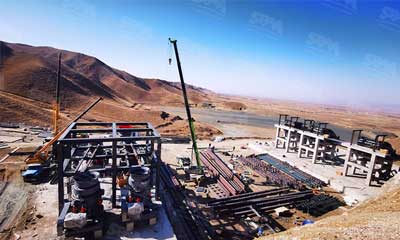
Modular units are factory-built, pre-wired, and pre-tested prior to shipment. Equipment arrives on site in standard shipping containers or flat-rack trucks. Bolt-together modular structures allow mechanical and electrical assembly to be completed in a fraction of the time needed for traditional plants, enabling mine owners to begin producing saleable aggregates and generating cash flow weeks ahead of schedule.

3. Flexibility and Easy Asset Relocation
Small mining concessions often face finite ore reserves or localized mineral depletion. If an ore body runs out or lease rights expire, a stationary plant represents a non-recoverable sunk cost. Modular plants can be quickly unbolted, packed into standard containers, and transported to a new project site with minimal asset depreciation.
4. Scalable Flowsheet Design
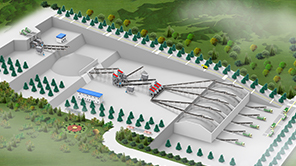
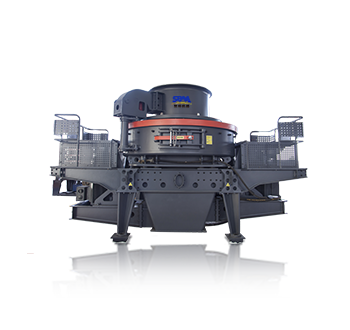
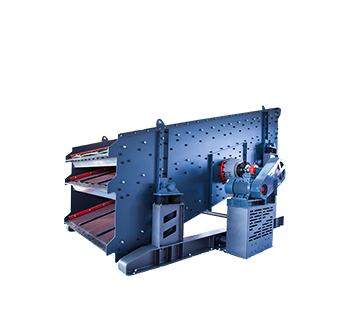
Small mine operators can start with a basic primary modular jaw crusher unit (e.g., 100–150 TPH) and expand as revenue grows. Secondary cone modules, tertiary VSI sand-making modules, or multi-deck screening modules can be seamlessly added into the circuit without redesigning the entire site infrastructure.
Selecting the Right Modular Setup for Your Ore Body
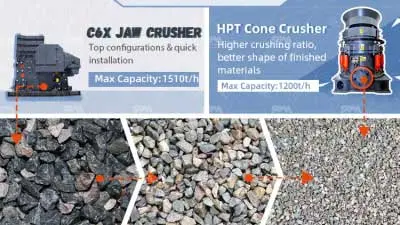
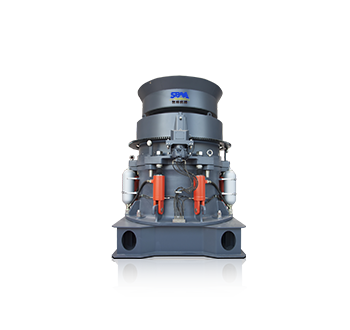
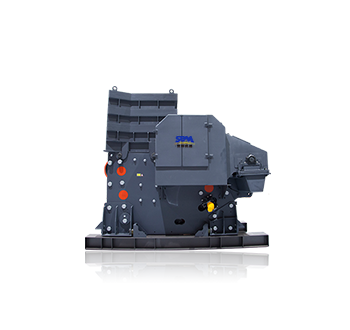
- Hard Rock Mining (Granite, Basalt, Quartz): Pair a heavy-duty primary modular jaw crusher with a secondary modular hydraulic cone crusher and a high-frequency screening module.
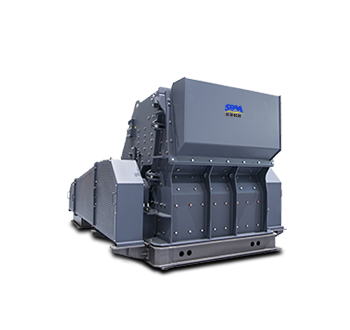
- Alluvial & Soft Rock Ore: Utilize a modular impact crusher combined with modular washing and sizing screens to maximize cubical aggregate yield.
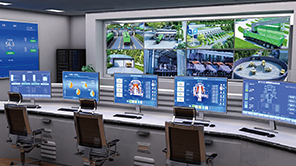
- Pre-Wired Plug-and-Play Control: Choose modular suppliers offering integrated MCC (Motor Control Center) kiosks and automated PLC touchscreens to minimize electrical installation complexity on site.
FAQs About Modular Aggregate Crushing Plant
Q: What is a modular aggregate crushing plant?
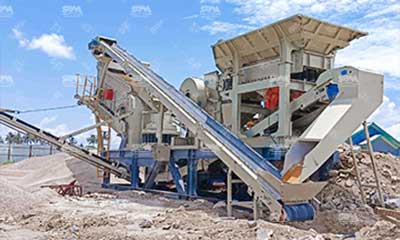
A: A modular aggregate crushing plant consists of pre-engineered, factory-tested crushing, screening, and conveying modules mounted on standardized steel frames or skids. These modules are easily transported and assembled on simple concrete pads with minimal civil engineering.
Q: Why are modular crushing plants better for small mining projects than stationary plants?
A:Modular plants require up to 70% less civil foundation work, reduce installation lead times from months to weeks, lower initial CAPEX, and allow easy relocation when deposit reserves are depleted.
Q: How long does it take to assemble a modular crushing plant?
A:Because modules are pre-wired and factory pre-assembled, full site setup and commissioning typically take between 7 to 14 days, compared to 3 to 6 months for traditional stationary plants.



 Get Solution
 Send Message