




The equipment side investment budget for a crushing plant is made up of three categories of expenditure: required investment, optional investment, and deferrable investment.
The classification depends on the project cycle, the standards in force at the location, and the finished product specification requirements. This article sets out what each category covers and the basis on which each is judged, followed by answers to frequently asked questions.
[Note]: This article analyzes capital costs for the crushing‑processing production line itself. It does not cover mine concession, land acquisition, permit fees, import duties, logistics, or working capital for daily operation. These items can represent a substantial share of total project expenditure and should be calculated separately.
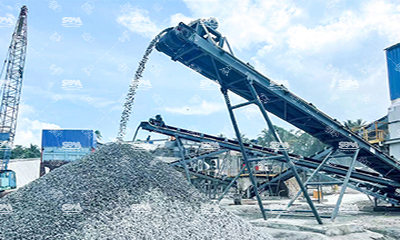
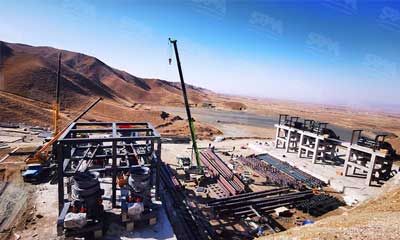
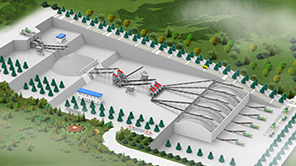
Aggregate and quarry sites are generally laid out in the open, on a single level: feeders, crushers, vibrating screens and belt conveyors are arranged in sequence along the site, with raw material feeding and finished product loading carried out by loading equipment. The production process does not depend on a building. When a budget is drawn up against this type of configuration, the investment estimate is easily reduced to a sum of equipment purchase costs, while expenditures that fall outside equipment quotations — power supply connection, loading equipment and others — arise one after another once work begins, producing a deviation, to a certain extent, between the budget and actual spending.
The deviation arises because the nature of these expenditures has not been distinguished. The first step in drawing up a budget for a crushing plant is therefore to classify each item of expenditure.

1. Required Investment: Prerequisites for Stable Operation of the Plant
1.1 Main Crushing and Screening Equipment
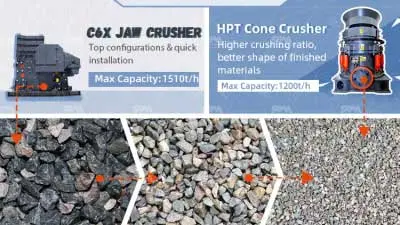
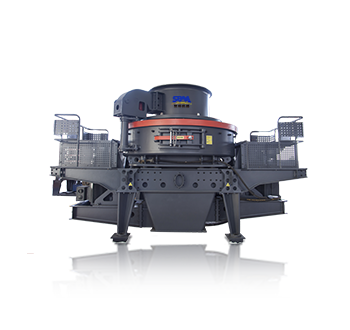
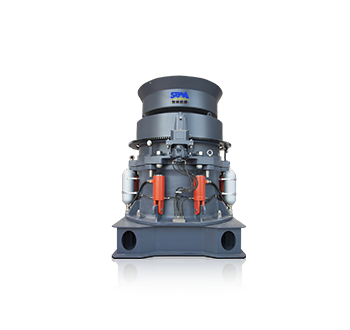
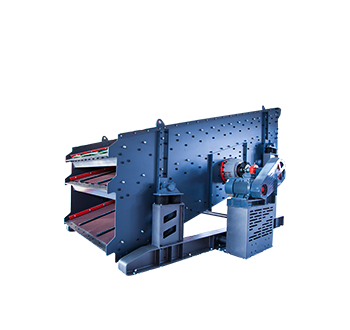
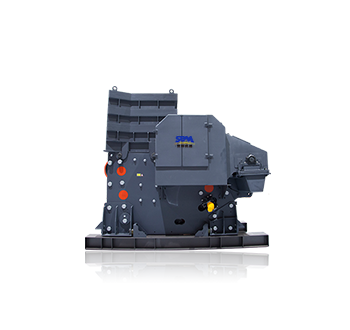
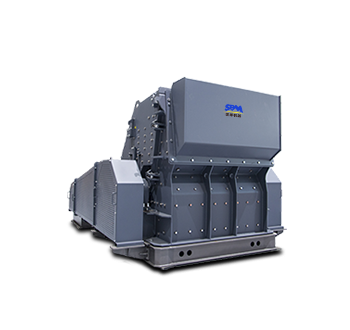
Configured in sequence along the direction of material flow: vibrating feeders in the feeding stage; jaw crushers or gyratory crushers for primary crushing; cone crushers or impact crushers for secondary and fine crushing; vibrating screens for screening. Vertical shaft impact (VSI) sand making machines are used in the sand making or shaping stage — whether they count as required investment depends on whether the finished product is required to meet the particle shape and gradation requirements of manufactured sand; where only crushed stone is supplied, this stage can be deferred.
The specifications of the main equipment are determined by capacity, maximum feed size, discharge opening setting, and material hardness. A full-process configuration of main equipment is the basic and necessary investment for a crushing production line to ultimately run stably and to keep delivering finished products to the market efficiently.
Click Here Click here to get a quote for your production line.
1.2 Material Transfer Between Equipment
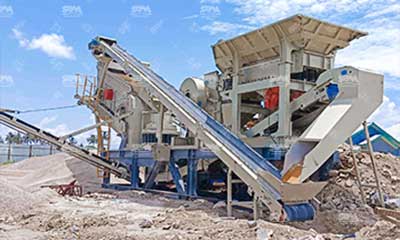
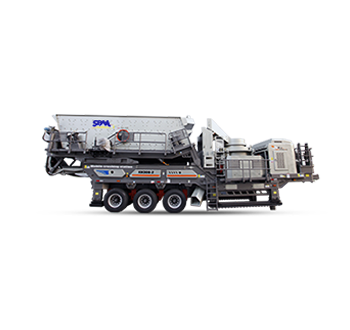
The number and total length of belt conveyors vary with the layout scheme, and the chutes and chutes at transfer points must be counted in as well. The actual amount of this investment depends on total conveying length, belt width, incline angle, and the number of transfer points. Where mobile crushing stations are used, the feeding and product conveyors supplied with the equipment can replace part of the fixed conveyor system, but the connections between machines still have to be provided for — the transfer stage is not eliminated as a result.
1.3 Raw Material Feeding and Finished Product Dispatch
Raw materials have to be delivered into the feeder, and finished products have to be loaded out from the stockpile. On an open-air production line both operations are carried out by wheel loaders and dump trucks. Loading and transport equipment is not part of the crushing equipment, yet it is a prerequisite for the line to start operating. The longer the on-site haul distance, the larger the share of this expenditure in the total investment.

1.4 Power Source
One of two options has to be selected — grid connection or on-site power generation — and the corresponding connection works are counted in the investment in either case. Grid connection involves line installation, transformer capacity and possible capacity upgrades; on-site generation involves purchase of generating sets, fuel supply and maintenance. In regions where grid stability is insufficient, generating capacity generally has to be retained as backup. The starting point of this budget item is the total installed power, obtained by summing the motor power of all equipment.
1.5 Equipment Foundations and Site Preparation
A stationary production line requires concrete foundations and steel structure platforms. A mobile crushing station is integrated on a tracked or wheeled chassis, so site leveling and bearing capacity requirements take the place of concrete foundation works — but the site still has to meet the requirements for equipment bearing capacity and vehicle access.

1.6 First Batch of Wear Parts and Spare Parts
Wear components such as jaw plates, liners, blow bars, screen meshes and conveyor belts, together with commonly used electrical components, have to be stocked in a certain quantity before commissioning; this is a one-off investment. The size of the stock is determined by expected consumption and lead time. For projects located far from service points or with long spare parts procurement cycles, the stock should be increased accordingly.
Click Here Click here to get a quote for your production line.
2. Optional Investment: Depending on Configuration Choices and Local Requirements
2.1 Buildings, Storage Sheds and Enclosed Conveyor Galleries
Open-air layout is common practice at aggregate and quarry sites, and a building is not a necessary component of a crushing plant. Storage sheds and enclosed conveyor galleries only become required configurations where local emission standards impose explicit limits on dust and noise, or where the finished product has to be kept at a stable moisture content. The basis for judgment is the specific emission limits and climatic conditions at the location.
2.2 Multi-Level Layout and Large Steel Structures
Where a production line has to be arranged on multiple levels to compress its footprint, large steel structures, bins and transfer platforms increase accordingly. Whether the footprint needs to be compressed depends on the area and shape of the site; where land is ample, the investment in multi-level layout and steel structures can generally be reduced.
2.3 Centralized Control
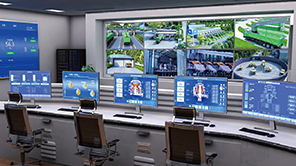
A small production line can be simplified to local control cabinets and local start/stop operation. What centralized control brings is a smaller operating crew in the operating stage and the recording of operating data; it is an optional configuration, and whether it is installed depends on production scale, staffing, and the requirements for recording line operating data.
2.4 Dust Collection and Washing Systems
The scale of dust collection and suppression is determined by local emission standards and the surroundings of the site. Where material mud and water content is low and there are no sensitive receptors nearby, water spray dust suppression is sufficient; where mud and water content is high or the finished product has to be clean, dust collection and washing systems are required — this investment should only be decided after material analysis has been completed.
2.5 On-Site Road Paving and Large-Area Site Leveling
Sites in long-term use with frequent heavy vehicle traffic need paved roads; for short-term projects or sites with good ground conditions, leveling of the working area alone may be sufficient. The project cycle is the most direct basis for judging this item.
Click Here Click here to get a quote for your production line.

3. Deferrable Investment: Reserve the Interfaces, Implement in Phases
3.1 Phase 2 Expansion: Adding a Production Line or Additional Main Machines
Configuring one production line's capacity to match the initial order volume, then adding a second or further production lines once market demand grows, or adding main machines of the same specification within the existing process, is a commonly used phased approach. The prerequisite is that the initial layout has already reserved equipment positions, foundations, conveying and power supply interfaces, so that expansion does not require modification of existing structures.
3.2 Finished Product Stockpile Expansion
Stockpile capacity is determined by finished product output and the dispatch cycle. It is built to turnover requirements at the initial stage and expanded once sales volume grows.
3.3 Sand Making or Shaping Stage
Where only crushed stone is supplied, the vertical shaft impact sand making machine can be deferred. It can be installed later if demand emerges for manufactured sand, or if the end market sets high requirements for product particle shape, gradation and quality. Space and conveying interfaces can be reserved at the initial stage.
3.4 Automation Upgrades and Remote Operation and Maintenance
Control systems, metering and remote monitoring can be added as actually required once production has stabilized, with communication and installation conditions retained at the initial stage.
3.5 Spare Parts Stock Expansion
Stocking at the initial stage to what commissioning requires, then adjusting the inventory structure after one operating cycle on the basis of actual consumption data, is more sounder than making a one-off purchase on the basis of estimated quantities.
Click Here Click here to get a quote for your production line.

4. FAQs
Q: What items are included in the equipment‑side required investment for building a crushing plant?
A: Main crushing and screening equipment; material transfer between equipment; loading and transport equipment for raw material feeding and finished‑product delivery; the power source; equipment foundations and site preparation; and the first batch of wear parts and spare parts.
Q: Can an open-air crushing production line save on civil works?
A: Buildings and multi-level steel structures can be dispensed with, but equipment foundations are still required. For open-air stationary equipment, the concrete foundation and maintenance platform works are smaller in scope than for a building-type layout; for mobile crushing stations, site bearing capacity and leveling requirements take the place of concrete foundations. Open-air layout is common practice at aggregate and quarry sites — whether it can be adopted depends on local emission and noise standards.
Q: How does the investment structure of a mobile crushing station differ from that of a stationary plant?
A: A mobile crushing station dispenses with foundation works and part of the fixed conveying system, and the installation and commissioning workload is reduced accordingly. This structure is better suited where the project cycle is short or the operating site has to be relocated.
Q: Can environmental protection investment in a crushing production line be reduced?
A: It depends on the local emission standards. In regions where emission, noise and soil and water conservation requirements are clearly defined, dust collection, enclosure and water treatment facilities are required investment; where requirements are less stringent, material mud and water content is low, and there are no sensitive receptors nearby, water spray dust suppression is sufficient.


SBM provides full-process services covering feasibility study, material analysis, site survey, solution design, equipment and spare parts supply, installation and commissioning, operation training, and process optimization. We can develop a customized solution based on your actual production needs and requirements, helping you achieve real cost savings, higher efficiency and lower energy consumption.
Click Here Click here to get a quote for your production line.


 Get Solution
 Send Message
