



This engineering guide provides a structured framework for selecting high-performance belt conveyors engineered for port logistics and bulk material handling terminals.
Key Highlights Covered:
- System Configurations: Ship-to-shore, yard stockpiling, and inland transport circuits.
- Engineering Specifications: High-capacity belt speeds (up to 6.5 m/s), steel cord belts, and C5-M marine anti-corrosion coatings.
- Environmental Compliance: Enclosed conveyor galleries, dry fog dust suppression, and lower material degradation at transfer points.
- Selection Parameters: Matching bulk density, abrasiveness, and throughput requirements for robust long-term operation.
The Backbone of Global Bulk Logistics
Ports are the critical nodes in global supply chains. Every year, billions of tons of iron ore, coal, grain, bauxite, and fertilizer move through port terminals worldwide. The efficiency of these ports hinges on one core piece of equipment: the belt conveyor system.
Unlike standard industrial conveyors, belt conveyors used in ports and bulk terminals are engineered to handle extreme volumes, harsh marine environments, and continuous 24/7 operation. A single high-capacity conveyor system can move upwards of 10,000 tons per hour—unloading a Capesize vessel in just a few days.
This guide provides a comprehensive engineering overview of belt conveyors for bulk material handling. We cover the system architecture, design considerations, major components, and key selection criteria for port authorities, EPC contractors, and terminal operators.


Part I: What Is a Belt Conveyor System for Bulk Handling?
A belt conveyor system for bulk material handling is an integrated network designed to transport materials between ships, storage yards, and inland transport links (trucks or rail).
Unlike factory conveyors, port systems face unique challenges:
- Extreme Capacity: Often exceeding 5,000–15,000 TPH.
- Corrosive Environment: Exposure to salt spray, high humidity, and extreme weather.
- Multiple Transfer Points: Interfacing with ship unloaders, stackers, reclaimers, and train loading stations.
1. Core Port Conveyor Configurations
| System Type | Function | Key Equipment |
|---|---|---|
| Ship Unloading to Yard | Moves material from vessel to stockpile | Ship unloader + Jetty conveyor + Yard conveyor |
| Yard to Ship Loading | Reclaims material from stockpile to vessel | Reclaimer + Yard conveyor + Shiploader boom |
| Yard to Inland Transport | Moves material from yard to trucks/trains | Reclaimer + Conveyor + Train loading station |
Part II: The 5 Core Engineering Design Considerations
Designing a conveyor for bulk material handling requires balancing structural integrity with operational flexibility. Here are the five most critical factors.
1. Extreme Capacity and Belt Speed
Port conveyors often require belt widths of 1,800 mm to 3,200 mm and belt speeds of 4.0 to 6.5 m/s.
| Parameter | Standard Industrial Conveyor | Port Bulk Conveyor |
|---|---|---|
| Belt Width | 500 – 1,200 mm | 1,800 – 3,200 mm |
| Belt Speed | 1.0 – 3.0 m/s | 4.0 – 6.5 m/s |
| Capacity | 50 – 1,000 TPH | 5,000 – 15,000+ TPH |
| Motor Power | 15 – 200 kW | 500 – 5,000+ kW |
Key Design Challenge: At speeds above 5 m/s, material turbulence at transfer points increases drastically. Proper chute design and belt tracking become paramount.
2. Corrosion and Marine Environment Protection
Salt-laden air accelerates corrosion exponentially. Standard carbon steel frames may degrade within a few years.
| Protection Method | Application | Standard |
|---|---|---|
| Hot-Dip Galvanizing | Structural steel frames, walkways | ISO 1461 |
| C5-M Marine Coating | Conveyor gantries, transfer towers | ISO 12944 |
| Stainless Steel Components | Critical fasteners, idler shafts | SS316 / SS304 |
| Enclosed Gantry Design | Main conveyor runs | To prevent wind-blown dust and rain ingress |
3. Dust Suppression and Environmental Compliance
Ports are often located near urban areas and face strict environmental regulations. Bulk materials like coal and iron ore generate severe fugitive dust.
Engineering Solutions:
- Enclosed Conveyor Galleries: Fully sealed structures to prevent wind dispersal.
- Dry Fog Systems: Water mist at transfer points to agglomerate dust without overwetting cargo.
- Baghouse Dust Collectors: Negative-pressure extraction at high-drop points.
- Water Sprays: Controlled moisture addition at loading/unloading points.
4. Structural Dynamics and Wind Loading
Port conveyors are elevated on gantries or trestles, exposing them to high wind loads, especially in coastal areas.
- Wind Load Design: Must withstand typhoon/hurricane-force winds (often designed for 50–70 m/s wind speeds).
- Dynamic Analysis: Transfer towers and long-span gantries require finite element analysis (FEA) to handle vibration and wind-induced oscillation.
- Seismic Design: In seismically active ports (e.g., Chile, Japan, Indonesia), foundations and structures must meet strict seismic codes.
5. Operational Flexibility and Automation
Modern ports require conveyors that can route material between multiple stockpiles, ship berths, and transport links.
- Transfer Tower Design: The key to flexibility. Material is diverted to different routes using flop gates or rotating chutes.
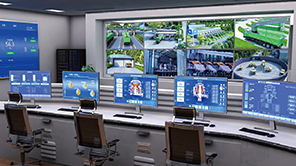
- Automation and PLC Control: Centralized control rooms manage belt speed, routing, and safety interlocks. Sensors monitor belt tension, misalignment, and motor temperature.
- Variable Frequency Drives (VFDs): Essential for smooth acceleration and energy savings. They allow the conveyor to run at reduced speed when capacity is low.
Part III: Major Components of a Bulk Material Conveyor
1. The Conveyor Belt
The belt is the single most expensive wear component.
| Belt Type | Application | Advantages | Disadvantages |
|---|---|---|---|
| Steel Cord Belt | Main long-distance conveyors (high tension) | Very high tensile strength, low elongation | Difficult to splice, heavy |
| Fabric Belt (EP/NN) | Short yard conveyors, shuttle conveyors | Flexible, easy to splice | Lower tensile strength |
| Heat-Resistant Belt | Handling hot materials (sinter, coke) | Withstands high temperatures | Higher cost |
2. Drive Systems
High-capacity conveyors require massive power.
- Head Drive vs. Intermediate Drive: Long conveyors may use intermediate booster drives to reduce belt tension.
- Drive Configurations: Single or dual pulley drives with gearboxes and fluid couplings.
- Regenerative Capability: Downhill conveyors can generate electricity back to the grid.
3. Idlers and Pulleys
| Component | Function | Key Spec |
|---|---|---|
| Troughing Idlers | Support the carrying side of the belt | Designed for 35° or 45° trough angles |
| Impact Idlers | Absorb shock at loading points | Heavy-duty rubber rings |
| Return Idlers | Support the return side | Flat or V-return design |
| Drive Pulley | Transmits power to the belt | Lagged surface for grip |
| Take-up Pulley | Maintains belt tension | Gravity or hydraulic take-up |
4. Transfer Points and Chutes
The most critical point for dust control and material degradation.
- Rock Box / Dead Box Design: Material builds up in a pocket, protecting the chute liner from direct impact.
- Curved Chutes: Reduce material velocity and minimize wear.
- Wear Liners: Ceramic or high-chrome plates installed at impact zones.
Part IV: Key Selection Criteria for Port Operators
Selecting the right belt conveyor system for bulk handling requires evaluating the following:
1. Material Characteristics
| Parameter | Why It Matters |
|---|---|
| Bulk Density | Determines belt width and power requirements |
| Particle Size | Affects chute design and belt selection |
| Abrasiveness | Determines liner and belt cover grade |
| Moisture Content | Affects handling (sticky materials cause carryback) |
| Angle of Repose | Determines stockpile and chute design |
2. Port Layout and Topography
- Jetty Length: Determines the length of the ship-to-shore conveyor.
- Stockpile Area: Determines the length of yard conveyors and the number of transfer towers.
- Inland Transport Access: Road and rail connections determine the terminal layout.
3. Required Throughput and Operational Hours
- Peak Capacity: Must match the ship unloader/loader capacity.
- Annual Throughput: Determines belt wear and maintenance schedules.
- Operating Hours: Continuous 24/7 operation requires higher redundancy (spare motors, spare belts).
4. Environmental and Regulatory Requirements
- Dust Emission Limits: May require enclosed galleries or advanced dust suppression.
- Noise Limits: Sound enclosures and low-noise idlers.
- Spillage Control: Belt cleaners and containment walls.
Part V: Frequently Asked Questions (FAQs)
Q1: What is the maximum capacity of a bulk material belt conveyor?
A: High-capacity belt conveyors in port terminals can handle up to 15,000+ TPH, using belts up to 3,200 mm wide, running at speeds of 6.0 m/s or more.
Q2: How long can a port conveyor system be?
A: Single-flight conveyors can reach lengths of 5 to 10 km, depending on terrain and drive configuration. For longer distances, multiple flights with transfer points are used.
Q3: How do you control dust in a port coal conveyor?
A: Dust control typically involves a combination of enclosed galleries, dry fog systems at transfer points, and baghouse dust collectors. Water sprays may also be used at loading points.
Q4: How long does a port conveyor belt last?
A: A high-quality steel cord belt in a bulk handling application typically lasts 8 to 15 years, depending on material abrasiveness, loading conditions, and maintenance practices.
Q5: What is the most critical maintenance issue in port conveyors?
A: Belt misalignment (tracking) is the most common issue. It causes edge damage, spillage, and premature belt failure. Regular inspections of pulleys, idlers, and belt tension are essential.
Q6: How is a bulk material conveyor system controlled?
A: Modern systems use PLC-based automation with centralized control rooms. Sensors monitor belt speed, tension, misalignment, motor temperature, and material flow. All emergency stops and safety interlocks are integrated into the control system.
Conclusion: Engineering Reliability for Global Trade
Belt conveyors for port and bulk material handling are the invisible engines of global trade. Their design demands a careful balance of high capacity, structural integrity, environmental compliance, and operational reliability.
Whether you are designing a new terminal or upgrading an existing one, selecting the right conveyor system partner is critical for long-term performance.
Key Takeaways:
| Factor | Recommendation |
|---|---|
| Capacity | Design for peak throughput with a 15–20% buffer |
| Belt Design | Use steel cord belts for long runs and high tension |
| Corrosion Protection | Specify C5-M coating and hot-dip galvanized frames |
| Dust Control | Enclosed galleries + dry fog systems at transfer points |
| Automation | Centralized PLC control with VFD drives |
Need a Custom Belt Conveyor Solution for Bulk Handling?
At SBM, we specialize in designing and supplying high-capacity belt conveyors for bulk material handling terminals. Our solutions cover everything from jetty conveyors to ship loading/unloading circuits and automated yard management.Contact our engineering team



 Get Solution
 Send Message
