





Summary: Discover how professional mineral processing equipment boosts recovery rates to 85-95%, cuts energy costs, and lowers TCO. From crushing to dewatering....
The global mining industry is at a crossroads. Demand for minerals and aggregates continues to rise, yet ore grades are declining, operating costs are climbing, and environmental regulations are tightening. In this challenging environment, the difference between a marginal operation and a highly profitable one often comes down to one factor: the quality of your mineral processing equipment.
Professional mineral processing equipment is not merely a capital expense—it is a strategic investment that determines your recovery rates, energy efficiency, product quality, and ultimately, your bottom line. This article explores how advanced crushing, grinding, screening, and beneficiation equipment can elevate your mining operation from survival to leadership.

Part I: The Foundation – Understanding Mineral Processing
1.1 What Is Mineral Processing?
Mineral processing is the art and science of extracting valuable minerals from raw ore. The goal is simple: separate the valuable mineral from the waste rock (gangue) at the lowest possible cost and highest possible efficiency.
The typical mineral processing flowsheet includes:
| Stage | Purpose | Equipment |
|---|---|---|
| Crushing | Reduce run-of-mine ore to manageable size | Jaw crushers, cone crushers, impact crushers |
| Grinding | Liberate minerals from the host rock | Ball mills, rod mills, SAG mills |
| Screening | Separate particles by size | Vibrating screens, hydrocyclones |
| Beneficiation | Concentrate the valuable mineral | Flotation cells, gravity concentrators, magnetic separators |
| Dewatering | Remove water from concentrate | Thickeners, filters, dryers |
1.2 Why Professional Equipment Matters
| Aspect | Low-End Equipment | Professional Equipment |
|---|---|---|
| Recovery rate | 60-75% | 85-95% |
| Energy efficiency | Poor | Optimized |
| Uptime | 70-80% | 90-95% |
| Wear life | Short, unpredictable | Long, predictable |
| Product quality | Inconsistent | Consistent, saleable |
| Total cost of ownership | Higher | Lower |

Part II: Crushing – The First Critical Step
2.1 Why Crushing Quality Sets the Stage
Crushing is the entry point to your entire processing circuit. If the crushing stage is poorly designed or equipped, every downstream process suffers:
- Grinding efficiency drops when mill feed is too coarse or inconsistent
- Recovery rates fall when liberation is incomplete
- Energy costs soar when material is over-crushed
2.2 Professional Crushing Equipment
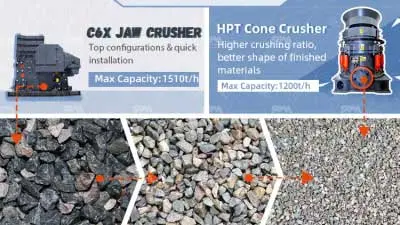
Jaw Crushers for Primary Crushing
- Heavy-duty construction for continuous operation
- Deep crushing chamber for maximum throughput
- Hydraulic adjustment for easy setting changes
- Suitable for hard rock, gravel, and recycled materials
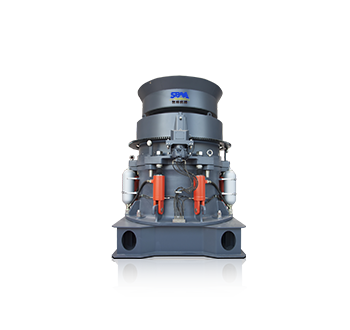
Cone Crushers for Secondary and Tertiary Crushing
- Interparticle crushing for superior particle shape
- Automated setting adjustment for consistent product
- Tramp iron protection to prevent damage
- Multiple cavity options for different applications
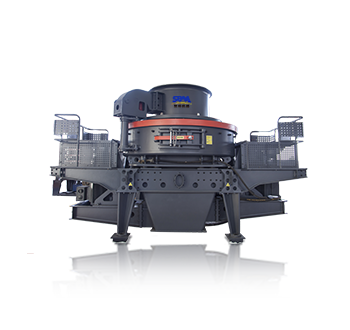
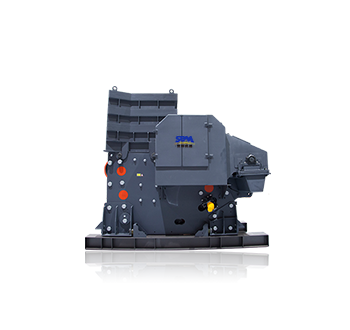
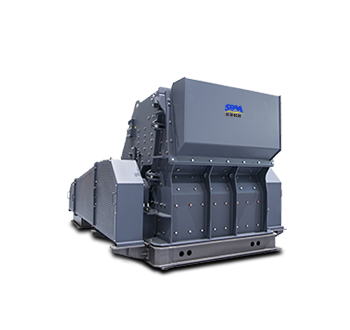
Impact Crushers for Soft to Medium-Hard Rock
- High reduction ratio (up to 20:1)
- Excellent cubical product shape
- Ideal for limestone, concrete recycling, and asphalt
2.3 The Professional Advantage in Crushing
| Feature | Benefit |
|---|---|
| Automated feed control | Maintains choke-fed condition, maximizes efficiency |
| Real-time monitoring | Prevents overload, predicts maintenance needs |
| High-precision wear parts | Extended liner life, predictable replacement intervals |
| Energy-efficient design | Lower cost per ton, reduced carbon footprint |
Part III: Grinding – The Energy Heart of Your Plant
3.1 The Grinding Challenge
Grinding is typically the most energy-intensive stage in mineral processing, accounting for 30-50% of total plant power consumption. Inefficient grinding not only wastes energy but also fails to achieve the liberation required for effective concentration.
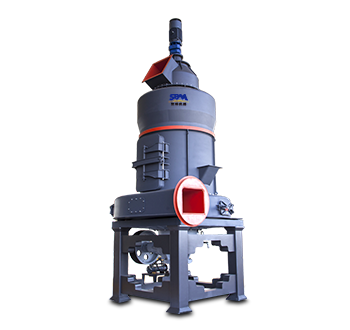
3.2 Professional Grinding Solutions
Ball Mills
- Designed for continuous, heavy-duty operation
- Optimized liner profiles for maximum grinding efficiency
- Available in overflow or grate discharge configurations
- Customizable for wet or dry grinding applications
Rod Mills
- Ideal for coarse grinding and preparing ball mill feed
- Produce a more uniform product than ball mills
- Lower power consumption for certain applications
SAG Mills
- Suitable for large-scale operations with competent ore
- Combines primary crushing and grinding in one stage
- Reduces equipment count and simplifies flowsheets
3.3 Optimizing Grinding Performance
| Feature | Impact |
|---|---|
| Variable speed drives | Match mill speed to ore characteristics |
| Advanced liner design | Extended liner life, improved grinding action |
| Automated media addition | Maintains optimal ball charge |
| Mill bearing monitoring | Prevents catastrophic failure |
Part IV: Screening and Classification
4.1 The Critical Role of Screening
Screening is often overlooked, yet it is the gatekeeper of your entire circuit. Poor screening efficiency leads to:
- Over-grinding (wasted energy)
- Under-grinding (poor liberation)
- Reduced downstream recovery
- Increased circulating loads
4.2 Professional Screening Equipment
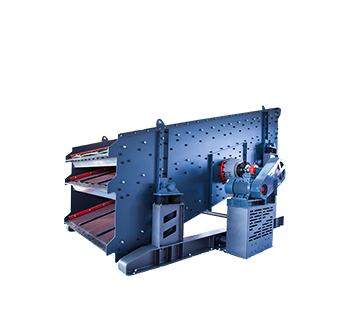
Vibrating Screens
- Multiple deck configurations for multi-product separation
- High-frequency operation for fine screening
- Heavy-duty construction for continuous operation
- Various media options (wire mesh, polyurethane, rubber)
Hydrocyclones
- No moving parts, low maintenance
- Precise classification in grinding circuits
- Compact footprint
- Multiple sizes for different capacity requirements
Part V: Beneficiation – Extracting the Value
5.1 From Crushed Rock to Concentrate
Beneficiation is where the value is actually extracted. The right equipment selection here directly determines your final recovery rate.
5.2 Professional Beneficiation Equipment
Flotation Cells
- Self-aspirating or forced-air designs
- Multiple cell configurations for roughing, scavenging, and cleaning
- Advanced froth management for improved recovery
- Energy-efficient rotor/stator designs
Gravity Concentrators
- No chemicals required
- Low operating cost
- Ideal for free gold, tin, tungsten, and industrial minerals
- Jigs, shaking tables, spirals, and centrifugal concentrators available
Magnetic Separators
- For magnetic and non-magnetic mineral separation
- Dry or wet configurations
- High-intensity options for weakly magnetic minerals
5.3 Recovery Rate Comparison
| Mineral | Typical Recovery (Basic Equipment) | Professional Equipment Achieves |
|---|---|---|
| Copper (sulfide) | 80-85% | 90-95% |
| Gold (free milling) | 70-80% | 85-92% |
| Iron ore | 75-85% | 88-95% |
| Lead-zinc | 75-85% | 85-93% |
Part VI: Dewatering – Completing the Process
6.1 Why Dewatering Matters
After concentration, the mineral concentrate must be dewatered for transport and further processing. Efficient dewatering:
- Reduces transport costs
- Prevents concentrate degradation
- Recovers valuable water for recirculation
- Minimizes environmental impact
6.2 Professional Dewatering Equipment
| Equipment | Application | Typical Discharge Moisture |
|---|---|---|
| Thickeners | Concentrate or tailings | 40-60% solids |
| Vacuum filters | Fine concentrates | 10-20% moisture |
| Pressure filters | Ultra-fine concentrates | 8-12% moisture |
| Belt presses | High-volume tailings | 20-30% moisture |
Part VII: The Financial Case for Professional Equipment
7.1 Initial Investment vs. Lifetime Value
| Metric | Basic Equipment | Professional Equipment |
|---|---|---|
| Initial capital | Lower | Higher (20-40%) |
| Recovery rate | 70-80% | 85-95% |
| Annual production (100 tph operation) | 560,000 tons | 680,000 tons |
| Annual revenue (@$50/ton) | $28M | $34M |
| Annual revenue difference | — | +$6M |
The incremental revenue from higher recovery alone pays for the professional equipment investment within months.
7.2 Operating Cost Comparison
| Cost Category | Basic Equipment | Professional Equipment |
|---|---|---|
| Energy (kWh/ton) | 25-35 | 18-25 |
| Wear parts ($/ton) | $0.40-0.70 | $0.25-0.45 |
| Maintenance (hours/month) | 40-60 | 15-25 |
| Unplanned downtime | 5-10% | 1-3% |
Part VIII: Selecting the Right Equipment Partner
8.1 What to Look For
| Criteria | Why It Matters |
|---|---|
| Industry experience | Proven solutions for your ore type |
| Complete product range | Single-source responsibility for entire flowsheet |
| Process engineering capability | Custom solutions, not just standard products |
| After-sales support | Training, spare parts, technical assistance |
| Global reference base | Demonstrated success in similar applications |
8.2 The SBM Difference
At SBM, we understand that every mining operation is unique. Your ore type, location, capacity requirements, and budget all influence the optimal equipment solution.
We offer:
- Complete mineral processing solutions from crushing to dewatering
- Custom flowsheet design tailored to your ore characteristics
- High-quality equipment built for continuous operation
- Global service network for spare parts and technical support
- Process optimization expertise to maximize your recovery
Elevate Your Operation
In today's competitive mining environment, you cannot afford to leave value in the ground or waste energy on inefficient processes. Professional mineral processing equipment is not an expense—it is the most direct path to higher recovery, lower costs, and increased profitability.
Whether you are developing a new deposit, expanding an existing operation, or seeking to optimize your current circuit, the right equipment partner makes all the difference.
Ready to elevate your mining operation? Contact SBM today for a professional assessment of your mineral processing needs.


 Get Solution
 Send Message