




Summary: Drawing on SBM’s extensive experience in solid waste recycling projects, this article outlines key points for selecting solid waste recycling equipment. We share practical guidance to help you avoid common pitfalls, choose the right equipment, and improve your return on investment (ROI)....
Faced with diverse solid waste types and numerous equipment options, many customers encounter the same problem: how to select suitable solid waste recycling equipment that matches raw materials, maintains stable production capacity, complies with environmental standards and delivers sustainable returns.
Step 1: Define Core Requirements for Waste Recycling Equipment
There are many types of solid wastes with significant differences. Therefore, when selecting equipment, it is necessary to clarify the core premises of the project to ensure a reasonable plan.
.jpg)
.jpg)
.jpg)
1.Clarify Material Characteristics
Materials are the primary basis for equipment selection. Different solid wastes vary greatly in characteristics such as hardness, humidity, impurity content, and abrasiveness. For example, construction waste contains steel bars, wood chips, and plastics, so impurity removal should be emphasized during processing; industrial tailings have high hardness and strong abrasiveness, so wear - resistance should be emphasized during processing. Only by clarifying the material properties can the process route be determined.
2.Determine the Treatment Scale
The scale determines the equipment model and configuration. If a large - scale project is equipped with small - sized equipment, the production capacity cannot be achieved, affecting the project's revenue; if a small - scale project selects large - sized equipment, it will cause waste of investment and high energy consumption. Therefore, the equipment selection should be reasonably matched with the production capacity, which is the key to cost control and stable output of the project.
3.Clearly Define the Use of the Finished Product
The destination of the finished product determines the equipment accuracy and process level. The equipment configuration and process flow vary for different uses such as subgrade backfilling, recycled aggregates, dry - mixed mortar, and building materials for sponge cities. The clearer the positioning, the more accurate the equipment selection.
4.Understand the Site Conditions
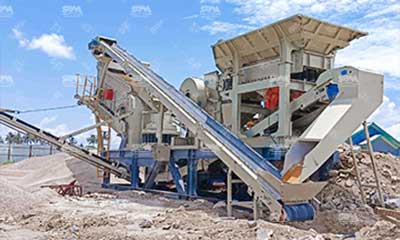
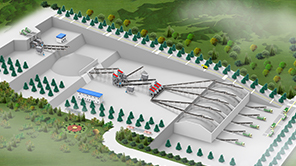
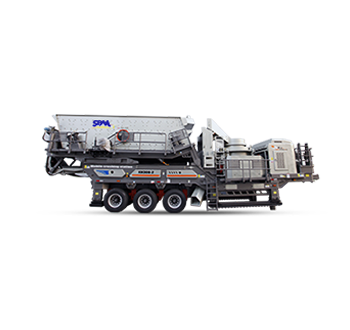
The site conditions directly affect the project layout. A spacious site with long - term fixed operation is suitable for building a fixed production line; scenarios such as demolition sites, decentralized operations, short - term projects, or those with high requirements for relocation are more suitable for mobile crushing plants.
5.Strictly Comply with Environmental Protection Standards
When selecting solid waste resource recovery treatment equipment, the emission requirements for dust, noise, and wastewater should be considered simultaneously. Complying with environmental protection regulations is the basis for the long - term and stable operation of the project.
In summary, the selection of solid waste recycling equipment must be customized according to material characteristics + project requirements. Only by clarifying this information can the core equipment be accurately matched.
Step2: Select Equipment According to Process Flow to Maximize Line Efficiency
The main processes of solid waste resource recovery treatment are: feeding - primary crushing - medium and fine crushing - screening - separation - sand making and shaping - finished product. The equipment in each link needs to be coordinated and matched.
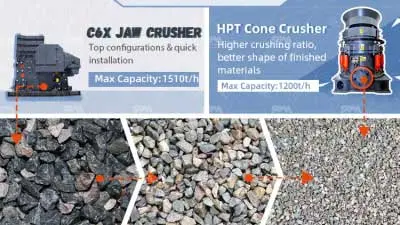
1.Primary Crushing Equipment: Jaw Crusher
- Application:The first-stage crushing of various large-sized solid wastes
- Advantages:Large feed inlet, high crushing ratio, strong impact resistance, suitable for various complex materials
- Selection Points:Select the corresponding model according to the feed particle size and hourly production capacity
- Recommended Crusher:SBM-C6X Jaw Crusher, SBM-PEW Jaw Crusher


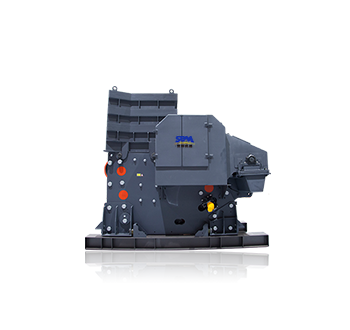
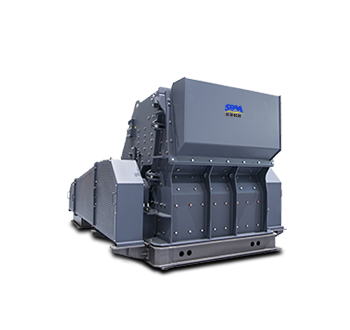
2.Medium and Fine Crushing Equipment: Impact Crusher / Cone Crusher
- Impact Crusher:Suitable for solid wastes with medium - low hardness. It has good discharge particle shape, is not prone to material blockage, and is convenient for maintenance.
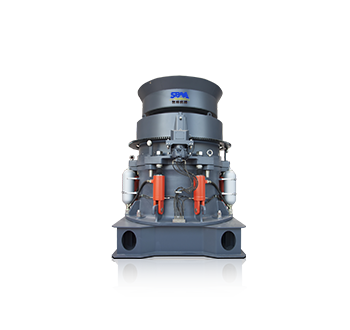
- Cone Crusher:Suitable for solid wastes with high hardness and high abrasiveness. The wearing parts have a long service life, stable operation, and can cope with high-intensity operations for a long time.
- Recommended Crusher:SBM-CI5X Impact Crusher, SBM-HPT Cone Crusher&HST Cone crusher


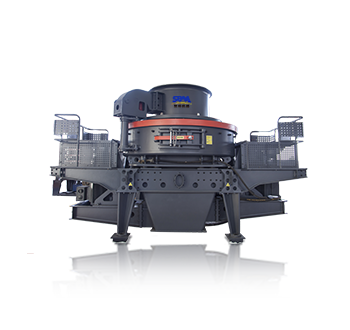
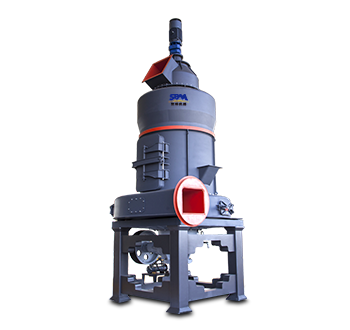
3.Sand Making and Shaping Equipment: Sand Maker
- Application:Projects with high-standard requirements for high-quality recycled sand and gravel and building material raw materials
- Advantages:The finished product has a round particle shape and a reasonable gradation, increasing the added value of the solid waste product
- Recommended Crusher:SBM-VSI6X Sand Maker

4.Screening and Separation
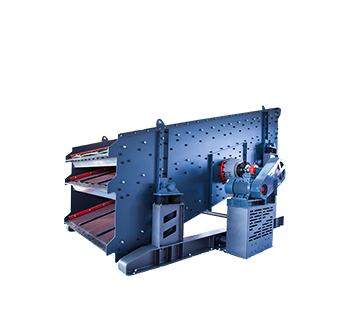
The screening equipment ensures that the particle size of the finished product meets the standard. The iron remover recovers metals and protects the main machine. The light-material separator removes impurities such as plastics and wood chips, and the soil-removing screen reduces the mud content.
- Recommended Equipment:SBM-S5X Vibrating Screen

5.Mobile / Fixed Solutions
- Mobile Crushing Station:Suitable for short-term solid waste resource recovery treatment projects that require flexible relocation, quick commissioning, and decentralized treatment
- Fixed Production Line:Suitable for large-scale solid waste resource recovery treatment projects with high production capacity and high automation requirements
It should be noted that when selecting solid waste recycling equipment, it is necessary to avoid over - emphasizing the equipment price while ignoring the long - term operating costs, which may lead to problems such as high energy consumption, frequent replacement of wearing parts, and high failure rates during subsequent production.
The scientific selection of solid waste recycling equipment should focus on: equipment operation energy consumption, service life of wearing parts, maintenance convenience, automation level, environmental protection configuration, etc.
At the same time, attention should also be paid to the selection of auxiliary equipment. A complete supporting treatment system will greatly enhance the project value.
Step3: Select Trusted Suppliers for Quality Gear, Stable Production and Lower Costs
Selecting solid waste recycling equipment is not just about purchasing single - unit equipment, but also about choosing long - term and stable services.
- Industry Experience
- Solution Capability
- Equipment Quality
- Full-life-cycle Service System
- Case Endorsement
SBM has been deeply engaged in the field of solid waste resource recovery for many years, covering all types of solid waste treatment scenarios such as construction waste and industrial tailings. It has mature process technologies and rich project implementation experience, and can provide customized solid waste resource recovery treatment solutions in various forms such as mobile and fixed. From project planning to production operation, SBM provides customers with a full - life - cycle service to ensure stable production and make solid waste treatment more efficient.

Conclusion
Solid waste resource recovery treatment is not simply "crushing and transporting", but a resource - based, efficient, and green system project. Under the trend of the rapid development of solid waste resource recovery, choosing a set of solid waste resource recovery solutions that are suitable for the project, stable in the long - term, cost - reducing, and efficiency - increasing can truly transform solid waste into renewable resources and achieve ecological and economic benefits improvement.


 Get Solution
 Send Message