





Summary: Considering the material properties of regional river pebbles, local power‑supply limitations and tropical climate conditions, river‑pebble crushing plant design emphasizes simplified workflows, low energy consumption and high cost‑effectiveness....
The Philippines is endowed with abundant river pebble resources, which are widely used as raw aggregate for local infrastructure and construction projects. Considering the material properties of regional river pebbles, local power‑supply limitations and tropical climate conditions, river‑pebble crushing plant design emphasizes simplified workflows, low energy consumption and high cost‑effectiveness.

1. Physical Characteristics of Philippine River Pebbles
Most river pebbles in the Philippines originate from natural riverbeds and exhibit high hardness. Their physical parameters impose specific demands on processing plant configuration:
| Material Characteristic | Specific Behavior | Challenge to Production Line Design |
|---|---|---|
| High Silica Content | High Mohs hardness with strong wear resistance; predominantly quartz-based abrasive rock. | High wear rates on jaw plates and mantle/concave liners; equipment selection directly dictates long-term spare part expenditures. |
| High Proportion of Natural Fines | Uneven particle size distribution (0–630 mm) due to natural fluvial erosion, containing large amounts of natural fines that requires no further crushing. | Without pre-screening at the feed end, qualified products are crushed again — wasting energy, generating excess dust and disrupting the gradation. |
| Fluctuating Moisture & Clay Content | Influenced by the tropical monsoon climate, the feed is often mixed with silt and mud during the rainy season. | Demands highly reliable anti-clogging screening and efficient washing systems. |
2.Key Engineering Principles to Design a River Pebble Crushing Plant
To meet regional demands for low operational expenditure (Opex) and quick capital expenditure (Capex) recovery in the Philippines, the river pebble crushing plant incorporates five core engineering strategies:
2.1 Integrated Pre-Screening
There are a certain proportion of fines in the river pebble that don’t need to be crushed again. Without pre-screening, these fine materials are fed entirely into the jaw crusher—effectively crushing qualified finished products a second time. This not only wastes energy, but also generates excess fine dust and compromises aggregate gradation.
Configured with grizzly bars, the vibrating feeder directly screens out natural fines from river pebbles and sends them to the product screen for sizing, while remaining oversized rock enters the jaw crusher for primary crushing.
Pre-screening effectively minimizes over-crushing, lowers equipment wear and energy consumption, increases crusher throughput capacity, and prevents or alleviates crushing chamber blockage.

2.2 Selecting Cone Crusher for Medium and Fine Crushing
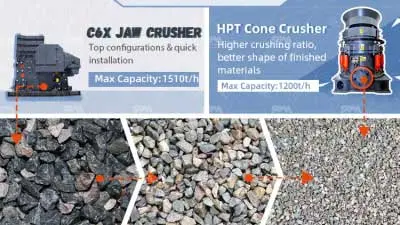
When processing highly abrasive raw materials such as river pebbles, cone crushers typically exhibit lower wear-part consumption. Furthermore, multi-cylinder hydraulic cone crushers utilize the lamination crushing principle, delivering superior aggregate particle shape.
From a long-term operational cost perspective, cone crushers offer low energy consumption, extended wear-part replacement cycles, low overall failure rates, and straightforward routine maintenance—resulting in lower overall production costs.
2.3 Centralized Layout and Cable Line Optimization
Constructing the power control room directly beneath the main energy-consuming equipment (such as the jaw crusher and cone crusher) shortens cable routing distances. This reduces cable procurement costs while minimizing line voltage drop and power loss.
2.4 Closed-Circuit Design and Streamlined Conveyor Layout
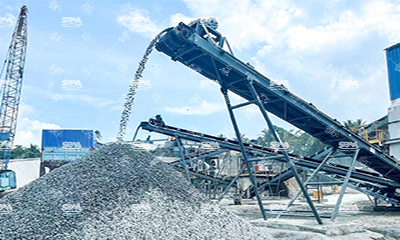
Through optimized material flow paths, the entire plant achieves a full closed-circuit crushing process using only three main belt conveyors. This substantially lowers capital investment in equipment as well as ongoing belt maintenance costs.
2.5 Modular Design
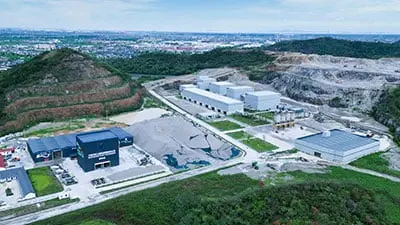
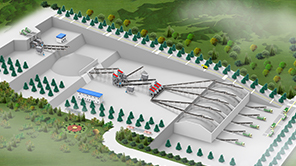
The river pebble crushing plant design adopts a complete modular setup consisting of a Crushing Module (feed hopper, feeder, jaw crusher, and cone crusher), a Vibrating Screening & Sand Washing Module, and a Finished Product Stockpile Area. The design is compact, minimalist, and requires a smaller site footprint.

3.Main Equipment in the River Pebble Crushing Plant
3.1 Vibrating Feeder
In the river pebble crushing plant, the vibrating feeder is responsible for continuously feeding raw materials from the storage bin to the jaw crusher, while utilizing a discharge hopper to divert natural fines and small finished materials directly to the main conveyor. The feeding rate is adjustable to ensure the jaw crusher remains fully loaded without clogging.
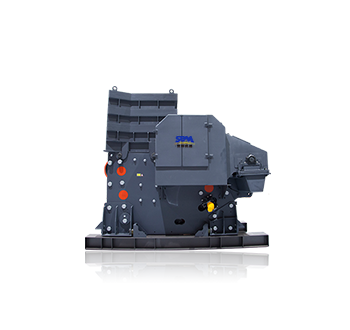
3.2 Jaw Crusher
Jaw crusher is the primary (coarse) crushing equipment to reduce large river pebbles down to a feed size suitable for the cone crusher. Its deep-chamber design and optimized nip angle provide sufficient squeezing force for rounded, smooth materials like river pebbles.Get Latest Price
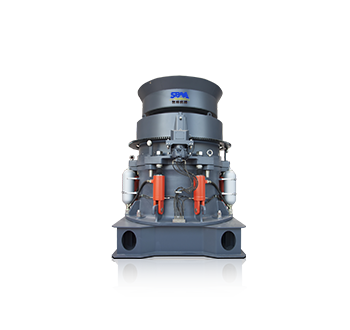
3.3 Cone Crusher
Cone crusher handles secondary/fine crushing and particle shaping. It utilizes inter-particle (lamination) crushing, where material layers compress against each other; this subjects wear parts to gentler forces compared to high-speed impact methods, resulting in a longer service life when processing quartz-based river pebbles. Operating in a closed-loop crushing circuit, it recirculates material larger than required sizes for further crushing until it falls within the finished product size range.Get Free Quote

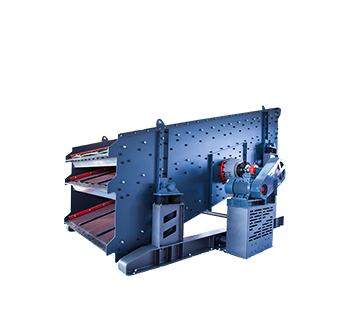
3.4 Vibrating Screen
In a river pebble crushing line, vibrating screens are primarily used for finished product screening. Depending on the number of screen decks, they separate materials into finished products of different specifications. Oversize materials exceeding finished product requirements are directed from the top screen deck to an intermediate stockpile, from where they are returned to the cone crusher for re-crushing.
The screen surface dimensions and mesh configuration directly determine whether the finished product gradation can consistently meet required standards.
3.5 Sand Washer
Sand washer is to wash out the soil, silt and impurities in the manufactured sand. An impeller rotates to agitate the material while water flow removes clay powder, effectively controlling the silt content and fineness modulus of the manufactured sand. Water is recycled after treatment in a sedimentation tank.
3.6 Main Conveyor System and Centralized Electrical Control
Three main conveyor belts link the feeding, screening, and closed-circuit crushing stages. A centralized control room manages the feeder, jaw crusher, cone crusher, vibrating screen, sand washer, and conveyors. Interlocks and emergency stop controls are centralized, allowing operators to monitor and manage the operational status of the entire crushing line from a single location.
With lower energy consumption, reduced wear-part expenses, and minimal maintenance demands, this river pebble crushing production line has become the standard configuration in the Philippines market.
Click Here to Customize Your Crushing Plant
Frequently Asked Questions
Q1: Why is pre-screening strongly recommended for river pebble crushing plants in the Philippines?
Philippine river pebbles naturally contain large volumes of fine material mixed with silt and clay, especially during rainy seasons. Pre‑screening through feeder grizzly bars diverts these damp, clay‑bearing fines before they enter the jaw crusher. This avoids over‑crushing of already‑qualified aggregate and eliminates the risk of wet clay paste clogging the crushing chamber and discharge gap. As a result, equipment wear and power consumption drop, while jaw‑crusher effective throughput rises.
Q2: Why is a cone crusher preferred for river pebble medium and fine crushing?
Philippine river pebbles feature high silica content and strong abrasiveness. Cone crushers utilize lamination crushing principle, relying on the mutual compression between stones to achieve size reduction. This significantly minimizes direct impact and wear on the cone crusher itself. With more even wear on wear parts, extended replacement cycles, low energy consumption, and minimal failure rates, the long-term spare parts and maintenance costs are far lower than those of impact crusher.
Q3: What permits does a river pebble crushing plant need in the Philippines?
A river pebble crushing plant in the Philippines requires a primary extraction permit—either a Commercial Sand and Gravel (CSAG) Permit or an Industrial Sand and Gravel (ISAG) Permit—depending on the scale, area size, and use of mechanical processing. Environmental Compliance Certificate or Certificate of Non-Coverage from the environmental authorities are also needed.


 Get Solution
 Send Message