





Summary: Learn the complete Gold CIL Processing Plant design: crushing, grinding, leaching & adsorption, elution, and tailings. Discover key advantages and equipment list....
The Carbon-in-Leach (CIL) process is one of the most widely used gold extraction technologies for hard rock gold deposits. It integrates cyanide leaching and activated carbon adsorption into a single continuous operation, offering high recovery efficiency and stable performance.
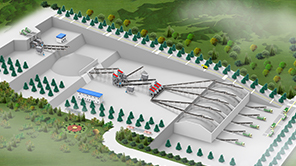
A Complete Gold CIL Processing Plant consists of the crushing system, grinding system, thickening system, leaching and adsorption system, elution and electrolysis system, and tailings dry stacking with water recycling system.

Suitable Ore Conditions for the CIL Process
The CIL (Carbon-in-Leach) process is primarily applied to hard rock gold deposits where gold is finely disseminated within the ore matrix and can be effectively leached by cyanide solution.
CIL is most suitable for:
- Oxide gold ores with good cyanide leachability
- Low-sulfide and low-carbonaceous ores
- Fine-grained disseminated gold deposits
- Gold particle size typically smaller than 0.1 mm
- Medium-grade ores (commonly 1–10 g/t, depending on project economics)
This process performs best when gold is present in a form that allows direct cyanidation without complex pretreatment.
For refractory ores—such as those containing high sulfide content, preg-robbing carbon, or encapsulated gold—additional pretreatment methods may be required. These can include flotation, roasting, pressure oxidation, or ultrafine grinding before the CIL stage.
Proper ore testing, including cyanide leach tests and mineralogical analysis, is essential to confirm the suitability of the CIL process and to determine expected recovery rates.
Gold CIL Process Flow
1. Crushing System
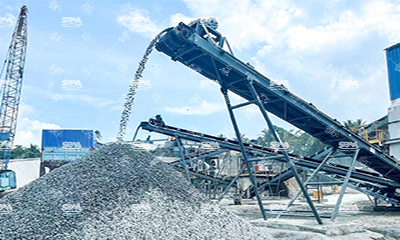
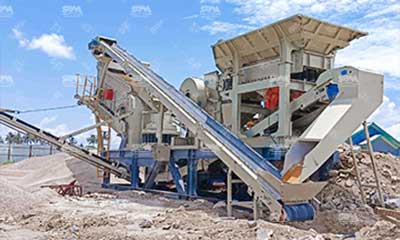
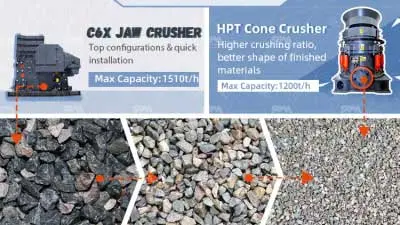
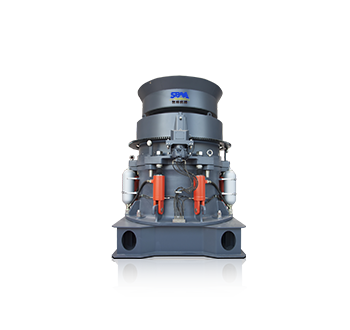
The raw ore is fed into the raw ore bin and delivered by a grizzly feeder to a jaw crusher for primary crushing. The crushed material is then conveyed via belt conveyor to a single-cylinder hydraulic cone crusher for secondary crushing.
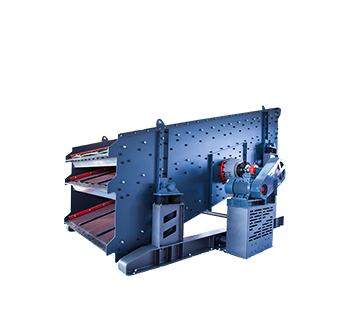
The secondary crushed product is transported to a vibrating screen. Oversized material from the screen is returned to the cone crusher for fine crushing, forming a closed-circuit crushing system. The screened undersize product is conveyed to the ore storage bin for the next stage of processing.

2. Grinding System
First-Stage Grinding
Material from the storage bin is fed by a vibrating feeder onto a belt conveyor and transported to a ball mill for grinding. The ball mill discharge flows into a double-spiral classifier.
The classifier underflow (coarse particles) returns to the second-stage ball mill for further grinding, while the classifier overflow flows into the slurry tank.
Second-Stage Grinding
A slurry pump delivers the slurry to a hydrocyclone for classification. The hydrocyclone underflow (coarse fraction) returns to the second-stage ball mill to form a closed-circuit grinding system.
The discharge from the second-stage ball mill flows into the slurry tank, while the hydrocyclone overflow (fine particles) proceeds to the next process stage.

3. Thickening System
Hydrocyclone overflow slurry passes through a trash screen. Screened slurry flows to an agitation tank where flocculant is added for mixing. Slurry then flows to a thickener for pre-leach concentration. Flocculant accelerates settling: thickener overflow returns to the circulation water pool for reuse; thickener underflow flows to the slurry tank for pumping to leaching.
4. Leaching & Adsorption System
Lime and sodium cyanide are accurately dosed into the leaching tanks by metering pumps. The slurry is pumped into a series of leaching tanks and adsorption tanks, where gold is leached and simultaneously adsorbed onto activated carbon.
After adsorption, the slurry flows by gravity to a safety screen. Oversized carbon is recovered for further treatment, while the undersize slurry enters the slurry tank in preparation for tailings treatment.
Fresh activated carbon is added into the last adsorption tank. Using an air-lift carbon transfer system, the carbon moves counter-current to the slurry flow, advancing from one tank to the previous tank sequentially.
Loaded carbon and slurry are withdrawn from the second adsorption tank. The mixture passes through a separation screen, where the loaded carbon is separated. The screened slurry flows back to the adsorption tank, while the loaded carbon is sent to the desorption and electrowinning workshop for further processing.

5. Elution & Electrolysis System
Under high temperature and high pressure conditions, and with the action of desorption solution, gold loaded on the carbon is transferred into the desorption solution.
The gold-bearing solution then undergoes electrowinning, producing gold sludge. The gold sludge is sent to the smelting workshop for refining, ultimately producing doré gold.
6. Tailings Dry Stacking& Water Recycling
The treated slurry is pumped by a slurry pump to a filter press. Once the filter chambers are filled, filtration separates solid and liquid phases.
The filtered water is discharged from the filter press and returned to the circulating water system for reuse. The filter cake is discharged from the filter plates, collected by a loader, and transported for disposal or storage.

Advantages of the Gold CIL Process
The gold cil process is widely used in modern gold beneficiation plants due to its operational simplicity, high recovery efficiency, and strong economic performance.
1. Simultaneous Leaching and Adsorption
Unlike the CIP (Carbon-in-Pulp) process, CIL combines leaching and carbon adsorption in the same tanks. This reduces processing time and lowers the risk of gold losses during slurry transfer.
2. Higher Gold Recovery
Under properly optimized conditions, gold recovery rates typically reach 90–95%, and even higher for easily leachable ores.
3. Reduced Capital Investment
Because leaching and adsorption occur in a single circuit, fewer tanks and less infrastructure are required compared to some alternative processes, reducing initial capital expenditure.
4. Shorter Processing Time
The integration of leaching and adsorption improves overall kinetics, often shortening total retention time compared to separate-stage processes.
5. Mature and Proven Technology
CIL has been successfully applied in thousands of gold plants worldwide. Its technology is stable, well-understood, and supported by widely available equipment and operational expertise.
6. Suitable for Medium to Large-Scale Operations
CIL processing plants are scalable and commonly applied in operations ranging from several hundred tons per day to several thousand tons per day.
These advantages make CIL one of the most widely adopted gold extraction technologies globally.
Typical Gold CIL Processing Plant Configuration
The configuration of a Gold CIL Processing Plant depends on ore characteristics and processing capacity. Below is a typical example of a medium-scale hard rock gold CIL plant (500–1000 TPD):
Crushing Section
- 1 Jaw Crusher
- 1 Cone Crusher
- Vibrating Screen
- Belt Conveyor System
Grinding Section
- 1–2 Ball Mills
- Hydrocyclone Classification System
- Slurry Pumps and Tanks
Thickening Section
- High-Efficiency Thickener
- Flocculant Dosing System
Leaching & Adsorption Section
- 6–8 CIL Tanks with agitators
- Activated Carbon Transfer System
- Safety Screen
Elution & Electrowinning Section
- Desorption Column
- Heating System
- Electrowinning Cell
- Gold Smelting Furnace
Tailings & Water Recycling
- Filter Press or Tailings Thickener
- Dry Stacking Facility
- Circulating Water Tank
For smaller gold CIL processing plant (e.g., 300 TPD), equipment quantity may be reduced. For large-scale operations (over 2000 TPD), multiple grinding lines and expanded CIL capacity are required.
Plant configuration should always be customized based on laboratory testing results, production targets, site conditions, and environmental standards.
The CIL Gold Processing Plant remains one of the most efficient and reliable technologies for extracting gold from hard rock deposits. With high recovery rates, stable performance, and scalable plant design, it is widely applied in medium and large-scale gold mining operations worldwide.
However, every gold deposit has unique characteristics. Ore hardness, gold distribution, mineral composition, and site conditions all directly influence process design and equipment selection. Therefore, a successful CIL plant depends not only on equipment quality but also on proper laboratory testing, process optimization, and customized engineering design.
Before finalizing plant configuration, it is strongly recommended to conduct metallurgical testing to determine gold recovery rate, reagent consumption, grinding fineness, and optimal leaching conditions. Based on these results, the crushing and grinding circuit, tank volume, and carbon loading system can be accurately designed to ensure stable operation and long-term profitability.
If you are planning a new gold CIL processing plant or upgrading an existing processing line, our engineering team can provide customized solutions based on your ore characteristics, required capacity, and local environmental standards.



 Get Solution
 Send Message