


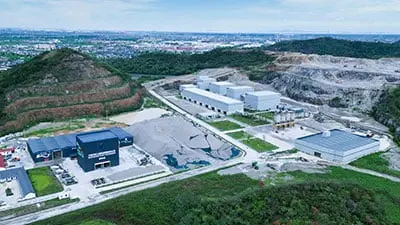
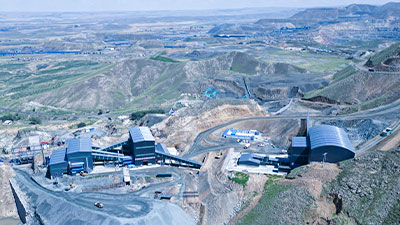


Summary: A complete guide to gold processing, covering plant construction from exploration to operation. Learn about key beneficiation methods like cyanidation and flotation for maximum recovery....
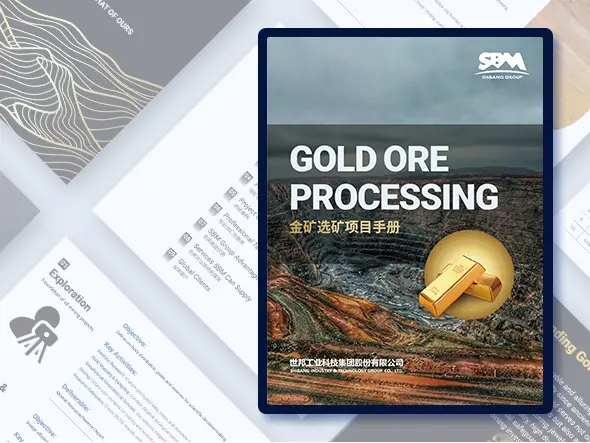
Gold Ore Beneficiation Process Handbook
This guide delivers a high-level overview of modern gold ore processing workflows, from crushing and grinding to core beneficiation stages.
It covers all four dominant gold extraction methods: gravity separation for coarse placer gold, flotation for medium/fine sulfide-associated gold, cyanidation (CIL/CIP) as the global standard for refractory ores, and heap leaching for low-grade oxide deposits. It also includes regional best practices for African, Southeast Asian, and South American mining contexts, alongside case studies of successful plant deployments.
Download the Full EbookUnderstanding Gold
Gold, the world's most valuable and alluring precious metal, has symbolized wealth and stability since ancient times. In modern mining and financial systems, gold serves not only as an anchor asset for monetary systems but also as a critical raw material for industrial manufacturing, jewelry processing, and high-tech industries. Its stability, high ductility, and corrosion resistance make gold a vital safeguard for long-term returns and risk mitigation in mining investments.
Gold's Natural Forms: Primary and Secondary Gold
Gold deposits are classified into three main types, each with distinct geological conditions, grades, and beneficiation processes.
Primary Gold
Formed by direct precipitation and consolidation within rocks or veins during geological mineralization, typically found in plutonic rocks, hydrothermal veins, or metamorphic bodies.
【Vein Gold Deposit 】
- Mineralogy: Gold often coexists with quartz veins, pyrite, chalcopyrite, and sphalerite, occurring as fine veins or disseminated grains.
- Typical Regions: Witwatersrand veins (South Africa), Kalgoorlie Gold Mine (Australia).
- Process: Primary crushing → Secondary crushing → Ball milling → Gravity separation → Flotation → CIP or CIL carbon adsorption
【Lode Gold Deposit 】
- Mineralogy: Gold hosted within hard rock, often associated with sulfide minerals.
- Process: Crushing → Ball milling → Classification → Flotation → Cyanidation leaching.
【Disseminated Gold Deposit】
- Mineralogy: Finely dispersed gold within rock lattices, difficult to identify visually.
- Process: Extremely fine particle size, high processing difficulty; requires ultra-fine grinding combined with flotation-cyanidation processes.

Secondary Gold
Deposits formed by weathering, erosion, and transportation of primary deposits.
【Placer Gold Deposit】
- Characteristics: Gold particles appear as sand grains or small flakes, easily identifiable visually.
- Typical Regions: Riverbeds (Ghana), Siberian alluvial belt (Russia), Yukon region (Canada).
- Process: Jig, shaking table, spiral concentrator gravity separation.
【Alluvial Gold Deposit】
- Mineralogy: Derived from ancient riverbed or alluvial fan sediments, with uniform particles.
- Process: Sluice box or centrifugal concentrator.
【Laterite Gold Deposit】
Found in tropical/subtropical regions; shallow ore bodies suitable for open-pit mining.
Characteristics: Lower grade but lower mining costs, ideal for initial projects with limited capital.

Global Gold Deposit Distribution
As of 2024, the global annual gold mine production is approximately 3,600 tonnes, with mineable reserves estimated at around 59,000 tonnes. Gold resources are widely distributed and concentrated in countries such as Australia, Russia, China, Canada, and the United States. Meanwhile, Africa, with its rich mineral potential and favorable investment policies, has become an emerging hub for global mining investment.
Gold Processing Plant Construction Workflow
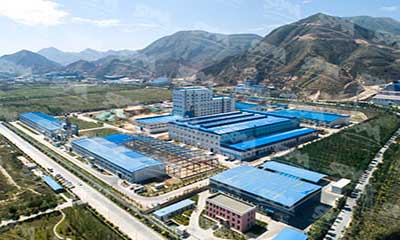
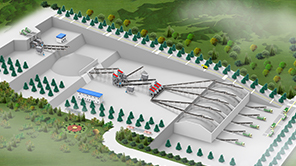
Plant construction is a complex, multidisciplinary project requiring significant capital and long execution cycles. It must follow rigorous scientific planning to ensure technical feasibility, economic viability, and ESG compliance.

1. Exploration
Objective: Define ore body distribution, grade, and reserves for scientific decision-making.
Key Activities:
- Desktop Research: Analyze geological data, maps, and literature to identify targets.
- Field Mapping & Sampling: Conduct detailed geological surveys.
- Geophysical/Geochemical Surveys: Use airborne magnetics/GPR to detect deposits.
- Drilling: Obtain core samples for testing and resource estimation.
- Resource Estimation: Create 2D/3D models estimating size, grade, and viability.
Deliverable: Mineral Resource/Reserve Report.
2. Planning & Design
Objective: Design efficient, economical, and safe production lines.
Key Activities:
- Feasibility Studies: Assess economic and technical viability.
- Permitting & Financing: Secure environmental permits and funding.
- Mine Design: Plan infrastructure, access routes, mining methods (open-pit/underground), Extraction Design, Beneficiation Design and Taillings Design.
- Site Preparation: Construct access roads, facilities, and clear overburden.
Deliverable: Feasibility Study Report, Mine Design
3. Construction
Objective: Ensure high-standard construction for rapid commissioning.
Key Activities:
- Procurement: Global sourcing of crushers, ball mills, flotation cells, thickeners, filters, pumps, valves, automation systems.
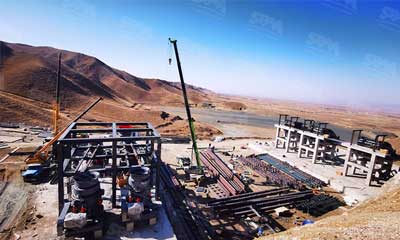
- Civil Works: Site leveling, roads, plant foundations, structural erection, starter dam for tailings storage facilities (TSF).
- Equipment Installation & Commissioning:
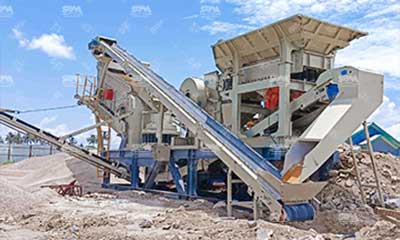
- Install and align crushing, grinding, separation, thickening, and filtration equipment per process flow.
- Install piping, electrical, and automation systems.
- Single-equipment testing: Verify individual unit operations.
- Load testing: Run with ore/water, gradually ramp up to design capacity and metrics.
Deliverable: Commissioned plant with feed.
4. Operation & Maintenance
Objective: Safe, stable, efficient, low-cost operation.
Key Activities:
- Ore Mining & Haulage:
- Drilling & Blasting: Fragment rock for excavation.
- Loading & Hauling: Transport ore to plant via excavators/trucks.
- Production: Run crushing, grinding, separation, thickening, filtration per design. Control key parameters (grind size, reagent dosage, flotation time, thickener density).
- Maintenance: Regular inspections, servicing, and part replacement to minimize downtime.
- Quality Control: Test feed, intermediates, and concentrate; adjust processes to meet specifications. Safety Management: Implement protocols, training, PPE, and emergency response systems.
Deliverable: Achieved production targets.
5. Sales & Logistics
Objective: Fast, secure, low-cost value conversion.
Key Activities:
- Quality Assaying: Joint sampling/preparation/assays to determine final grade for settlement.
- Sales Agreement: Long-term contracts based on market prices.
- Concentrate Transport: Ship via truck/rail/sea with protective measures to preserve quality.
Deliverable: Revenue realization.
6. Tailings Management & ESG
Objective: Integrate safety, environmental responsibility, and social compliance.
Key Activities:
- Tailings Discharge: Tailings generated during production are transported via pipelines or other means to the Tailings Storage Facility (TSF) for storage.
- TSF Management: Continuously monitor dam stability, seepage, and water quality; simultaneously implement necessary environmental protection measures such as installing impermeable liners and constructing wastewater treatment facilities to prevent pollution.
- Tailings Comprehensive Utilization: Reprocess or otherwise comprehensively utilize tailings to recover valuable elements, or use them as construction materials, for backfilling mined-out areas, etc., thereby reducing tailings stockpiling, minimizing environmental impact, and maximizing resource utilization.
- Ecological Rehabilitation: Upon reaching design capacity, close and ecologically reclaim the TSF through vegetation restoration and landform recovery.
Common Gold Beneficiation Processes
Process selection depends on ore type, liberation size, mineralogy, and economics. Primary routes include Gravity Separation, Flotation, Cyanidation, and Combined Processes.

Gravity Separation
Applicability: Ideal for placer deposits and hard-rock ores with coarse liberated gold. Requires coarse particles, significant density differences, and low clay content (e.g., alluvial, glacial deposits).
Principle: Leverages gold's high density (~19.3 g/cm³) vs. gangue. Separation occurs via fluid dynamics/centrifugal force in gravity concentrators.
Typical Flow:
- 1.Primary Crushing & Screening (remove waste rock)
- 2.Gravity Concentration (Spiral Chute / Jig / Shaking Table)
- 3.Concentrate Upgrading & Thickening → High-grade gold concentrate.
- 4.Tailings: Recirculate or send to flotation/cyanidation.
Pros: Low cost, simple, no chemicals, direct recovery: 85%-90%.
Cons: Poor recovery of fine gold; limited effectiveness for clay-rich or encapsulated gold.

Flotation
Applicability: Primary method for medium/fine gold and sulfide-associated gold (pyrite, chalcopyrite, sphalerite). Used in ~20% of global gold projects for lode or complex ores.
Principle: Exploits differences in surface hydrophobicity. Reagents (collectors/frothers) render gold/sulfides hydrophobic, attaching them to air bubbles for froth recovery.
Typical Flow:
- 1.Crushing & Grinding (to -200 mesh, 60%-80% passing).
- 2.Roughing: Add collectors/frothers; produce bulk concentrate.
- 3.Cleaning: Upgrade concentrate grade.
- 4.Scavenging: Recover residual gold from tails. 5.Concentrate: Direct smelting or cyanidation.
Pros: Effective for fine/encapsulated gold.
Cons: Complex; requires chemicals; higher operating costs & environmental controls.

Cyanidation
Applicability: Dominant global gold extraction process (>90% of gold). Suitable for most ores, including low-grade oxides, fine gold, and flotation concentrates.
Principle: Gold dissolves in alkaline cyanide solution forming [Au(CN)2]- complex. Recovered via carbon adsorption (CIP/CIL) or zinc precipitation.
Typical Flow:
- 1.Crushing & Grinding (to -200 mesh, 80%-90% passing).
- 2.Cyanide Leaching (CIL/CIP): Gold dissolves into solution.
- 3.Adsorption/Elution: Activated carbon adsorbs gold complex; eluted & electrowon to gold mud.
- 4. Smelting → High-purity gold.
Pros: Mature technology; high recovery (90%-97%); wide applicability.
Cons: Toxic cyanide (strict environmental control); requires pre-treatment for carbonaceous/arsenical ores (roasting/POX).

Heap Leaching (Cyanide Heap Leach Mining)
Applicability: Low-grade oxide ores (typically 0.5-1.5g/t) with free-milling gold. Requires good permeability (low clay). Targets: Low-grade ROM, waste rock, old tailings.
Principle: 10000 Tons Heap Leaching Design For Gold Dilute NaCN solution trickles through stacked ore. Gold dissolves into solution via reaction: 4Au + 8NaCN + O2 + 2H2O → 4Na[Au(CN)2] + 4NaOH Pregnant solution collected; gold recovered via carbon adsorption → elution/electrowinning.
Pros: Low CAPEX/OPEX, low energy; processes marginal grades; flexible/scalable.
Cons: Lower recovery (60%-85%); long cycle (weeks/months); slow cash flow; climate-sensitive (cold/rain); permeability critical; environmental risks.

Post-Beneficiation Value Realization
Maximizing resource value by upgrading low-grade ore into high-value products. Common business models:
Gold Concentrate Sales: Direct sale to smelters. Short cash cycle; avoids smelting risks (ideal for capital-constrained startups).
Gold Dore/Ingot Sales: On-site smelting/refining → sell standard ingots. Maximizes profit margin; stronger pricing control.
Toll Processing: Send concentrate/dore to smelter for refining (pay fee); retain ownership & market flexibility.


 Get Solution
 Send Message