





Summary: The cost of gold ore processing varies tremendously, ranging from $20 to over $100 per ton. This wide spectrum is not random but is precisely determined by two core factors: ore type and processing route....
Gold mining remains one of the world’s most economically significant extractive industries, yet its profitability hinges heavily on the cost of processing gold ore—a complex metric influenced by ore grade, mineralogy, processing technology, geographic location, and regulatory requirements.
For mining operators, investors, and industry stakeholders, understanding the cost dynamics of processing one ton of gold ore is critical for feasibility studies, investment decisions, and operational optimization.

Typical Cost Range for Processing One Ton of Gold Ore
The cost of gold ore processing varies tremendously, ranging from $20 to over $100 per ton. This wide spectrum is not random but is precisely determined by two core factors: ore type and processing route.
1. Ore Types
- Easy-to-Process Oxidized Ore (Cost: $20-$40 per ton)
- Characteristics: Gold occurs in a free state and can be directly dissolved through cyanidation, featuring simple mineral composition and no requirement for pre-enrichment.
- Process: Employs the conventional "crushing-grinding-leaching" process with low technical complexity. The cost is mainly composed of grinding energy consumption (accounting for over 60% of the stage cost) and basic cyanide reagent consumption, serving as the lowest cost benchmark in gold beneficiation.
- Conventional Sulfide Ore (Cost: $40-$80 per ton)
- Characteristics: Gold is encapsulated within sulfide minerals (e.g., pyrite, arsenopyrite), rendering direct leaching ineffective and necessitating preliminary enrichment to enhance gold grade.
- Process: Flotation is primarily used to produce gold concentrate prior to subsequent smelting. The cost includes two core stages: flotation enrichment (with reagents accounting for 35% and energy for 25% of the cost) and preliminary leaching of concentrates, resulting in a notable cost increase compared to oxidized ores.
- Difficult-to-Process Ore (Cost: $80-$100+ per ton)
- Characteristics: Contains carbon, arsenic, or gold is encapsulated in fine-grained minerals, leading to an extremely low direct leaching recovery rate (typically below 60%). Common varieties include carbonaceous gold ore and arsenopyrite-bearing gold ore.
- Process: Expensive pretreatment processes such as roasting, bio-oxidation, or pressure oxidation are mandatory to "break the encapsulation shell" of sulfides or carbon. For instance, bio-oxidation adds an operating cost of 1.59-7.1 USD per ton, causing a drastic surge in the overall beneficiation cost.
2. Processing Technology
- Whole-Ore Cyanidation (CIL/CIP): The process is direct, with costs concentrated on fine grinding and reagents.
- Flotation + Concentrate Processing: The cost structure presents a "low front and high back" pattern, shifting most costs to the subsequent concentrate processing stage.
- Pre-Concentration and Waste Rejection (e.g., Gravity Separation): As an auxiliary method, it significantly reduces the subsequent processing tonnage by discarding waste rock in advance, serving as a key cost-reduction lever.

The Cost Components of Processing Gold Ore
Taking a CIL concentrator processing conventional oxidized ore as an example, the processing cost per ton of ore can be broken down as follows (converted at 1 USD ≈ 7.3 RMB, aligned with 2025 global gold beneficiation cost benchmarks):
1. Energy Cost (≈ 30–40% of Total Cost)
- Grinding Power Consumption (Major Cost Item): $3–$6/ton. To liberate gold particles, ore must be ground to an extremely fine particle size, making this the largest energy expenditure.
- Auxiliary Power Consumption (Crushing, Agitation, etc.): $1–$2/ton
2. Material & Reagent Cost (≈ 25–35% of Total Cost)
- Cyanide: $0.68–$2.74/ton. Consumption is highly affected by impurities in the ore, making it a core variable cost.
- Steel Balls & Liners: $1–$3/ton. Sustained wear-and-tear during the grinding process.
- Activated Carbon, Lime, etc.: $1–$2/ton
3. Labor, Maintenance & Management Cost (≈ 15–25% of Total Cost)
A relatively fixed operational baseline; automation can optimize the labor cost ratio.
4. Fixed Additional Costs
Non-negotiable expenses including mine safety, advanced wastewater treatment, and environmental compliance costs.
Key Insight: Gold mining costs are driven by a "dual-high" model — high energy consumption (physical crushing/grinding) and high reagent consumption (chemical extraction). Refractory ores face a "third extreme": massive investment and energy demands in the pre-treatment stage.
Gold Ore Processing Cost Reduction Methods
True cost reduction and efficiency gains stem from systematic optimization and precise control.
1. Crushing Stage: How to Achieve "More Crushing, Less Grinding"?
Core Objective: Minimize the feed size to the grinding mill to "unburden" the subsequent high-energy consumption grinding process. For every 1 mm reduction in feed size, grinding efficiency can improve by approximately 2%-3%.
Process & Equipment Recommendations:
Implement a "Three-Stage, Closed-Circuit" Crushing Process (primary, secondary, tertiary crushing + closed-circuit screening) to consistently control the mill feed size below 12-15 mm.
Primary Crusher Selection:
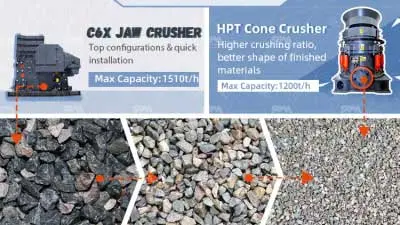
- Preferred Option: Large gyratory crushers or jaw crushers. They offer high capacity, stable operation, uniform product size, and low total lifecycle operating costs.
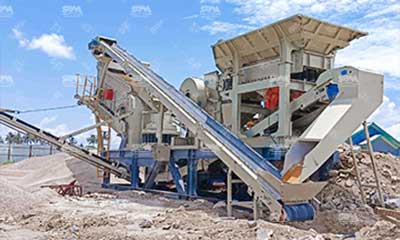
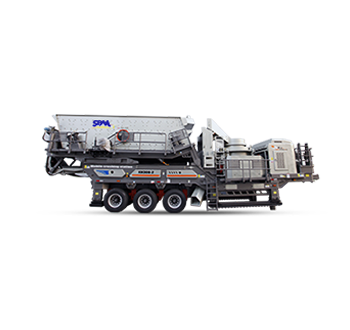
- Alternative Option: Mobile crushing stations. Ideal for scattered ore bodies or the initial development phase, providing high flexibility.
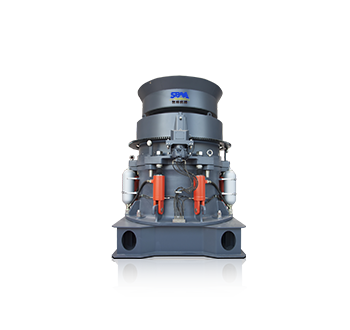
Secondary & Tertiary Crusher Selection: Utilize high-performance hydraulic cone crushers. Their inter-particle compression crushing principle ensures high efficiency and excellent particle shape, effectively reducing subsequent grinding energy consumption.
2. Process Optimization: "More Crushing, Less Grinding" & "Reject Waste Early"
- Actively apply efficient equipment like High-Pressure Grinding Rolls (HPGR) in the front end to further reduce mill feed size.
- Introduce pre-concentration technologies such as gravity separation or X-ray Transmission (XRT) intelligent sorting after crushing but before grinding. This can discard over 30% of waste rock at the source, achieving a hard reduction in grinding volume and cost.
3. Technical Efficiency: Precisely Targeting High-Cost Areas
- Grinding Stage: Employ advanced mill liners and grinding media, optimizing the filling rate and ball size distribution to enhance energy conversion efficiency.
- Leaching/Flotation Stage: Apply online analyzers and automatic reagent dosing systems to achieve precise, on-demand reagent addition, eliminating waste.
The above cost and data analyses are based on typical industry projects and serve as general reference. Actual project costs are highly dependent on specific ore characteristics, process design, regional policies, and management standards. Final decisions must be based on detailed mineral processing tests and feasibility studies.


 Get Solution
 Send Message