





Summary: Explore the essential four-step beneficiation process for Indonesian porphyry copper-gold ores, from crushing and grinding to flotation and dewatering, detailing equipment and key operational controls for maximum efficiency....
Indonesia stands as a globally significant gold producer. Its gold resources are primarily categorized into Porphyry Copper-Gold Deposits, Placer Gold, and Oxidized Ores. Among these, Porphyry Copper-Gold Deposits, characterized by their massive scale, intimate co-association of copper and gold, and mature processing systems, form the absolute backbone of Indonesia's gold production and its core source of economic value.
Resource Profile and Distribution
The most economically valuable deposits are Porphyry Copper-Gold.
Resource Characteristics: The fundamental feature of this ore is the tight carrier-enclosure relationship between copper minerals (primarily Chalcopyrite) and gold minerals. Gold often exists in microscopic forms within sulfide minerals like chalcopyrite. This dictates that the gold-bearing mineral aggregates must be recovered as a whole via flotation to achieve efficient extraction of both copper and gold values.
Major Distribution: Resources are highly concentrated in a few world-class deposits, mainly:
- The Grasberg Deposit in Papua Province, a top-tier global gold-copper mine.
- The Batu Hijau Deposit on Sumbawa Island, another super-large porphyry copper-gold mine in Indonesia.
The Four-Step Copper-Gold Ore Beneficiation Process Flow
The journey from run-of-mine ore to separated copper-gold concentrate typically involves four critical stages.
Step 1: Crushing
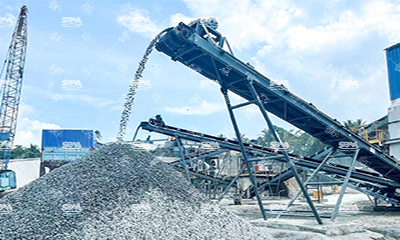
This primary stage reduces the ore to below 15mm, typically using a Three-Stage, Closed-Circuit process.
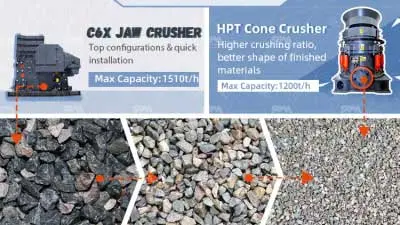
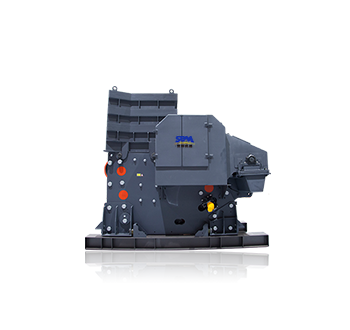
- Primary Crushing: Near the mine face, high-capacity, reliable Gyratory Crushers or large Jaw Crushers reduce ore from lumps up to 1.5 meters to below 250-300mm.
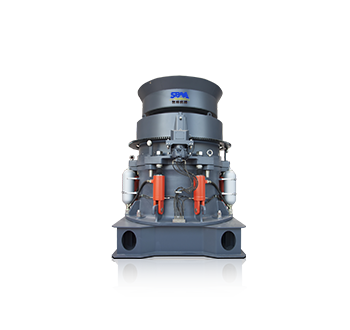
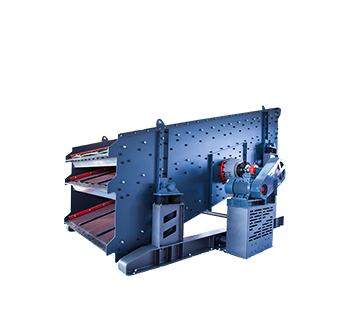
- Secondary Crushing: The primary product is further crushed by Standard Cone Crushers and then classified by Heavy-Duty Vibrating Screens.
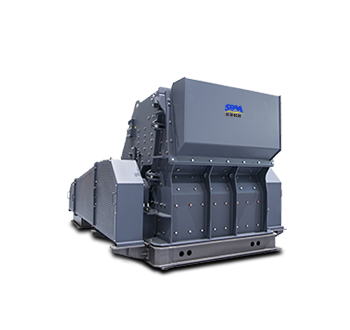
- Tertiary Crushing: The HPGR's "inter-particle comminution" principle generates numerous micro-cracks within the ore, significantly reducing energy consumption in the subsequent grinding stage (estimated at 15%-30%). The tertiary product returns to the screen, forming a closed circuit that precisely controls the final product size at approximately -15mm.

Step 2: Grinding
This step uses mechanical force to achieve thorough physical liberation of the valuable minerals (gold-bearing chalcopyrite) from the gangue (mainly pyrite and quartz), a prerequisite for efficient flotation.
- Semi-Autogenous Grinding (SAG): The crushed product is fed into a SAG Mill, using the ore itself as part of the grinding media for impact and abrasion.
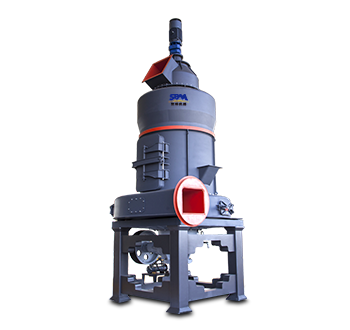
- Classification & Fine Grinding: The SAG mill discharge is screened, with the material entering a closed-circuit grinding system comprising large Ball Mills and Hydrocyclone clusters. The Hydrocyclones, as the core classification device, separate the ground product into fine particles (overflow, reporting to flotation) and coarse particles (underflow, returning to the ball mill for regrinding). Precise control of cyclone parameters ensures the final grinding fineness meets the target range of 65%-80% passing 200 mesh, guaranteeing effective chalcopyrite liberation.

Step 3: Flotation Separation
Flotation is the "heart" of the process. It leverages differences in mineral surface properties, combined with precise reagent control and circuit design, to efficiently concentrate and purify copper-gold minerals in stages.
1. Rougher Flotation (Core Concentration):
- Objective: Maximize recovery of liberated copper-gold minerals from the finely ground pulp in the shortest time, setting a high recovery for the entire circuit.
- Operation & Equipment: The conditioned pulp is pumped into a series of Mechanical Agitation Flotation Cells (Rougher Banks). Lime is first added to stabilize pulp pH at 10.5-12.0, depressing pyrite. Then, selective xanthate collectors are added to render chalcopyrite surfaces hydrophobic, while frothers ensure stable, appropriately sized bubbles. Under intense agitation and aeration, the hydrophobic, gold-bearing minerals attach to bubbles, rapidly rising to form a froth layer skimmed off as the Rougher Concentrate.
2. Scavenger Flotation (Tailings Safeguard):
- Objective: "Scavenge" and recover remaining valuable minerals from the rougher tails, crucial for lowering final tailings grade and boosting overall recovery.
- Operation & Equipment: Rougher tails flow to subsequent Scavenger Flotation Cells. Additional collector is often added here to maintain adequate collecting power. The scavenger froth product is typically returned to the rougher feed or grinding circuit for reprocessing.
3. Cleaner Flotation (Staged Purification):
- Objective: Progressively "clean" and "purify" the rougher concentrate through multiple stages, removing entrained gangue and impurities to produce a final concentrate meeting market specifications.
- Operation & Equipment: The rougher concentrate enters a multi-stage cleaner circuit (typically 3-5 stages). Cleaning is conducted under gentler conditions, often using Flotation Columns or dedicated cleaner cells for enhanced selectivity. Tails from each cleaner stage are returned to the previous stage, forming a closed, staged purification loop. The final Copper-Gold Bulk Concentrate typically assays above 20% Cu.

Step 4: Dewatering & Tailings Management
This final stage completes product preparation for shipment and ensures safe waste disposal, closing the loop on resource utilization and environmental stewardship.
1. Concentrate Dewatering (Product Finishing):
- Objective: Transform the flotation concentrate slurry into a low-moisture, transportable, and storable commodity.
- Operation & Equipment: The concentrate slurry first enters a High-Rate Thickener for initial densification. The thickener underflow is then fed to Ceramic Filters or Filter Presses for deep dewatering, finally producing a filter cake with moisture content below 12%.
2. Tailings Management (Environmental & Reuse):
- Objective: Safely dispose of process tailings and recycle water, meeting environmental and sustainability requirements.
- Operation & Equipment: Flotation tailings are pumped via Slurry Pumps and pipelines to a Tailings Storage Facility (TSF) designed to safety standards. Clarified water from the TSF is largely recycled back to the plant via a return water system.

The beneficiation of Indonesian copper-gold ores is not merely a sequence of steps but a finely tuned symphony of precision engineering. From the powerful reduction in crushing to the liberation achieved in grinding, the selective concentration in flotation, and the responsible closure in dewatering, each stage is interdependent. The process is designed to master the unique challenge posed by the intimate bond between copper and gold in porphyry deposits. This systematic approach ensures maximum recovery of valuable metals while adhering to modern standards of efficiency and environmental management, solidifying Indonesia's position on the global minerals map. Success hinges on the precise execution of each stage and the seamless integration of the entire circuit.


 Get Solution
 Send Message