





Summary: Before buying a stone crusher, confirm material properties, required capacity, product specs, mechanical design, and site compatibility. This guide details the essential parameters to secure a high-performing, cost-effective investment....
Ordering a stone crusher represents a major capital investment with long-term implications for your operation's productivity, profitability, and sustainability. Selecting the wrong equipment can lead to chronic underperformance, excessive maintenance costs, and costly premature replacement. This guide details the critical technical parameters you must verify with your supplier before placing an order, transforming a complex procurement decision into a structured, risk-mitigated process.

1. Material Characteristics
Selecting the right stone crusher starts with knowing your rock. Its physical and chemical properties directly determine which machine type will work best, how long it will last, and what your operating costs will be.
| Characteristic | Why It Matters | Key Test & Parameter |
|---|---|---|
| Abrasiveness | Directly determines wear part life and operating cost. | Los Angeles Abrasion (LA) Value, Tahk or Cerchar Abrasivity Index. High abrasivity (>30 LA) demands special alloys and designs. |
| Hardness & Strength | Determines required crushing force and crusher type. | Uniaxial Compressive Strength (UCS) in MPa. >250 MPa = very hard. Also Bond Work Index (BWI) for grinding energy. |
| Moisture & Clay Content | Risk of material sticking and blocking crusher cavity or feeders. | Atterberg Limits, moisture percentage. High clay may require a pre-scalper or different crusher type (e.g., impact over cone). |
| Silica (SiO₂) Content | Critical for health, safety, and environmental (dust) planning. | Percentage by mass. High silica requires superior dust encapsulation and suppression systems. |
2. Primary Performance & Capacity Parameters
These parameters define the fundamental capability of the crusher and its fit for your project.
2.1 Feed Size and Gradation
Do not just state a maximum lump size. Provide your supplier with a detailed feed size distribution.
- Maximum Feed Size (Fmax): The crusher's designed opening must physically accept your largest expected rock. A common mistake is underestimating this size after blasting.
- Gradation Curve: The percentage of fines, medium, and coarse material in your feed significantly impacts capacity and wear. A feed with many fines may bypass crushing in a jaw crusher ("slabbing"), while an overload of fines can choke a cone crusher.
- Specification Format: Require a statement like: "The crusher is designed to accept a maximum feed size of 800mm with no more than 10% of feed exceeding 700mm and 20% being below 150mm."
2.2 Required Product Size
This is not a single number but a range or curve defining your target final product.
- Closed Side Setting (CSS): Understand that the CSS on jaw and cone crushers controls the minimum gap the rock must pass. The actual product will contain a range of sizes larger than this setting.
- Product Shape Requirements: For concrete or asphalt aggregates, cubicity is crucial. Impact crushers typically produce a better-shaped product than compressive crushers. Specify the required percentage of flaky or elongated pieces (e.g., <15%).
- Multiple Products: If you need several graded products (e.g., 0-5mm, 5-10mm, 10-20mm), clarify if this single crusher is expected to produce them all (via screening and recirculation) or its role within a multi-stage circuit.
2.3 Capacity (Throughput)
This is the most critical and often misunderstood parameter.
- Define Conditions: Capacity is not a fixed number. It varies drastically with:
- Feed material hardness (BWI/AWI)
- Feed gradation
- Required product size
- Moisture content
- Request Performance Curves: Demand charts from the manufacturer showing throughput (t/h) vs. CSS for different rock types. This provides a realistic performance envelope.
- Tonnage Basis: Ensure the quoted capacity is in metric tons per hour (t/h) or U.S. tons per hour (STPH), and clarify if it's based on a material density (e.g., 1.6 t/m³ for granite). A capacity quoted for limestone is unachievable if crushing basalt.
3. Crusher-Specific Mechanical & Design Parameters
These parameters ensure the machine is robustly built for your specific duty.
3.1 Drive System & Power
- Motor Power & Type: Confirm the installed kW/HP meets the peak load, not just average. Prefer high-efficiency (IE3/IE4) electric motors. Specify voltage and frequency (e.g., 400V/50Hz).
- Drive Configuration: Direct V-belt drive is common and provides some shock absorption. Hydraulic drive offers more flexibility and overload protection but is more complex.
- Flywheel Mass: Adequate flywheel mass stores kinetic energy to help the crusher push through tough spots, reducing cycle-to-cycle power demand spikes.
3.2 Wear Parts & Maintenance
- Material of Construction: Specify the grade for jaws, mantles, concaves, and blow bars. Standard manganese steel (Mn14%, Mn18%) is common, but MNX, M2, or chrome-iron alloys offer longer life in highly abrasive conditions at a higher cost.
- Access & Replacement Time: Request diagrams or videos showing the procedure to replace key wear parts. How many hours of labor are required to change a cone crusher mantle? Easy access reduces downtime.
- Expected Wear Life: Ask for estimated wear life in tonnage produced for your specific material, not just in hours. This allows direct operational costing.
3.3 Operational Controls & Automation
- Setting Adjustment: Is the CSS adjusted manually with shims, or via a hydraulic adjustment system? Hydraulic systems allow remote, in-process adjustment and automated clearing (tramp release).
- Level & Load Control: Does the crusher have a level sensor in the cavity to optimize feed via the conveyor? An auto-regulating system protects against overload and maximizes throughput.
- Integration with Plant SCADA: Confirm communication protocols (e.g., Profibus, Modbus) to integrate the crusher's PLC with your plant's control system for monitoring power, CSS, and alarms.
4. Installation & Site Parameters
The crusher must fit your physical and infrastructural reality.
- Physical Dimensions & Weight: Verify the machine's footprint, height, and total weight against your foundation design, building constraints, and lifting capacity on site.
- Foundation Forces: The supplier must provide dynamic load data for foundation design. Crushers generate significant vibration and cyclic loads. The drawing should specify all forces (vertical, horizontal, moments).
- Feed & Discharge Arrangements: Confirm the height and geometry of the feed hopper and discharge opening. Do they match your existing or planned feed conveyor and discharge conveyor/chute? Provide layout drawings to the supplier.
- Utilities Consumption: Get exact requirements for:
- Electrical Power: Starting current (inrush), running current, cable sizing.
- Dust Suppression: Water flow rate and pressure (bar) needed for spray nozzles.
- Hydraulic System: If equipped, oil capacity, cooling requirements, and filtration specs.
5. Supplier Data & Documentation Checklist
Formalize these requirements in your Request for Quotation (RFQ).
Before ordering, ensure you receive and review:
- Detailed General Arrangement (GA) Drawings with all dimensions and interface points.
- Performance Guarantee Sheet stating capacity, product size, and power consumption under defined conditions (with contractual penalties/remedies).
- Dynamic Foundation Drawing with all loads explicitly stated.
- Bill of Materials (BOM) for key wear parts with part numbers and estimated life.
- Electrical and Control Schematics (single-line diagrams, control panel layout).
- Manual & Maintenance Plan outlining routine service tasks and intervals.
- Noise and Dust Emission Data to ensure compliance with local regulations.
Why Choose SBM's Stone Crushers?
Ordering a stone crusher based on brochure specifications or a single capacity number is a high-risk endeavor. By systematically confirming the technical parameters outlined above, you shift the process from a price-based commodity purchase to a value-based engineering procurement. You are not just buying a machine; you are investing in a guaranteed stream of correctly sized aggregate.
This is where choosing the right partner becomes paramount. SBM is engineered to be that partner. We transform this complex due diligence process from your burden into our shared protocol.
At SBM, we don't just sell crushers; we deliver Verified Crushing Solutions. Our process begins with a commitment to the precise technical dialogue this guide outlines:
- Data-Backed Proposals: We reject generic quotes. Our engineers will request your material samples for analysis at our R&D center and provide performance simulation reports and wear life projections specific to your ore, not estimates.
- Total Transparency: You will receive exhaustive documentation—from dynamic foundation load drawings and graded performance curves to a detailed bill of materials for wear parts with transparent pricing—before any commitment.
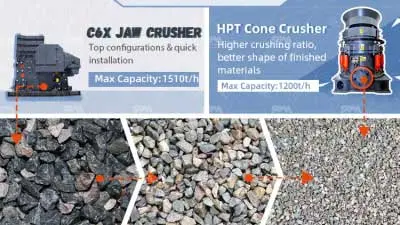
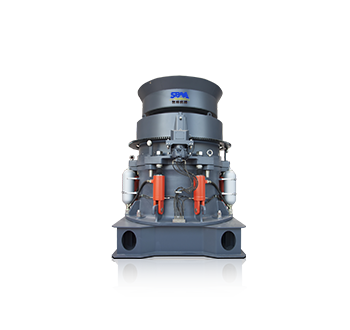
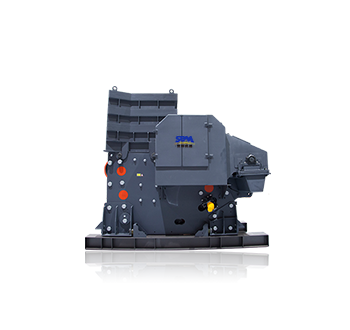
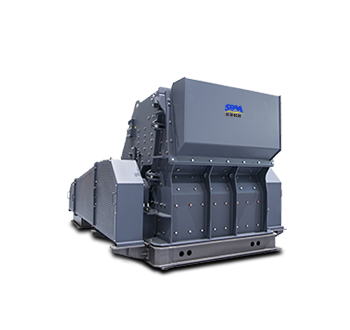
- Lifecycle Value Engineering: Our stone crushers, like the renowned HPT Multi-cylinder Hydraulic Cone Crusher and High-Efficiency Jaw Crusher, are designed with maintenance and longevity as first principles. Features like fully hydraulic adjustment and clearing, modular wear part design, and intelligent control systems are engineered to maximize uptime and minimize your cost-per-ton over decades, not just years.
- The SBM Validation: We proudly connect you with our global client base. When you ask for a site-specific reference, we will provide direct contacts from operations where our equipment is processing material nearly identical to yours, offering you genuine, peer-to-peer verification.
Contact SBM today to begin a technical consultation. Let us demonstrate how our machinery, backed by our process, is designed to meet and exceed every critical parameter, ensuring your investment delivers optimal productivity and profitability for the life of your project.


 Get Solution
 Send Message