




Summary: The price of a commercial stone crusher machine in Indonesia ranges broadly from IDR 35,000,000 ($2,200 USD) for entry-level units to well over IDR 10,000,000,000 ($640,000 USD) for high-capacity systems....
Driven by massive infrastructure development—including the ongoing construction of the new capital city (IKN Nusantara), national highway expansions, and thriving nickel and gold mining corridors across Sulawesi and Sumatra—Indonesia is experiencing an unprecedented demand for high-quality aggregates. For local quarry operators and contractors, capitalizing on this boom requires reliable equipment, making stone crusher machinery a critical capital investment. Consequently, the most common question among procurement managers today is: How much does a stone crusher machine cost in the current Indonesian market?
Generally, the price of a commercial stone crusher machine in Indonesia ranges broadly from IDR 35,000,000 ($2,200 USD) for entry-level units to well over IDR 10,000,000,000 ($640,000 USD) for premium, high-capacity systems. To provide a clearer baseline, here are the indicative price ranges for the four most common types of crushers deployed across the archipelago:
- Jaw Crushers (Primary Stage): IDR 35,000,000 – IDR 2,400,000,000
- Impact Crushers (Limestone/Soft Rock): IDR 380,000,000 – IDR 2,100,000,000
- Cone Crushers (River Pebbles/Hard Rock): IDR 450,000,000 – IDR 3,500,000,000
- Mobile Crushing Plants (Tracked/Wheeled): IDR 2,400,000,000 – IDR 10,000,000,000+
Note: These figures serve only as baseline estimates. The final landing cost will fluctuate significantly depending on a variety of influencing factors, including the required production capacity (TPH), the brand's country of origin (Chinese value-engineered vs. European premium), ACFTA import duty exemptions, TKDN (local content) compliance, and heavy-haul inter-island shipping costs.
This analysis breaks down the detailed market pricing, key cost drivers, and smart procurement frameworks tailored specifically to the Indonesian market.


1. Comprehensive Cost Breakdown by Crusher Type
Industrial rock crushers are priced according to their engineering complexity and throughput capacity. In Indonesia, pricing is generally split between Tier 1 premium brands (such as Metso and Sandvik), Tier 2 international mid-market/Chinese manufacturers (such as SBM and ZENITH), and localized assembly units.
Primary Stage: Jaw Crushers
Jaw crushers serve as the primary stage to breakdown hard materials like basalt, granite, and andesite stone.
- Small Capacity (10–50 tph): Popular for small provincial quarries. Prices typically range from IDR 35,000,000 to IDR 150,000,000 ($2,200 – $9,500 USD), heavily dominated by standard Chinese PE series imports.
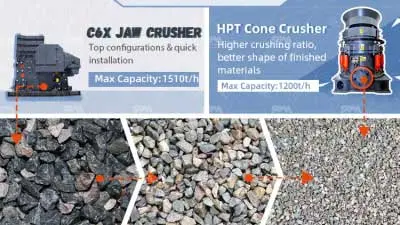
- Medium to Large Capacity (100–300 tph): Essential for commercial aggregate plants. Heavy-duty units with optimized detached non-welded frames (such as the ZENITH C6X types) range from IDR 260,000,000 to over IDR 1,200,000,000 ($16,000 – $75,000+ USD).
Secondary Stage: Impact Crushers
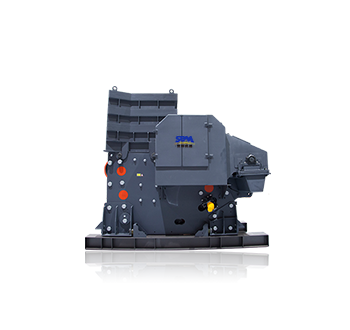
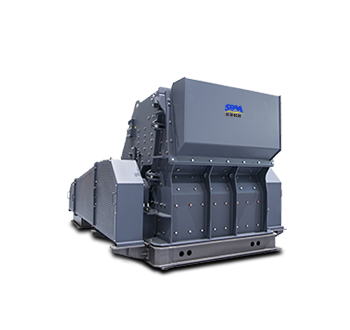
Impact crushers are the go-to equipment for processing softer, less abrasive materials like limestone and dolomite, which are abundant across Sumatra and Java. They are highly valued for producing excellent cubical-shaped aggregates required by cement and concrete batching plants.
- Standard Capacity (100–250 tph): For reliable mid-market and top-tier Chinese brands, prices generally range from IDR 380,000,000 to IDR 950,000,000 ($23,000 – $60,000 USD). Premium European or American models equipped with advanced blow-bar metallurgy and heavy-duty rotors typically cost between IDR 1,200,000,000 and IDR 2,100,000,000 ($75,000 – $130,000 USD).
Secondary & Tertiary Stage: Cone Crushers
Cone crushers are highly favored for hard-rock crushing (such as river pebbles common in Java). They use advanced hydraulics to lower operating costs and resist high-silica wear.
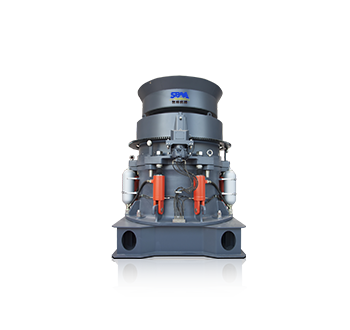
- Standard Multi-Cylinder/Single-Cylinder Hydraulic Units (150–300 tph): Prices sit between IDR 450,000,000 and IDR 2,500,000,000 ($28,000 – $155,000 USD). Premium European equivalents with specialized automation frequently exceed IDR 3,500,000,000 ($220,000 USD).
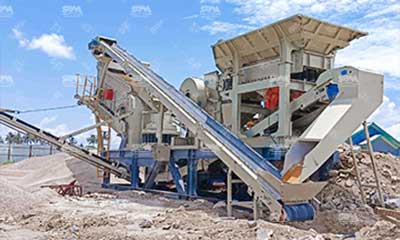
Mobile Crushing Plants
Mobile plants are growing rapidly in popularity due to Indonesia's fragmented geography. They reduce mobilization costs across disconnected island infrastructure projects.
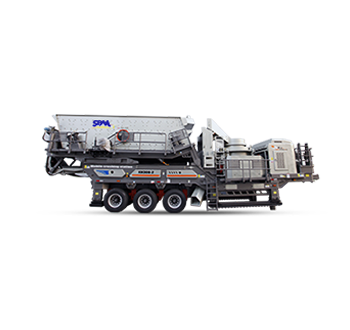
- Tracked Mobile Plants (200–300 tph): A complete mobile jaw or cone station ranges from IDR 2,400,000,000 to IDR 5,000,000,000 ($150,000 – $320,000 USD) for top-tier Chinese brands, while premium European tracked units command prices between IDR 5,500,000,000 and IDR 10,000,000,000+ ($350,000 – $640,000+ USD).

2. Key Matrix: Estimated Market Prices in Indonesia
The following table outlines indicative pricing ranges across the Indonesian market, highlighting the difference between Chinese value-engineered imports and European/US premium options.
| Equipment Category & Specifications | Chinese / Mid-Market Brands (FOB/Batam Stock, IDR) | Premium European / US Brands (CIF Jakarta, IDR) | Primary Application in Indonesia |
|---|---|---|---|
| Small Jaw Crusher (PE 150x250 to 400x600, 10–60 tph) | IDR 35,000,000 – 260,000,000 | IDR 250,000,000 – 600,000,000 | Small-scale local river stone crushing, rural road bases. |
| Heavy Primary Jaw Crusher (PE 600x900 to 900x1200, 60–500 tph) | IDR 560,000,000 – 1,100,000,000 | IDR 1,300,000,000 – 2,400,000,000 | Large commercial quarries, base metal mining facilities. |
| Hydraulic Cone Crusher (Secondary/Tertiary, 100–300 tph) | IDR 450,000,000 – 1,500,000,000 | IDR 1,900,000,000 – 3,500,000,000 | High-silica rock processing, high-grade concrete aggregate fabrication. |
| Impact Crusher (Secondary Stage, 100–250 tph) | IDR 380,000,000 – 950,000,000 | IDR 1,200,000,000 – 2,100,000,000 | Limestone crushing, cement manufacturing plants in Sumatra/Java. |
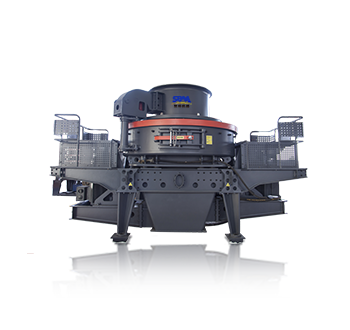
| VSI Sand Making Machine (50–200 tph) | IDR 230,000,000 – 750,000,000 | IDR 900,000,000 – 1,800,000,000 | Manufactured sand (M-Sand) production to replace banned natural river sand. |
| Tracked Mobile Crushing Station (Heavy Duty, 200–300 tph) | IDR 2,400,000,000 – 5,000,000,000 | IDR 5,500,000,000 – 10,000,000,000 | Inter-island infrastructure projects, fast relocation quarry lines. |
| Complete Stationary Plant (Turnkey Circuit, 150–200 tph) | IDR 1,500,000,000 – 3,500,000,000 | IDR 4,500,000,000 – 9,000,000,000 | Mass infrastructure material supply lines, ready-mix concrete sourcing. |
3. Critical Factors Driving Crusher Prices in Indonesia
3.1 Origin of Manufacture and Brand Positioning
The most significant price differentiator in the Indonesian market is whether a crusher is manufactured in China, Europe/Japan, or assembled locally.
Chinese brands (SBM, Zenith, Liming and others) have captured substantial market share by offering competitive pricing. Similar capacity machines from China can be priced approximately 30% to 50% lower than their Western counterparts. This price advantage has made Chinese equipment the default choice for many Indonesian operators, particularly those in the medium and small segments.
Premium international brands (Metso, Sandvik, Terex, Kleemann) are priced at the top tier due to perceived durability, advanced technology, and established after-sales support networks. While the initial investment is significantly higher, these machines often deliver lower total cost of ownership over their service life due to longer wear part life, higher uptime, and better resale value.
Locally assembled units using imported components offer a mid-price option. These machines attempt to balance cost and quality, though availability varies by region.
3.2 Import Duties, Taxes, and Currency Exchange
Since most heavy machinery is imported or uses imported components, understanding Indonesia's import regime is essential for accurate budgeting.
Import duties for mining and construction machinery vary but can add 5-15% to the landed cost. Value Added Tax (PPN) of 11% applies to most equipment imports, and Income Tax Article 22 (PPh 22) may also be assessed. Customs clearance fees and logistics costs add further to the final price.
The exchange rate between the US Dollar (or Chinese Yuan) and the Indonesian Rupiah directly impacts final pricing. When the Rupiah weakens against major currencies, distributors adjust prices upward, sometimes within weeks. Buyers should monitor exchange rates and consider locking in prices when the Rupiah is strong.
3.3 Logistics and Delivery to Site
Indonesia's archipelagic geography means that transportation from the port of entry (typically Tanjung Priok in Jakarta, Tanjung Perak in Surabaya, or Belawan in Medan) to the final site can be a significant cost.
For sites in Java, logistics costs are relatively modest. However, for remote locations in Kalimantan, Papua, or Maluku, overland and inter-island shipping can add 15-30% to the delivered cost. Buyers should always request delivered prices (CIF to port, plus inland transport to site) when comparing quotes.
3.4 New vs. Used Equipment
The second-hand crusher market in Java is prosperous. Reconditioned equipment is 30% – 50% cheaper than new machines, but buyers need to assess component aging, wear part loss and remaining service life. Most second-hand units lack official after-sales support, leading to higher long-term operating risks.
4. Total Cost of Ownership (TCO): Hidden Operational Costs
4.1 Beyond the Purchase Price
Many first-time buyers focus exclusively on the initial purchase price, only to discover significant additional costs after delivery. Understanding total cost of ownership (TCO) is essential for making a sound investment decision.
The TCO formula for a stone crusher in Indonesia includes:
- Purchase Price: The base cost of the equipment, either FOB China or delivered to port.
- Freight and Import Duties: Shipping from the manufacturing country to Indonesia, plus customs duties, VAT, and clearance fees. These can add 20-40% to the FOB price.
- Installation and Commissioning: Foundation work, assembly, wiring, and testing. For stationary plants, this can add 10-20% to equipment cost. Mobile plants require less site work, reducing this cost.
- Energy Cost: Electric motors consume significant power. At Indonesian industrial electricity rates (approximately IDR 1,000-1,500 per kWh), annual power cost can reach hundreds of millions of Rupiah for a 150 tph plant.
- Wear Parts Replacement: Jaw plates, cone liners, blow bars, and screen media must be replaced regularly. For hard rock applications, annual wear part cost can be 10-15% of the equipment purchase price.
- Maintenance Labor: Scheduled maintenance and repairs require skilled technicians. Availability and cost vary by region.
- Unscheduled Downtime: When the crusher is not running due to breakdowns or parts delays, production stops. Each day of downtime represents lost revenue that can be substantial.
4.2 The Cost of Downtime: A Real Example
Consider a 150 tph crushing plant operating at an average product value of IDR 150,000 per ton. Each hour of downtime represents IDR 22.5 million in lost revenue. A single day (10 hours) of unplanned downtime costs IDR 225 million.
If a cheaper crusher is more prone to breakdowns or if spare parts are not available locally, a single extended downtime event can wipe out the initial price advantage of a value machine. This is why experienced buyers prioritize reliability and parts availability over upfront cost.
4.3 Wear Part Cost Comparison
For high-abrasion Indonesian rocks (andesite, basalt, granite), wear part consumption is a major operating expense:
A jaw crusher set (two jaw plates) for a 150 tph unit might cost IDR 15-30 million and last 3-6 months depending on material abrasiveness. A cone crusher liner set (mantle + concave) might cost IDR 25-50 million and last 2-4 months.
Premium wear parts (higher manganese content, better metallurgy) cost more upfront but last longer. The trade-off between initial price and service life should be carefully evaluated.
5. How to Get the Best Price and Value
5.1 Request Multiple Quotes with Identical Specifications
When requesting quotations, provide detailed specifications to all suppliers: target capacity (tph), maximum feed size, required output sizes, and material type (e.g., andesite, basalt, limestone). This allows apples-to-apples comparison.
Always request both FOB (Free on Board) and CIF (Cost, Insurance, Freight) prices to your nearest Indonesian port (typically Tanjung Priok, Surabaya, or Medan). The difference between FOB and CIF reveals the supplier's shipping cost estimate.
5.2 Verify Local Support and Parts Availability
A lower purchase price is meaningless if spare parts are unavailable when needed. Before committing, ask each supplier:
- Do they have a physical parts warehouse in Indonesia?
- What is the lead time for common wear parts (jaw plates, cone liners)?
- Do they have local service technicians who speak Bahasa Indonesia?
- Can you speak with existing Indonesian customers?
5.3 Consider the Total Cost of Ownership, Not Just Purchase Price
A Chinese crusher at IDR 2 billion and a European crusher at IDR 5 billion are not directly comparable. Calculate the 5-year TCO including:
- Initial purchase price + freight + duties + installation
- Annual wear part cost (estimate based on material abrasiveness)
- Annual energy cost (based on motor power and operating hours)
- Annual maintenance labor cost
- Expected uptime percentage (95% for premium vs. 85% for value)
Often, the premium machine delivers lower TCO despite higher upfront cost, particularly for high-volume or long-term operations.
5.4 Negotiate the Complete Package
When negotiating, consider asking for:
- Inclusion of a spare parts starter kit (one set of jaw plates, cone liners, belts, bearings)
- Free or discounted installation supervision
- Extended warranty (2 years instead of 1)
- Operator training for your team
- Commissioning support for the first month of operation
These items have low marginal cost to the supplier but high value to the buyer.
6. Making an Informed Purchase Decision
The price of a stone crusher machine in Indonesia is not a single number but a range determined by type, capacity, origin, brand, and countless other factors. A small jaw crusher for entry-level operations might cost IDR 35,000,000, while a complete 300 tph stationary plant from a premium brand could exceed IDR 20 billion.
For most Indonesian quarry operators, Chinese-brand equipment offers the best balance of affordability and reliability. The top-tier Chinese manufacturers have established local agent networks, maintain parts inventories, and provide technical support. Their machines are widely deployed across Indonesia and have proven themselves in local conditions.
Regardless of which path you choose, the key to a successful purchase is thorough research, detailed comparison, and a clear understanding of total cost of ownership. Request multiple quotes, verify local support, and calculate your payback period.
Frequently Asked Questions (FAQs)
Q: Do I have to pay import tax for bringing a stone crusher machine into Indonesia from China?
A: No, you can achieve a 0% import duty rating under the ACFTA framework. You must instruct your supplier to provide an official Form E (Certificate of Origin) and ensure the description perfectly matches the Bill of Lading (B/L) and HS Code 8474.20.
Q: Which type of stone crusher is most cost-effective for crushing river stone in Sumatra?
A: Since river stone contains high amounts of hard silica, a hydraulic cone crusher is the most cost-effective solution for secondary stage processing. While its purchase price is higher than an impact crusher, it dramatically reduces your monthly wear parts replacement costs.
Q: How does the new capital city (IKN) project affect crusher availability and pricing in Indonesia?
A: The massive demand from IKN Nusantara has caused localized equipment stock shortages and increased heavy barge shipping rates to East Kalimantan. Buyers are recommended to lock in equipment orders 8 to 12 weeks in advance to avoid project delays.


 Get Solution
 Send Message