






Summary: This article covers the full production process of high-quality basalt aggregate, from raw material control, crushing, shaping, and screening to cleanliness control, examining how each stage affects aggregate quality and the key production control points, providing a systematic quality control reference for basalt aggregate production operators....
Basalt, due to its high compressive strength, good abrasion resistance, and stable chemical properties, is an important aggregate source for highways, high-speed railways, hydropower projects, and high-strength concrete. However, the same basalt raw ore can yield finished products of very different quality from different production lines. Market demand for high-quality basalt aggregate continues to grow, yet production lines capable of consistently supplying high-quality basalt aggregate are not many. The reason lies not in the ore itself, but in the level of control across each stage of the production process. So, how exactly is high-quality basalt aggregate produced?
I. What Is High-Quality Basalt Aggregate?
Referring to GB/T 14685-2022 Pebble and Crushed Stone for Construction, high-quality basalt aggregate (Class I) should meet the following core indicators:
| Quality Indicator | ClassⅠRequirement | Why It Matters |
|---|---|---|
| Flaky and elongated particle content | ≤5% | Directly affects concrete density and strength |
| Crushing value | ≤10% | Reflects the aggregate's own compressive resistance |
| Clay content | ≤0.5% | Clay weakens the bond between cement and aggregate |
| Particle gradation | Continuous gradation | Affects concrete porosity and cement dosage |
| Particle shape | Near cubical | Cubical aggregate has strong interlocking force |
Among these indicators, flaky and elongated particle content and particle shape are the most effective at differentiating production quality levels. The gap between high-quality and ordinary-quality aggregate is concentrated in these two indicators.

II. Raw Material Control: High-Quality Basalt Aggregate Starts from Mine Raw Material
Many operators attribute aggregate quality issues to crushers, but in reality, raw material quality is an important factor determining final aggregate quality. No matter how good the crusher, it cannot transform severely weathered raw material into Class I high-quality aggregate.
1. Blast Design
Blasting results directly affect the entire downstream production process:
If blast fragment size is too large, primary crushing energy consumption rises and liner wear intensifies; if too small, fines content will be high. Over-blasting produces large amounts of fine powder and stone dust, which increase fines content and dust collection pressure after entering the production line.
2. Selective Mining
Basalt deposits generally have a surface weathering zone. Basalt in the weathering zone has significantly reduced compressive strength and a high tendency toward flaky particles, making it unsuitable as high-quality aggregate raw material. Producing high-quality basalt aggregate should implement selective mining:
· Surface weathered raw material is stripped separately and used for road base fill or low-grade aggregate;
· Deep-layer basalt enters the high-quality aggregate production line;
· During the rainy season, soil easily adheres to raw stone surfaces; pre-screening and washing should be strengthened at the feeding stage.
3. Raw Material Stockpiling
Mined basalt raw material should be properly stored:
· Stockpile ground should be hardened to prevent soil from mixing in at the bottom;
· Raw materials of different qualities should be stockpiled in separate zones to avoid mixing weathered material with quality raw material;
· Raw material follows first-in-first-out. Long-stored basalt surfaces will absorb moisture and weather, affecting aggregates cleanliness.

III. Crushing Stage: How to Control Basalt Aggregate Quality?
Basalt has high hardness and strong abrasiveness. The crushing stage for high-quality aggregate typically adopts a primary crushing + secondary/tertiary crushing configuration. Every crushing action affects the particle shape, gradation, and fines content of the finished product. To produce high-quality basalt aggregate, attention must be paid to the impact of each crushing stage on quality and targeted controls must be implemented.
1. Primary Crushing: Laying the Foundation for High-Quality Basalt Aggregate
Primary crushing breaks blasted raw stone to medium particle size, creating feed conditions for subsequent secondary/tertiary crushing and laying the quality foundation for the entire production line.
· Stable particle size: The discharge particle size distribution from primary crushing determines the feed conditions for secondary/tertiary crushing. If discharge is stable and distribution is concentrated, secondary/tertiary crushing can operate under stable conditions. To produce high-quality aggregate, the primary crushing stage must ensure discharge opening stability and control discharge particle size.
· Control clay content at the source: High-quality basalt aggregate requires clay content ≤0.5%. Once clay enters downstream, it ultimately adheres to the finished product surface, raising clay content indicators, and removal costs increase. Configuring pre-screening equipment at the feeding stage is a low-cost and most direct method for clay content control.
2. Secondary/Tertiary Crushing: The Core of Basalt Aggregate Quality Formation
Secondary/tertiary crushing is the core stage of basalt aggregate production. The particle size distribution and particle shape foundation of the finished product largely depend on this stage. To produce high-quality aggregate, the secondary/tertiary crushing discharge opening should be set reasonably, feed should be stable, and discharge particle size should be concentrated within the processable range of subsequent shaping and screening stages.
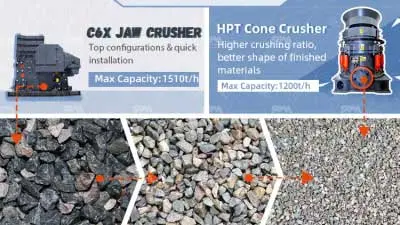
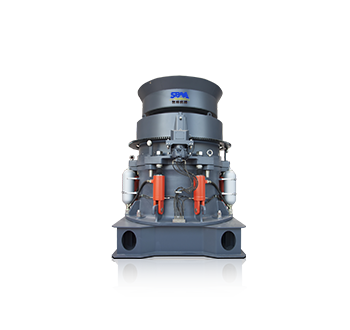
Basalt secondary/tertiary crushing generally uses cone crushers. The effectiveness of the laminated principle depends on the thickness of the material layer in the crushing chamber. When feed is sufficient and continuous, inter-particle compression is thorough and particle shape is relatively uniform. Otherwise, particle shape instability may occur, along with accelerated liner wear. During production, equipment operating status should be observed promptly, parameters adjusted in a timely manner, and wearing parts replaced to stabilize secondary/tertiary crushing discharge quality.

IV. Material Shaping: The Key from Qualified to High-Quality Basalt Aggregate
If crushing stages solve the problem of "qualified material," then the shaping stage solves the problem of "excellent quality." High-quality basalt aggregate plants are generally equipped with a shaping stage.
1. Why Is Shaping Necessary in Basalt Aggregate Production?
Material output from secondary/tertiary cone crushing does not entirely meet final high-quality aggregate standards. A considerable proportion of particles will exhibit flaky and elongated shapes, which tend to reduce concrete density and strength. The purpose of shaping is to reshape flaky and elongated particles into more cubical forms through impact crushing, reducing aggregate flaky and elongated particle content to better meet high-quality basalt aggregate requirements.
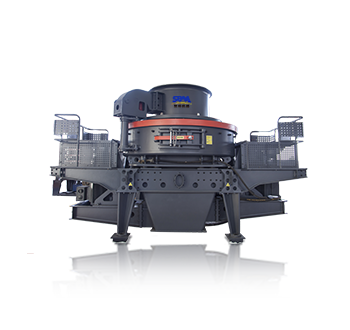
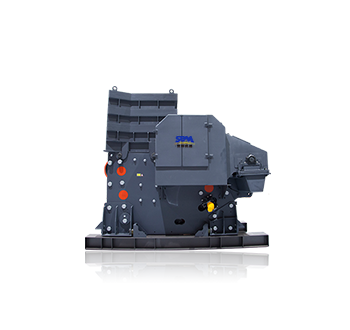
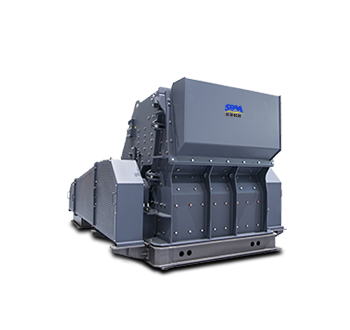
Shaping typically uses a VSI crusher. Utilizing the "rock-on-rock" crushing principle: material is accelerated by a high-speed rotor and thrown out, striking the material lining on the crushing chamber wall, achieving inter-particle crushing. In this process, metal wear parts rarely directly participate in crushing, resulting in low wear costs, suitable for highly abrasive materials like basalt.
2. Key Control Points in the Shaping Stage
· Feed particle size control. Oversized feed into the shaping stage can cause rotor jamming and reduced projection efficiency. Secondary/tertiary crushing discharge should first pass through screening, with on-spec material sent to the shaping machine and off-spec material returned to the cone crusher for re-crushing.
· Speed control. Shaping effectiveness depends on rotor tip speed. Higher speed means greater material projection kinetic energy, more thorough impact crushing, and better shaping results. But excessive speed also means higher energy consumption and faster wear part degradation. In actual operation, speed should be reasonably and flexibly adjusted based on feed conditions and target particle shape.
· Throughput control. Material shaping is not simply passing through once. Excessive feed rate results in overly high material density in the crushing chamber, weakening impact effectiveness and leading to insufficient shaping; insufficient feed rate wastes capacity. The proper approach is to control feed rate within the reasonable range of equipment processing capacity, ensuring each particle receives adequate impact kinetic energy.
For basalt aggregate production projects targeting highway surface courses, high-speed railway ballast, and high-strength concrete, the shaping stage is a necessary configuration.

V. Screening Stage: Safeguarding the Gradation of High-Quality Basalt Aggregate
In basalt aggregate production, the screening stage determines the gradation curve of the finished product.
1. Screen Mesh Configuration
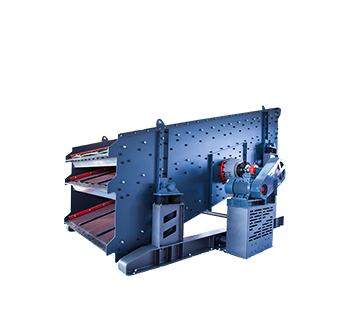
High-quality basalt aggregate typically requires simultaneous production of multiple specifications. Therefore, screen mesh aperture must strictly match target specifications. At the same time, the number of screen layers and screening area must be reasonably arranged according to processing capacity; insufficient screening area leads to reduced screening efficiency.
2. Closed-Circuit Screening
In high-quality basalt aggregate production projects, a closed-circuit screening loop is generally added after secondary/tertiary crushing. The vibrating screen simultaneously diverts qualified material as finished product and returns unqualified material to the crusher, fully ensuring screening efficiency and finished product gradation.
VI. How to Ensure Basalt Aggregate Fines Content Meets Standards?
Basalt contains 45%–52% SiO₂, making the fine dust generated during crushing a respirable crystalline silica hazard. The crushing process also produces fine dust that must be controlled to meet specifications. Dust adhering to aggregate surfaces causes fines content to exceed standards. This is a key indicator for evaluating high-quality aggregate. Dust collection processes can be reasonably configured in production stages to reduce aggregate fines content.
1. Dry Dust Collection Process
Configure dust collection systems at points prone to dust escape such as feeding, crushing, and screening stages:
· High-pressure water mist spray: suitable for points with low dust concentration
· Pulse dust collection: suitable for points with high dust concentration
2. Wet Washing Process
For high-quality basalt aggregate plants with strict fines content requirements, dry dust collection may be insufficient for stable compliance, requiring the addition of a washing stage:
· Spiral sand washer or wheel sand washer to remove fine powder adhering to aggregate surfaces;
· Fine sand recovery devices should be equipped after washing to reduce fine aggregate loss;
· Wet production also requires a wastewater treatment system, with water recycling for environmental sustainability.
In summary, the production of high-quality basalt aggregate is not a breakthrough in any single stage, but systematic management and control across the entire production process. Raw material is the foundation, crushing is the focus, shaping is the key, screening safeguards gradation, and aggregate cleanliness is the quality baseline. Only by controlling every stage of production can the ore realize its maximum value, ultimately serving the high-quality aggregate demand market.
To learn about high-quality basalt aggregate production solutions, please consult SBM.
SBM has been deeply engaged in the basalt aggregate production field for over thirty years, with rich global project experience. Contact us for a one-stop customized solution.


 Get Solution
 Send Message