





Summary: A comprehensive guide to recognizing gold ore. Learn about placer, free-milling, and refractory gold types, field indicators, fool-proof tests (streak, pin, acid), and laboratory methods like fire assay and AAS....
Finding gold in the wild is rarely as obvious as tripping over a shiny yellow nugget. Whether you are an exploration geologist, an investor, or a prospecting enthusiast, accurately recognizing gold ore is the most critical skill in mineral exploration.
Recognizing gold ore requires a two-step approach: field observation and laboratory confirmation.
- In the Field: Gold occurs in three primary forms—Placer (loose nuggets), Free-Milling (visible in quartz), and Refractory (invisible, locked in sulfides). You can identify visible gold by testing its malleability (it dents, never shatters) and its streak (it leaves a pure yellow powder, unlike the greenish-black of pyrite).
- In the Lab: Because most modern commercial gold is microscopic and invisible, visual identification is not enough. You must use laboratory methods like Fire Assaying (melting the rock to extract the metal) or Atomic Absorption Spectroscopy (AAS) to confirm the exact grade (grams per ton) of the gold ore.
Here is the definitive, expanded guide to understanding gold ore types, reading the ground, performing field tests, and ultimately proving the value of your find through rigorous laboratory analysis.

1. The Three Primary Types of Gold Ore
Geologists categorize gold deposits based on how the gold was formed and trapped within the earth. Each type requires entirely different mining techniques and metallurgical processing methods.
1.1 Placer Gold (Alluvial Deposits)
Placer gold is what most people picture when they think of the 1849 California Gold Rush. This is gold that has been freed from its original host rock through millions of years of natural weathering (wind, ice, freezing/thawing, and water erosion).
- The Geology: Because gold is extraordinarily dense (19.3 g/cm³), it sinks to the lowest possible point when moved by water. As rivers flow, lighter rocks wash away, but gold drops out of the current and accumulates in deep bedrock cracks or behind large boulders.
- Appearance: Ranges from microscopic "flour gold" to large, smooth, water-worn nuggets. Because it has been battered by rocks in a river, placer gold is usually dense, relatively pure, and its edges are heavily rounded.
- Extraction: Simple gravity separation. Panning, sluice boxes, and trommels use flowing water to wash away lighter sands, leaving the heavy gold behind.
1.2 Free-Milling Gold (Lode Deposits in Quartz)
"Free-milling" means the gold is native (pure metallic gold) and large enough to be freed simply by crushing the host rock. This is the classic "hardrock" gold that miners blast out of the sides of mountains.
- The Geology: Millions of years ago, superheated, high-pressure hydrothermal fluids containing dissolved silica and gold squeezed up through cracks in the earth's crust. As the fluid cooled, the silica crystallized into solid quartz, and the gold precipitated out as solid metal trapped inside.
- Appearance: It appears as crystalline wires, flakes, or bright yellow masses embedded directly inside white, gray, or rust-stained quartz.
- Extraction: Requires heavy machinery (jaw crushers and ball mills) to pulverize the quartz into powder, followed by gravity concentration or mild leaching to separate the exposed gold.
1.3 Refractory Gold (Sulfide & Telluride Ores)
This is the most common type of gold mined commercially today by major corporations, but it is completely invisible to the naked eye. The gold is trapped at a microscopic or sub-microscopic level within the crystalline structure of other minerals.
- The Geology: Instead of forming native metal flakes, the gold bonded with sulfur or tellurium.
- Appearance: The rock will not look like gold at all. It will often look like dull gray stone heavily populated with Pyrite (fool's gold) or Arsenopyrite (a silver-white, metallic, and highly toxic mineral). Carlin-type deposits in Nevada, which produce millions of ounces of gold, often look like worthless, dirty gray limestone.
- Extraction: You cannot pan or simply crush this ore to get the gold. It requires extreme industrial processes like intense roasting, pressure oxidation (autoclaves), or bio-oxidation before the gold can be leached out with cyanide.
2. Field Indicators: What does Gold Look Like When Found?
Gold is rarely found in pristine, clean white rocks. If you are hiking or prospecting, you should be looking for these "ugly" geological indicators and structural clues:
2.1 Gossan and Iron Staining (The "Iron Hat")
When sulfide minerals (which often host gold) weather and decay at the earth's surface, they rust. A heavily iron-stained, reddish-brown, or orange-crusted quartz vein—known by geologists as a "gossan"—is a massive green flag. The sulfides have rotted away, often leaving native gold sitting inside a spongy, rusted rock.
2.2 Indicator Minerals
Gold rarely travels alone. The hydrothermal fluids that brought gold to the surface usually brought base metals, too. Keep an eye out for:
- Galena: A heavy, shiny, metallic gray lead sulfide.
- Chalcopyrite & Malachite: Brassy copper sulfides and bright green copper stains.
- Sphalerite: Zinc ore that often appears as shiny, dark brown or black crystals.
Where these base metals exist in high concentrations, gold and silver are frequently hiding nearby.
2.3 Geological Structures (The Plumbing System)
Solid, unbroken bedrock rarely holds gold. Gold needs a "plumbing system" to travel from the earth's mantle to the surface. Look for fault lines, shear zones, and contact zones (areas where two completely different types of rock meet). The extreme heat, pressure, and cracking at these boundaries create the perfect void spaces for quartz and gold to crystallize.
2.4 Heavy Black Sands
If you are panning in a river, pay attention to the heavy black sands left in the bottom of your pan. These are usually magnetite or hematite (heavy iron oxides). Because gold and black sand are both extremely heavy, the river deposits them in the exact same places (known as "paystreaks"). Where there is black sand, gold is usually sitting directly underneath it.
3. The Fool-Proof Field Tests for Identifying Gold Ore
The wilderness is full of minerals like Pyrite and Mica that desperately want to trick you. If you find a shiny yellow speck in a rock or river, perform these specific tests immediately to rule out fool's gold:
3.1 The Light / Shade Test (The Glow)
Pyrite is highly reflective. In direct sunlight, fool's gold will flash and glint brightly. However, if you cup your hands over it to block the sun, pyrite will immediately look dark, dull, and gray.
Real gold is not reflective; it is glowing. Real gold retains its rich, buttery-yellow luster even in complete shadow or under muddy water.
3.2 The Pin Test (Malleability)
This is the ultimate field test for visible gold in a rock. Take a sharp steel sewing pin, a heavy sewing needle, or the point of a pocket knife and firmly press it into the center of the yellow flake.
- If it is Pyrite/Chalcopyrite: The mineral is hard and brittle. It will chip, flake, or shatter into powder under the point of the pin.
- If it is Real Gold: Gold is incredibly soft and malleable. The pin will smoothly dent the metal without breaking it, much like pressing a pin into a piece of soft lead or warm wax.
3.3 The Streak Test
Find a piece of unglazed ceramic (like the bottom unglazed ring of a coffee mug or a specialized geological streak plate) and rub the mineral across it. This bypasses the tarnished surface and reveals the mineral's true powder color.
- Fool's gold will leave a greenish-black or brownish-black powder trail.
- Real gold will leave a pure yellow/gold streak.
3.4 The Nitric Acid Test (Advanced)
Gold is a noble metal, meaning it is highly resistant to chemical corrosion. If you have a questionable nugget, you can place a single drop of nitric acid on it (always wear safety goggles and gloves).
- Pyrite and base metals will aggressively fizz, dissolve, and turn the liquid green or brown.
- Real gold will not react to nitric acid at all; it will sit there completely unaffected.
| Feature to Test | Real Gold | Pyrite (Fool's Gold) |
|---|---|---|
| Color in Shadow | Warm, buttery yellow | Dull gray or black |
| Pin Test | Dents smoothly (Malleable) | Shatters into powder (Brittle) |
| Streak on Ceramic | Yellow / Golden | Greenish-black |
| Nitric Acid Reaction | No reaction | Fizzes and dissolves |
4. Laboratory Testing: The Definitive Proof of Gold Content
Field tests are excellent for eliminating false positives, but they cannot tell you the commercial value of the rock. Furthermore, because the most lucrative commercial deposits today consist of invisible, refractory gold locked inside sulfide rocks, you cannot rely on your eyes alone to recognize an ore body.
To determine the exact "grade" (grams of gold per ton of rock), representative samples must be sent to a certified metallurgical laboratory. Here are the three primary methods scientists use to recognize and quantify gold:
4.1 The Fire Assay (The Industry Standard)
The fire assay is the oldest, most reliable, and universally accepted method for determining gold and silver content.
The Process: The rock is pulverized into a fine powder and mixed with a chemical flux (including lead oxide, borax, and silica). The mixture is placed in a crucible and fired in a furnace at over 1,000°C (1,832°F). The lead melts, binds with the precious metals, and sinks to the bottom. After cooling, the lead "button" is extracted and placed in a bone-ash cupel, which absorbs the lead when re-heated, leaving behind a tiny, pure bead of gold and silver (called a prill). The silver is dissolved with nitric acid, and the remaining gold is weighed on a microbalance.
Why it's used: It is incredibly accurate and provides the definitive baseline for commercial mining feasibility studies.
4.2 Atomic Absorption Spectroscopy (AAS)
For low-grade ores or trace amounts of gold, AAS provides highly sensitive readings.
The Process: The pulverized rock is dissolved in a powerful acid mixture (usually Aqua Regia, a mix of hydrochloric and nitric acids) to liquefy the gold. The liquid is then aspirated into a flame, and a specific wavelength of light is passed through it. The amount of light absorbed by the vaporized atoms tells the spectrometer exactly how much gold is in the solution.
Why it's used: It is faster and cheaper than fire assaying and is excellent for detecting microscopic trace gold in exploration soil samples.
4.3 X-Ray Fluorescence (XRF)
Geologists often carry portable XRF (pXRF) guns into the field for immediate analysis.
The Process: The device shoots X-rays at the rock, causing the elements inside to emit fluorescent secondary X-rays. The machine reads these energy signatures to identify the exact elemental breakdown of the rock.
Why it's used: While pXRF guns struggle to detect ultra-low concentrations of invisible gold, they are incredible for instantly identifying "pathfinder elements" like arsenic, copper, and iron, confirming that you are standing on a potential gold-bearing sulfide deposit.
5. Conclusion: From Discovery to Extraction
Recognizing gold ore is a multi-step journey. It begins with a prospector's trained eye spotting iron-stained gossan and quartz veins in the wilderness. It is verified by simple, physical field tests like malleability and streak to rule out fool's gold. Finally, the true economic potential is unlocked through rigorous laboratory fire assaying and chemical analysis.
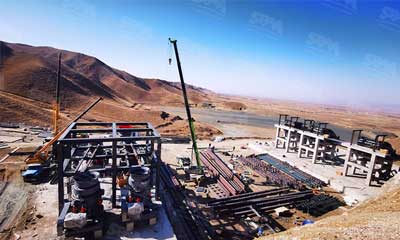
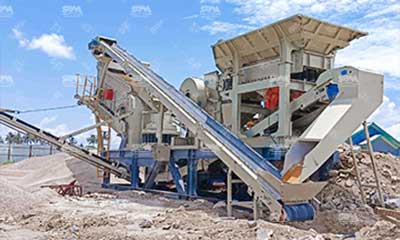
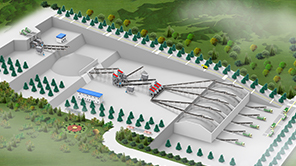
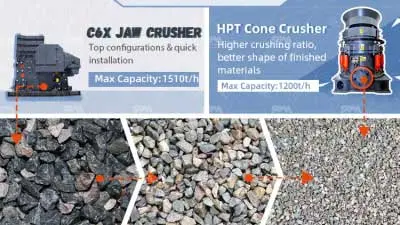
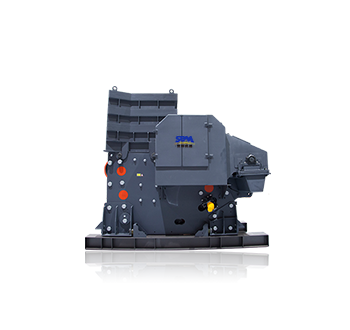
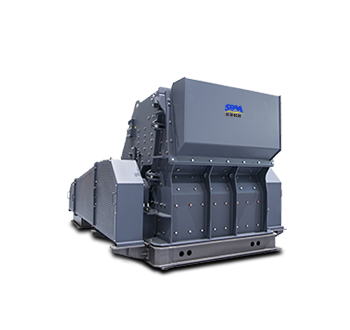
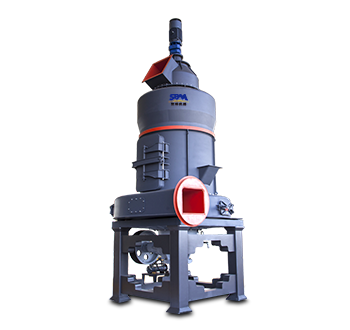
If your lab results confirm a high-grade gold deposit, the final challenge shifts from identification to extraction. Depending on whether your ore is free-milling quartz or a complex refractory sulfide, you will need a customized processing plant featuring specialized jaw crushers, ball mills, gravity concentrators, or froth flotation cells.
6. Partner with an Expert Gold Processing Team
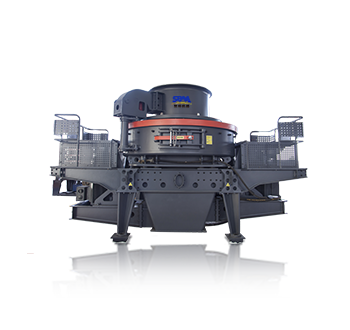
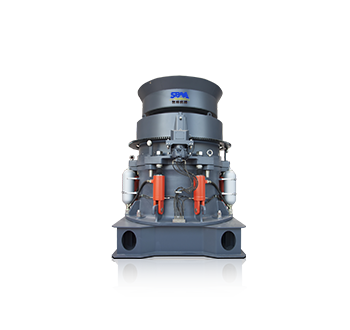
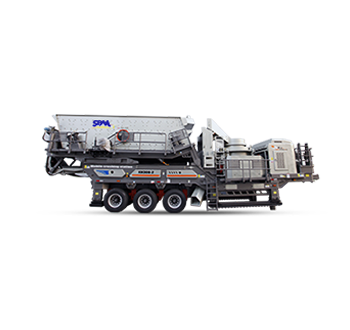
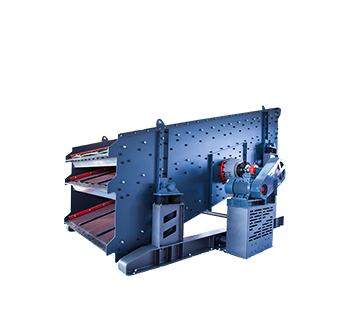
Discovering gold is only the first step; extracting it efficiently is where true commercial value is created. With over 30 years of rich experience in designing and executing gold mining projects worldwide, SBM provides top-tier mineral processing equipment tailored to your specific ore type.
From heavy-duty primary crushers to advanced gravity separation and highly efficient flotation circuits, SBM deliver manufacturing excellence and reliable machinery that minimizes downtime. More importantly, our expert engineering team offers one-on-one, customized turnkey services—guiding you from initial ore sample testing and plant blueprint design, all the way to equipment installation and on-site commissioning.



 Get Solution
 Send Message