






Summary: Placer gold, concentrated in riverbeds, is extracted by simple gravity separation. Lode gold, locked in hard rock, requires complex chemical processing. Their differences define exploration, mining methods, and costs in the gold industry....
Gold, as a precious metal with high economic value and industrial applicability, has been sought after by humans for thousands of years. In geological terms, gold deposits are mainly classified into two primary types based on their occurrence forms: placer gold and lode gold (also known as vein gold). While both are natural gold resources, they differ significantly in terms of geological formation, occurrence characteristics, mining methods, gold extraction processes, and economic benefits.
Lode gold remains locked within host rocks requiring sophisticated metallurgical processing, placer gold undergoes natural liberation through erosional forces, permitting physical separation methods. The technological evolution from ancient panning techniques to modern cyanidation and carbon-in-pulp processes represents a significant advancement in gold recovery efficiency and environmental management. Understanding these differences is crucial for mineral exploration, mining operation planning, and investment decision-making in the gold mining industry.

Definitions: What Are Placer Gold and Lode Gold?
1. Lode Gold Formation (Endogenic Processes)
Lode gold deposits originate from hydrothermal processes deep within Earth's crust. Mineral-rich fluids, typically heated to 150°C to 350°C, migrate through fractures and fault systems. As physicochemical conditions change—often due to pressure reduction, cooling, or fluid-rock interactions—gold precipitates alongside quartz and sulfide minerals. These hypogene processes create diverse deposit types:
- Quartz-vein deposits: Gold in fractured rock matrices
- Disseminated deposits (Carlin-type): Microscopic gold in sedimentary rocks
- Massive sulfide-associated deposits: Gold in volcanogenic massive sulfides
Epithermal deposits form at shallow depths (<1 km) with low-temperature mineralization, while mesothermal (orogenic) deposits develop at greater depths with moderate temperatures. The unique geochemical signature of each deposit guides exploration and processing approaches.

2. Placer Gold Formation (Exogenic Processes)
Placer deposits form through weathering, erosion, and gravitational sorting of pre-existing lode sources. The process follows sequential stages:
- 1. Physical weathering exposes gold-bearing veins to surface conditions
- 2. Chemical decomposition of host rocks liberates gold particles
- 3. Hydraulic transport via streams and rivers moves lighter materials downstream
- 4. Gravitational concentration deposits dense gold particles in traps:
- Inside bends of river channels (point bars)
- Behind bedrock obstacles
- At the base of coarse sediment layers
- In ancient river terraces and beach placers
Gold's high density (19.3 g/cm³) ensures efficient natural concentration, often increasing grades tenfold compared to source rocks. Particle sizes range from fine "flour gold" (<0.1 mm) to exceptional nuggets exceeding several kilograms.

3. Placer Gold VS Lode Gold: Comparison of Geological Features
| Feature | Placer Gold | Lode Gold |
|---|---|---|
| Deposit Type | Secondary, exogenous deposit | Primary, endogenous deposit |
| Formation Process | External forces: weathering, transportation, and sedimentation | Internal forces: magmatic-hydrothermal and metamorphic processes |
| Occurrence State | In unconsolidated loose sediments | Within fractures of hard rock or throughout the rock mass |
| Gold Particle Morphology | Well-rounded, smooth surfaces | Irregular shapes, often with crystalline faces |
| Common Associated Minerals | Heavy minerals (e.g., magnetite, ilmenite) | Quartz, sulfides (e.g., pyrite) |
| Exploration Methods | Heavy mineral concentrate sampling, paleochannel analysis | Geological mapping, geophysical/geochemical surveys |
Placer Gold VS Lode Gold: Comparison of Mining and Gold Extraction Processes
The differences in geological characteristics between placer gold and lode gold lead to significant variations in their mining and gold extraction processes. Placer gold mining is generally simpler and less capital-intensive, while lode gold mining requires more complex technologies and higher upfront investment.
1. Placer Gold: Mining And Extraction
The essence of placer gold mining lies in the physical separation of gold due to its high density (significantly higher than that of sand and gravel). The entire process involves virtually no complex chemical reactions, and while the technology is relatively traditional, it can be highly efficient and scalable.
Core Process: Gravity Separation
This is the soul of placer gold recovery. All methods revolve around one core principle: using the scouring and agitation of water flow to allow denser gold particles to settle, while less dense sediment is washed away.
- Traditional Gold Pan: The oldest and most illustrative method, relying entirely on manual shaking and water scouring, suitable for small-scale operations or exploration.
- Sluice Box: A sloping trough is lined with rough "flow-blocking strips" (such as felt or straw mats). As the slurry flows through, gold particles are trapped in the gaps between the strips. High efficiency, it was the primary method in the early days.
- Jig: Pulsed water flow causes the ore to repeatedly rise and settle on a screen, stratifying it according to density. The heavier minerals (gold) settle to the bottom and are discharged.
- Shaking Table: On an inclined, reciprocating vibrating surface, water flow and vibration precisely separate mineral particles according to density and size, resulting in extremely high separation accuracy. It is commonly used for fine mineral processing.
Modern Mining Methods
- Drone Mining: For large riverbeds or ancient riverbed placer gold deposits, using drone vessels that integrate excavation, washing, beneficiation, and tailings discharge is the most efficient method.
- Hydraulic Mechanical Mining: Utilizing high-pressure water jets to impact the ore sand, forming a slurry, which is then pumped to a beneficiation system (such as sluices or jigs) for processing. Suitable for ore bodies with a certain slope.
- Open-Pit Mechanized Mining: Similar to placer mining, excavators and bulldozers are used for excavation, and the ore is transported by truck to a fixed washing and beneficiation plant for centralized processing.
2. Lode Gold: Mining And Gold Extraction
Gold mining is a large, complex, and highly technical industrial system. Because gold is "locked" in very low concentrations within hard rock, it must undergo multiple processes to be released.
2.1 Mining Processes
Underground Mining: For deep, high-grade deposits, shafts and tunnels must be excavated for underground operations. This is the most dangerous and costly method.
Open-Pit Mining: For shallow, large-scale deposits, open-pit mining directly removes the surface soil and rock, offering high efficiency and low cost.
2.2 Core Extraction Process
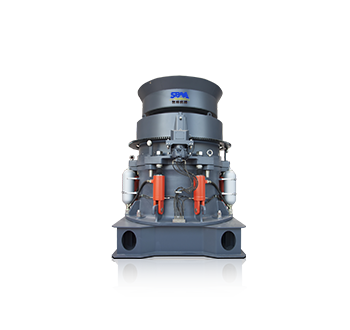
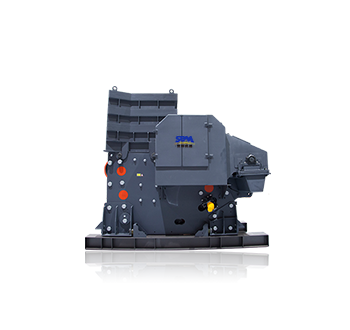
- Crushing and Grinding: Large ore blocks are crushed and ground into fine powder (usually as fine as flour) to "liberate" the gold particles, exposing them from the encasing rock.
- Cyanide Process (Mainstream Process): The finely ground ore powder is mixed with a diluted sodium cyanide solution. Under aeration, the gold reacts with the cyanide, dissolving into the solution to form a "precious solution." Then, activated carbon adsorption or zinc powder displacement methods are used to extract the gold from the solution. This is currently the most economical and effective method for processing lode gold (especially low-grade ores).
- Flotation: For ores where gold is closely associated with sulfide minerals (such as pyrite), flotation is often used. By adding chemical reagents, the gold-bearing minerals adhere to bubbles and float to the surface, yielding a high-grade gold concentrate. This concentrate is then cyanidation or directly smelted.
- Gravity Separation: This method recovers liberated coarse gold particles in advance during the grinding process (e.g., using jigs or shaking tables) to prevent over-grinding or loss in subsequent processes. It is often used as an auxiliary process.
- Heap Leaching: For extremely low-grade oxide ores, the ore is crushed to a certain size, piled on a seepage-proof mat, and cyanide solution is sprayed from top to bottom. The dissolved gold solution is collected from the bottom of the heap for further processing. This method is low-cost but has requirements regarding the type of ore.
2.3 Final Refining:
Regardless of the method used, the gold obtained usually contains impurities such as silver and copper, and is called "compound gold." To obtain finished gold with high purity (such as above 99.99%), electrolytic refining or chemical refining is required.
3. Comparison Summary: Placer Gold Mining vs. Lode Gold Mining
| Aspect | Placer Gold Mining | Lode Gold Mining |
|---|---|---|
| Core Principle | Physical Separation (Density Difference) | Chemical Extraction & Metallurgy |
| Primary Processes | Gravity Concentration | Cyanidation, Flotation, Smelting |
| Energy Focus | Excavation, Transportation, Water Circulation | Crushing, Grinding, Chemical Reagents |
| Environmental Impact | Land Disturbance, Water Turbidity | Tailings Storage, Cyanide Risk, Acid Drainage |
| Recovery Rate | Typically 60-85% | Typically 85-98% |
| Technical Threshold | Relatively Low | Very High |
Comparative Economic Analysis: Placer Gold VS. Lode Gold Mining
1. Cost Structure Comparison
Placer Gold Mining Cost Profile
- Capital Investment (CAPEX): Moderate. While large dredging fleets can require tens of millions of USD, CAPEX is generally lower than for a lode gold operation of comparable scale.
- Operating Costs (OPEX): Primarily driven by fuel, equipment maintenance, and labor. Due to the simpler processing flowsheet, unit processing costs are relatively low.
- Typical Cost Range: All-in production costs typically range from USD 800 to 1,200 per ounce, though highly efficient operations can achieve costs below USD 600/oz.
- Key Cost Drivers: Deposit scale, gold particle size, and the strip ratio (ratio of overburden to pay gravel thickness).
Lode Gold Mining Cost Profile
- Capital Investment (CAPEX): Extremely High. Initial investment for a medium-sized mine commonly reaches hundreds of millions to billions of USD.
- Operating Costs (OPEX): Complex and multi-faceted, encompassing expenses for mining, crushing, grinding, chemical reagents, tailings management, and more.
- Typical Cost Range: All-in Sustaining Costs (AISC) usually range from USD 1,000 to 1,400 per ounce, with deeper underground mines often exceeding this range.
- Key Cost Drivers: Ore grade, mining depth (open-pit vs. underground), ore hardness (grindability), and metallurgical complexity (refractory vs. free-milling ore).
2. Economic Viability Thresholds
Placer Gold Deposits
- Grade Requirement: Very low. Because mining targets unconsolidated sediments, large-scale operations can remain profitable even at grades as low as 0.1 to 0.3 grams per cubic meter.
- Scale Threshold: A large placer deposit typically contains over 8 tonnes (approximately 260,000 ounces) of gold.
- Critical Economic Factors: Daily processing volume (cubic meters/day), recovery efficiency, and site accessibility/infrastructure.
Lode Gold Deposits
- Grade Requirement: Significantly higher than for placer deposits. Open-pit mines generally require grades above 0.8 to 1.0 gram per tonne, while underground mines necessitate even higher grades (often >3 to 5 g/t).
- Scale Threshold: A large lode deposit typically contains over 20 tonnes (approximately 645,000 ounces) of gold.
- Critical Economic Factors: Total ore reserves, metallurgical recovery rate, and the condition of existing infrastructure (power, water, transport).
3. Market and Economic Sensitivity
Sensitivity to Gold Prices:
- Placeholder Gold Projects: Due to relatively fixed and low operating costs, they are more resilient to falling gold prices. Many placer gold mines have been able to maintain operations even when gold prices are below $1,200/oz.
- Vessel Gold Projects: Especially high-cost underground mines, they are extremely sensitive to gold price fluctuations. Falling gold prices may lead to the shutdown of high-cost mines.
Investment Return Characteristics:
- Placeholder Gold Projects: Typically have short construction periods (1-2 years) and fast investment recovery, but relatively short deposit lifespans (typically 5-15 years).
- Vessel Gold Projects: Long construction periods (3-5 years) and slow investment recovery, but large deposits can have service lives of over 20 years.
Risk Composition:
- Main Risks for Placeholder Gold: Resource uncertainty (uneven gold distribution), environmental permitting, and the impact of climate change on hydrology.
- Main Risks for Vein Gold: Geological risks (grade variations), metallurgical risks (recovery rate), political risks, and market price fluctuations.
Future Trends and Technological Developments
Frontiers in Placer Gold Mining:
- Precise Positioning Technology: Utilizing ground-penetrating radar and electromagnetic methods for more accurate detection of ancient river channels.
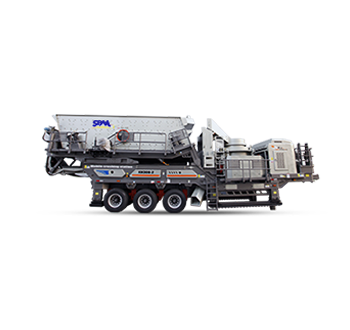
- Modular Mobile Equipment: Reducing environmental footprint and increasing deployment flexibility.
- High-Efficiency Fine Gold Recovery: New centrifuges and panning equipment improve the recovery rate of fine gold.
Frontiers in Vein Gold Mining:
- Automation and Digitalization: Driverless trucks, remote operation, AI-based ore sorting.
- Green Metallurgical Technologies: Development of cyanide alternatives (such as thiosulfate), bioleaching technology.
- Resource Efficiency Improvement: Technologies for economically recovering gold from low-grade ores and tailings.
- Overall Trends: Both mining methods are moving towards greater efficiency, environmental friendliness, and social sustainability. With the depletion of readily accessible resources, technological innovation will be key to maintaining the sustainability of gold supply.
Placer gold and lode gold are two distinct types of gold deposits with fundamental differences in geological formation, occurrence characteristics, mining methods, extraction processes, and economic benefits. Placer gold, as a secondary deposit, is characterized by its occurrence in loose sediments, high liberation of gold particles, and simple mining and extraction processes, making it suitable for small-scale and low-capital operations. Lode gold, as a primary deposit, is embedded in hard rock, requires complex mining and extraction technologies, and involves high capital and operating costs, but offers long-term profitability for large-scale operations.
Understanding these differences is essential for gold mining companies, investors, and policymakers. For regions with accessible placer deposits, small-scale placer mining can provide economic opportunities for local communities. For large-scale gold production, lode gold mines are the main source of global gold supply, but they require careful planning to manage environmental impacts and operational risks. As the demand for gold continues to grow, the exploration and development of both placer and lode gold deposits will play important roles in the global gold industry, with ongoing technological advancements aiming to improve mining efficiency, reduce environmental impacts, and enhance economic sustainability.


 Get Solution
 Send Message