


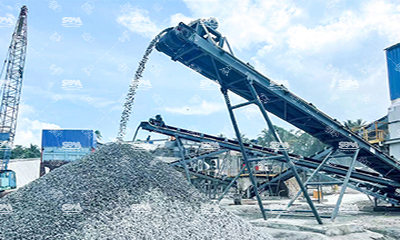
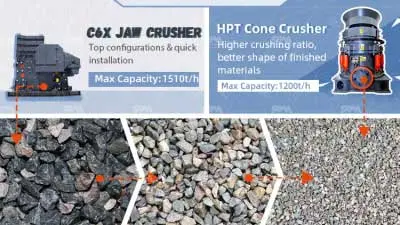

Due to their high silica content, Indonesian river pebbles are extremely abrasive and rich in natural fines, while also carrying wet, sticky clay during the rainy season. For the secondary and tertiary crushing of such materials, a cone crusher is a more economical choice:
- Wear part life is 2 to 3 times longer than the blow bars of an impact crusher
- Stable production capacity, ideal for large-scale operations
- Low energy consumption, reducing long-term production costs
- Laminated crushing producing aggregates that comply with Indonesian SNI standards
Part I: Overview
Indonesia’s booming infrastructure and construction sector—from Jakarta’s surrounding developments to the vast river basins in Kalimantan—relies heavily on local aggregate resources. River pebbles, in particular, are a common and abundant raw material in the region.
However, processing these Indonesian river pebbles presents unique challenges:
- High quartz and silica content: This results in extremely high abrasiveness.
- High natural fines content: The material contains a significant proportion of fine sand and small particles.
- Seasonal mud & clay: The material is often mixed with clay and silt during the rainy season.
When setting up a crushing plant, selecting the right secondary and fine crushing equipment is critical. While some operators might consider impact crushers, industry practice for processing high-silica Indonesian river pebbles strongly favors a combination of Jaw Crushers (Primary) and Cone Crushers (Secondary & Fine).

Part II: 3 Core Demands of River Pebble Fine Crushing
Before comparing any machines, define what your production goal actually demands. For river pebble medium-fine crushing, three requirements matter the most:
Product specification. If the aggregate supplies high-grade projects such as railways and bridges, the finished product needs a rounded particle shape (flakiness index ≤ 10%) and continuous gradation. For ordinary construction sand and gravel, shape requirements are lower and throughput matters more.
Cost control. This includes purchase price, wear-part replacement cost, and energy cost. Over a multi-year production cycle, wear parts and electricity — the hidden costs — usually outweigh the purchase price difference between machines.
Capacity matching. The fine crushing stage must keep pace with primary crushing. After jaw crushing, river pebble typically enters the secondary stage at 80–150 mm. The cone crusher must match that upstream capacity, or you get a bottleneck at one end and idle time at the other.
Part III: Cone Crusher VS Impact Crusher for High-Silica River Pebble Crushing
3.1 Why Not Impact Crushers?
Many clients are prone to choose impact crushers due to their lower initial cost and excellent aggregate shaping capabilities. However, high-silica river pebbles are extremely abrasive.
When fed into an impact crusher, the river pebbles rapidly wears down the blow bars and impact plates. In regions like Jakarta and Kalimantan, using an impact crusher for secondary crushing results in rising wear-part bills, excessive downtime and falling product quality.
3.2 Why are Cone Crushers Better Choice for Indonesia River Pebble Crushing?
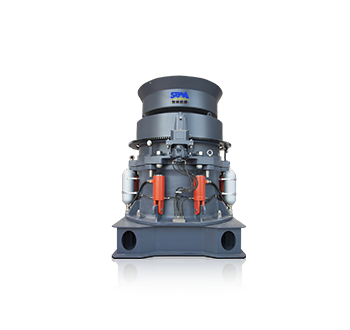
Cone crushers, especially multi-cylinder hydraulic cone crushersutilize the " lamination crushing" principle, breaking rock through compression and inter-particle grinding rather than impact. The crushing surfaces roll with the feed instead of striking it, which is exactly what an abrasive material like river pebble demands.
For Indonesian river pebbles, cone crushers offer three main advantages:
Wear Resistance & Lower Spare Part Replacement Costs
Cone crusher mantles and concaves are made from high-manganese steel combined with advanced alloy composites. When crushing abrasive river pebbles, their service life reaches 3 to 6 months, lasting 2 to 3 times longer than impact crusher blow bars.
Cost Example: For a 100 TPH plant, a cone crusher’s monthly wear-part cost is only around $450 - $750, whereas an impact crusher operating under the same conditions could cost $1,500 - $3,000 per month.
Stable Capacity for Scale Operations
The capacity range of cone crusher covers from 45 to 2000 tons per hour. For instance, SBM's HPT300 Multi-Cylinder Cone Crusher achieves a stable output of 150–300 TPH in secondary crushing and can operate continuously 24/7.
Additionally, HPT cone crusheradopts lamination crushing principle, which can produce more cubic particles from river pebbles, which helps meet the SNI standards in Indonesia.
Lower Energy Consumption for Long-Term Savings
Cone crushers consume 15% to 20% less motor power than impact crushers of comparable capacity. A 150 TPH cone crusher equipped with a 160 kW motor can save approximately $3 - $4.5 per hour in electricity. Calculated over 300 operational days per year, this results in $7,000 - $10,500 in direct annual savings.
Get Latest Price of SBM Cone Crusher

Part IV: Recommended Configuration for Indonesian River Pebbles Crushing
For a typical Indonesian river pebble aggregate line, the configuration that balances wear cost, capacity, and aggregate shape is:
Primary crushing: jaw crusher
Handles the large dredged pebble and reduces it to 80–150 mm for the next stage.
Medium-fine crushing: cone crusher (laminating crushing preferred)
A multi-cylinder hydraulic cone crusher such as the HPT series has stable production capacity and predictable liner consumption when processing river pebbles.
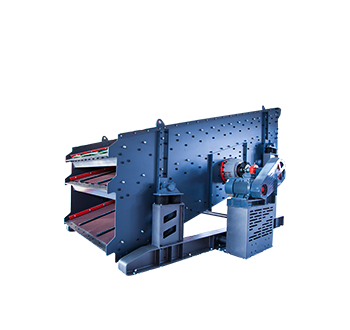
Screening circuit: closed loop with vibrating screen
Because river pebbles carry natural fines, sizing the screen to return only true oversize avoids re-crushing usable sand — a direct saving in wear and energy.
For over 30 years, SBM has consistently supplied crushing and screening equipment to aggregate producers in Indonesia and other Southeast Asian nations. The "jaw crusher + cone crusher" configuration for processing river pebbles is one of the most frequently delivered process setups for such projects.
Whether your project is located around Jakarta or in the river basins of Kalimantan, SBM offers customized crushing and screening solutions tailored to local Indonesian geological conditions.
Click Here to Contact SBM Technical Engineers
Frequently Asked Questions
Why are impact crushers not recommended for river pebbles?
Due to the high silica content in river pebbles, the blow bars of an impact crusher wear down 2–3 times faster than the liners of a cone crusher. In the long run, using an impact crusher for high-silica pebbles is not cost-effective.
What is the service life of cone crusher liners when processing highly abrasive pebbles?
When crushing river pebbles, mantle and concave liners made of composite high-manganese steel typically last 3–6 months. The actual service life depends on the feed size, material abrasiveness, and total operating hours.
Is a cone crusher utilizing laminated crushing the only equipment capable of producing aggregate particle shapes that comply with standard requirements?
Yes. The HPT Hydraulic Cone Crusher employs the principle of lamination crushing. The compression between particles causes rounded pebbles to fracture along their natural grain boundaries, resulting in a higher yield of cubic particles that help the finished aggregate satisfy Indonesian SNI standards.



 Get Solution
 Send Message
