





Summary: Selecting the right liners for a cone crusher is a multifaceted decision that requires a deep understanding of material properties, crusher specifications, production goals, and liner design....
In the realm of aggregate production, mining, and mineral processing, cone crushers stand as workhorses, relied upon for their ability to efficiently reduce medium to hard materials into precise particle sizes. Central to the performance, longevity, and cost-effectiveness of these machines are their liners—wear-resistant components that line the crushing chamber and directly interact with the material being processed. Selecting the right liners is a critical decision that impacts production efficiency, product quality, maintenance costs, and overall operational profitability. This article explores the key factors, considerations, and best practices involved in choosing optimal liners for cone crushers.

Understanding the Role of Cone Crusher Liners
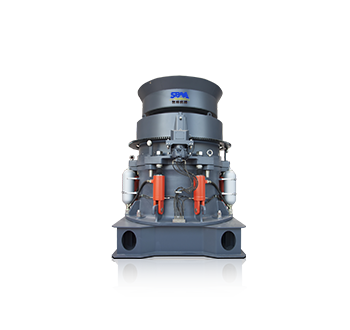
Before delving into selection criteria, it is essential to grasp the fundamental role of liners in cone crusher operations. Cone crushers operate on the principle of compression, where a rotating mantle (moving cone) gyrates within a stationary concave (fixed cone), creating a narrowing gap that crushes material between them. The liners, which cover both the mantle and the concave, serve as the primary contact points with the material, absorbing the impact and compressive forces generated during crushing.
Beyond protecting the underlying crusher components from wear and damage, liners influence several critical performance metrics:
- Particle Size Distribution: The design and profile of the liners determine the crushing chamber’s geometry, which directly affects the size and uniformity of the final product.
- Throughput Capacity: Liner design impacts how material flows through the chamber, influencing the crusher’s ability to process material at a consistent rate.
- Energy Efficiency: Properly matched liners minimize unnecessary friction and energy loss, reducing power consumption.
- Maintenance Intervals: Liner wear rates dictate how frequently they need to be replaced, affecting downtime and labor costs.
Given these roles, the selection of liners must be approached systematically, considering both operational requirements and material characteristics.
Key Factors Influencing Liner Selection
Material Properties
The nature of the material being crushed is the single most important factor in liner selection. Several material properties demand careful evaluation:
Hardness and Abrasiveness
Materials are classified by their hardness using scales such as the Mohs hardness scale or through compressive strength testing. Hard, abrasive materials—such as granite, basalt, quartz, and ore-bearing rocks—exert significant wear on liners. For these applications, liners made from high-chrome cast iron, martensitic steel, or alloy steels with high carbon content are preferred due to their superior wear resistance. In contrast, softer materials like limestone or sandstone may allow the use of lower-cost materials such as manganese steel, which offers good toughness but lower abrasion resistance.
Moisture and Clay Content
Materials with high moisture or clay content tend to stick to the liner surfaces, causing buildup, reduced throughput, and uneven wear. In such cases, liners with smooth profiles or special anti-stick coatings may be necessary. Additionally, liners with increased spacing between crushing surfaces can help prevent clogging, ensuring consistent material flow.
Size and Feed Characteristics
The initial size distribution and shape of the feed material influence liner design. Coarse, irregularly shaped feed may require liners with deeper crushing chambers and more aggressive profiles to ensure effective reduction, while finer feed may benefit from shallower chambers that promote uniform particle sizing.
Crusher Specifications and Operating Parameters
The design and operational settings of the cone crusher itself play a pivotal role in liner selection:
Crusher Model and Size
Different cone crusher models (e.g., standard, short-head, or medium-head) are engineered with specific chamber geometries and performance capabilities. Liner designs are tailored to these models to optimize performance. For example, short-head crushers, used for fine crushing, require liners with a steeper chamber angle and shorter height compared to standard crushers, which are designed for medium reduction ratios.
Reduction Ratio Requirement
The reduction ratio—the ratio of the feed size to the product size—dictates the liner’s profile. Higher reduction ratios (requiring finer final products) demand liners with a more gradual, multi-stage crushing action, while lower ratios may use liners with a simpler, more aggressive design.
Operating Speed and Power
Crusher speed (measured in revolutions per minute, RPM) affects the impact forces within the chamber. High-speed operations generate greater impact forces, necessitating liners with higher toughness to withstand dynamic loads. Conversely, lower speeds rely more on compressive force, where wear resistance may take precedence over toughness.
Production Goals and Product Specifications
Liners must be selected to align with the desired output:
Product Size and Uniformity
If the application requires a tight particle size distribution (e.g., for concrete aggregates), liners with a controlled, stepped profile are ideal. These liners guide material through a series of progressively smaller gaps, ensuring consistent reduction. For applications where a broader size range is acceptable, more open profiles may be used to maximize throughput.
Production Volume
High-capacity operations prioritize liners that minimize downtime and maximize wear life. This often means selecting thicker liners or those with reinforced wear zones, even if they come at a higher initial cost. Lower-volume operations may opt for thinner liners to reduce upfront expenses, accepting more frequent replacements.
Liner Material and Design Considerations
Material Composition
Liner materials are selected based on a balance of wear resistance, toughness, and cost:
- Manganese Steel (Hadfield Steel): Known for its work-hardening properties, manganese steel is highly tough and resistant to impact, making it suitable for less abrasive materials or applications where impact forces are high. It is relatively inexpensive but wears quickly under abrasive conditions.
- High-Chrome Cast Iron: Offers exceptional abrasion resistance due to its chromium carbide content but is more brittle than manganese steel. It is ideal for highly abrasive materials but may crack under severe impact.
- Alloy Steels: These are tailored to specific applications, combining elements like chromium, molybdenum, and nickel to enhance both wear resistance and toughness. They are often used in mixed applications where both impact and abrasion are factors.
- Composite Materials: Some manufacturers offer composite liners, combining layers of different materials (e.g., a high-chrome outer layer bonded to a manganese steel base) to leverage the benefits of both wear resistance and toughness.
Liner Profile and Geometry
Liner profiles are designed to optimize material flow and crushing efficiency:
- Standard Profiles: Feature a gradual taper, balancing throughput and product size control. They are versatile and suitable for general-purpose applications.
- Coarse Profiles: Have deeper pockets and larger initial gaps, designed to handle larger feed sizes and maximize throughput in primary or secondary crushing stages.
- Fine Profiles: Characterized by shallower chambers and smaller gaps, these liners produce finer, more uniform products, ideal for tertiary crushing.
- Non-Choking Profiles: Incorporate features like raised ribs or angled surfaces to prevent material buildup, useful for sticky or wet materials.
Installation and Replacement Considerations
Liners should be designed for ease of installation and removal to minimize downtime. Features such as bolted connections, quick-release mechanisms, or self-aligning designs can simplify maintenance. Additionally, the weight and dimensions of liners must be compatible with the crusher’s access points and lifting equipment available on-site.
Maintenance for Cone Crusher Liner Optimization
Even the best-selected liners will underperform without proper maintenance. Regular monitoring of liner wear is essential to maximize their service life and prevent premature failure:
- Visual Inspections: Periodic checks for uneven wear, cracks, or material buildup can identify issues early. Uneven wear may indicate misalignment, improper feed distribution, or incorrect liner selection.
- Wear Measurement: Using calipers or ultrasonic testing to measure liner thickness at regular intervals helps predict replacement timing, allowing for planned maintenance rather than unplanned downtime.
- Performance Tracking: Monitoring changes in product size, throughput, or power consumption can signal liner degradation. A sudden drop in throughput or increase in oversize material often indicates that liners are worn and need replacement.
Proper installation is equally critical. Liners must be securely fastened to prevent movement during operation, which can cause accelerated wear or damage to the crusher. Torque specifications for bolts should be strictly followed, and gaskets or shims used to ensure a tight fit.
Selecting the right liners for a cone crusher is a multifaceted decision that requires a deep understanding of material properties, crusher specifications, production goals, and liner design. By carefully evaluating these factors, operators can choose liners that maximize throughput, ensure product quality, minimize maintenance costs, and extend equipment life.


 Get Solution
 Send Message