





Summary: This guide details the complete quartz sand beneficiation and purification process, from crushing to chemical treatment, tailored for different grades from construction to electronic use....
Quartz sand, widely used in industries such as glass manufacturing, foundry, photovoltaics, and electronics, requires high purity levels to meet stringent industrial standards. The core objective of quartz sand beneficiation is to remove impurities (iron, aluminum, mica, clay, etc.) and achieve graded purification, ultimately producing high-purity quartz sand that complies with industrial-grade requirements.
While the process must be adapted to the characteristics of the raw ore (such as impurity types and particle size distribution), the core stages are universally applicable. This guide details the standardized quartz sand beneficiation and purification process flow, including core stages, equipment selection, key parameters, and application scenarios.

Standardized Quartz Sand Beneficiation Process Flow (Raw Ore → Finished Concentrate)
1. Pretreatment: Crushing & Screening (Particle Size Control, Large Impurity Removal)
Core Purpose: To crush the raw ore to a particle size suitable for grinding and to separate large gravel and waste rock to prevent clogging in subsequent equipment.
Process Steps:
- 1. Raw ore (quartz rock, quartz sand ore) is fed into the raw ore silo by a loader/feeder for stable feeding;
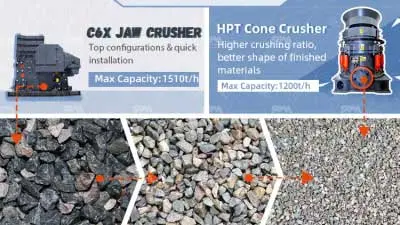
- 2. Primary crushing: Use a jaw crusher to reduce ore size to 50–100 mm to meet the requirements of subsequent finer crushing.
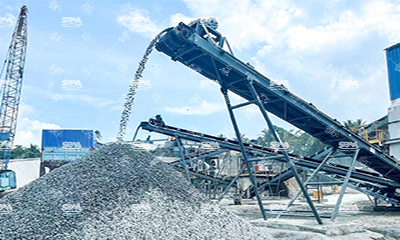
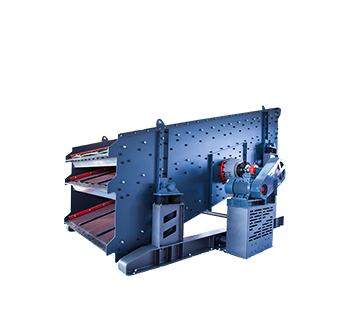
- 3. Screening and Classification: The coarse crushed material passes through a circular vibrating screen (mesh size 10–20 mm). Oversized material is returned for further crushing, while qualified material proceeds to fine crushing.
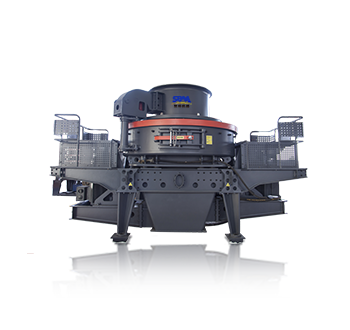
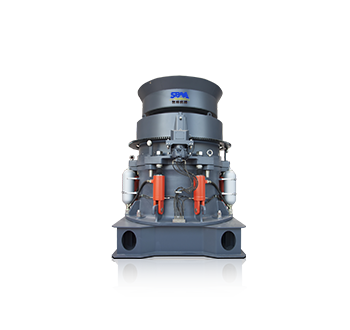
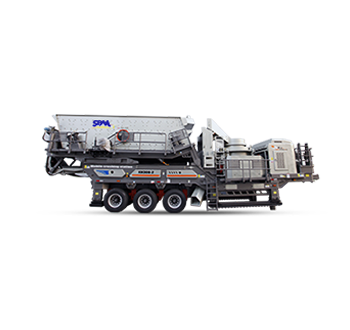
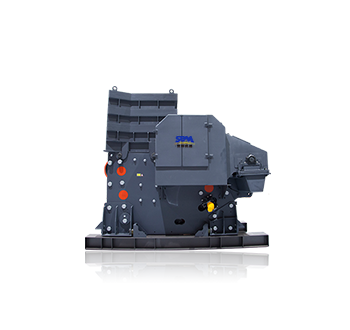
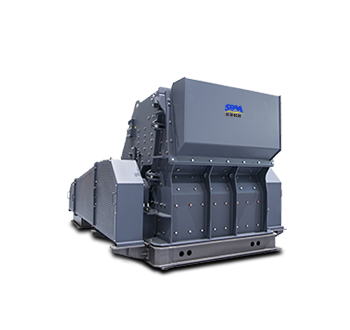
- 4. Secondary (Fine) Crushing: Use a cone crusher or impact crusher to reduce particle size to 5–10 mm, the final crushed product before grinding.
- 5. Closed-Circuit Cycle: The finely crushed product is returned to the circular vibrating screen to ensure uniform particle size and avoid over-crushing (which increases subsequent purification difficulty).
Key Parameters: Crushed product size controlled at 5–10 mm; screening efficiency ≥ 90%.
2. Grinding and Classification (Refining Particle Size, Liberating Impurities)
Core Purpose: To grind quartz particles to the target fineness (e.g., -20 mesh, -100 mesh), fully liberating quartz from embedded impurities (e.g., iron oxides, mica), laying the foundation for subsequent purification.
Process Steps:
- (1) The finely crushed material is sent to a fine ore bin and uniformly fed into a Wet Rod Mill or Ball Mill (rod mills are preferred for quartz sand to reduce over-grinding and iron contamination).
- (2) The ground product enters a Classification Device (hindered-bed settler, hydrocyclone, or spiral classifier) to separate coarse and fine particles.
- (3) Closed-Circuit Cycle: The underflow (coarse particles) from the classifier returns to the mill for regrinding; the overflow (qualified particle size) proceeds to purification.
Key Parameters:
- Grinding Fineness: Adjusted based on industrial needs. Ordinary glass sand requires over 80% passing 100 mesh; PV/electronic-grade sand requires over 90% passing 200 mesh.
- Slurry Density: Controlled at 60%–70% during grinding and 30%–40% during classification.
3. Core Purification Stages (Impurity Removal, Purity Enhancement)
Main impurities in quartz sand are iron (Fe₂O₃), aluminum (Al₂O₃), mica, and clay, requiring a combined "physical + chemical" process.
(1) Scrubbing and Desliming (Removing Clay, Argillaceous Coatings)
- Function: Mechanical agitation + hydraulic washing to strip clay films and fine slime from quartz particle surfaces (slime can encapsulate impurities, affecting subsequent iron removal).
- Equipment: Drum Scrubber, Spiral Scrubber (two-stage scrubbing is more effective).
- Key Parameters: Scrubbing time 15–30 min; slurry density 25%–35%; high-pressure water pressure 0.3–0.5 MPa.
(2) Classification and Desliming (Separating Fine Slime Impurities)
- Function: Classify the scrubbed slurry to remove fine slime below 200 mesh (rich in iron and aluminum impurities).
- Equipment: Hydrocyclone, Inclined Plate Thickener.
- Operation: Cyclone overflow (slime) is discarded; underflow (coarse quartz particles) proceeds to iron removal.
(3) Magnetic Separation for Iron Removal (Removing Magnetic Impurities)
- Function: Core step for removing magnetic iron (e.g., magnetite) and weakly magnetic iron (e.g., hematite, limonite).
- Equipment Combination: Low-Intensity Magnetic Separator (removes tramp iron, magnetite) + High-Intensity Magnetic Separator (removes weakly magnetic iron, iron-titanium oxides).
- Key Parameters: High-intensity magnetic field strength 10,000–15,000 Gauss; slurry flow velocity 0.5–1.0 m/s to ensure full adsorption of magnetic impurities.
(4) Flotation (Removing Non-Magnetic Impurities like Mica, Feldspar)
- Application: Required for high-purity quartz sand (e.g., Fe₂O₃ ≤ 0.02%) to separate feldspar and mica (similar density to quartz, not removable by magnetic separation).
- Principle: Under acidic conditions (pH 2–3), with flotation reagents (e.g., amine collectors, sodium fluorosilicate depressant), feldspar and mica attach to air bubbles and float, while quartz remains in the slurry.
- Equipment: Mechanical Agitation Flotation Machine, Aerated Flotation Machine (multi-stage flotation for thorough impurity removal).
(5) Chemical Purification (Essential for PV/Electronic-Grade Sand)
- Application: When ordinary processes cannot meet high-purity requirements (e.g., Fe₂O₃ ≤ 0.005%).
- Process Options:
- Acid Leaching: Soak the slurry in a mixed acid (hydrochloric, sulfuric, hydrofluoric) to dissolve residual iron and aluminum oxides.
- Roasting-Acid Leaching: First roast quartz sand at 600–800°C to convert refractory iron impurities into soluble forms, then remove them via acid leaching.
- Critical Step: After acid leaching, wash with purified water to neutrality (pH 6–7) to avoid residual acid affecting product quality.
4. Thickening and Dewatering (Obtaining Solid Concentrate)
- 1. Purified slurry enters a Thickener for concentration via gravity settling, increasing underflow density to 60%–70%.
- 2. Concentrated slurry is fed to a Filter Press or Vacuum Filter to dewater to ≤ 10% moisture content.
- 3. The filter cake is dried in a Rotary Dryer (120–150°C) to obtain dry quartz sand concentrate.
- 4. The dried concentrate is classified by a Vibrating Screen to screen finished products of different specifications (e.g., coarse, medium, fine sand) based on size requirements.
5. Finished Product Inspection and Storage
- Inspection Indicators: SiO₂ purity (ordinary industrial sand ≥98.5%, glass sand ≥99.3%, PV-grade ≥99.9%, electronic-grade ≥99.99%), Fe₂O₃ content (ordinary sand ≤0.3%, high-end sand ≤0.005%), particle size distribution, moisture content.
- Storage: Finished sand is stored in dedicated silos to avoid secondary contamination (e.g., iron chips, dust).
Simplified Process Schemes for Different Purity Requirements
| Application Scenario | Core Process Route | Key Indicators |
|---|---|---|
| Ordinary Construction Sand | Crushing & Screening → Scrubbing & Desliming → Classification | SiO₂ ≥ 95%, Fe₂O₃ ≤ 0.5% |
| Glass/Foundry Sand | Crushing & Screening → Grinding & Classification → Scrubbing & Desliming → Low & High-Intensity Magnetic Separation | SiO₂ ≥ 99.3%, Fe₂O₃ ≤ 0.1% |
| Photovoltaic (PV) Sand | Crushing & Screening → Grinding & Classification → Scrubbing & Desliming → Magnetic Separation → Flotation → Acid Leaching | SiO₂ ≥ 99.9%, Fe₂O₃ ≤ 0.008% |
| Electronic-Grade Sand | Crushing & Screening → Grinding & Classification → Scrubbing & Desliming → Magnetic Separation → Flotation → Roasting-Acid Leaching → Purified Water Washing | SiO₂ ≥ 99.99%, Fe₂O₃ ≤ 0.001% |
Process Core Features & Key Considerations
1. Core Features:
- Multi-stage closed-circuit cycles (both crushing and grinding) ensure uniform particle size and reduce material waste.
- "Physical purification primary, chemical purification supplementary" balances environmental protection and purification efficiency.
- Impurities are removed in stages, offering strong targeting and adaptability to different raw ores and purity needs.
2. Key Considerations:
- Preventing Iron Contamination: Prioritize rubber or ceramic liners in grinding and scrubbing equipment to avoid increased iron content from metal contact.
- Reagent Control: Precisely control reagent dosage and pH in flotation and acid leaching to avoid excessive residual reagents.
- Wastewater Treatment: Acid wash wastewater must be neutralized (e.g., with lime to pH ~7) before discharge or recycling to prevent pollution.
Core Equipment List (Standard Configuration)
| Process Stage | Core Equipment | Auxiliary Equipment |
|---|---|---|
| Crushing & Screening | Jaw Crusher, Cone Crusher, Circular Vibrating Screen | Belt Conveyor, Raw Ore Bin, Fine Ore Bin |
| Grinding & Classification | Wet Rod Mill, Hydrocyclone, Spiral Classifier | Feeder, Slurry Pump |
| Purification Stages | Scrubber, Low-Intensity Magnetic Separator, High-Intensity Magnetic Separator, Flotation Machine, Acid Leaching Tank | Agitation Tank, Reagent Preparation Tank |
| Thickening & Dewatering | Thickener, Filter Press, Rotary Dryer | Vibrating Screen, Finished Product Silo |
The standard process can be flexibly adjusted depending on the raw ore’s initial SiO₂ content, impurity types (including chromium, titanium presence), and target purity levels. Custom solutions require detailed raw ore assay data for optimization.
Achieving high-purity quartz sand suitable for diverse industrial applications demands a carefully designed and executed beneficiation process. The standardized purification flow outlined here integrates mechanical and chemical methods tailored to remove specific impurities effectively while accommodating varying ore characteristics and purity requirements. By leveraging appropriate equipment, closed-loop controls, and rigorous quality management, quartz sand producers can reliably supply materials that meet or exceed industrial standards for glass, foundry, photovoltaic, and electronic-grade sands. Adhering to critical process controls and environmental safeguards ensures sustainable operation alongside product excellence.
For customized beneficiation solutions and detailed process design, conducting a thorough raw ore characterization is indispensable to optimize purification strategies and maximize product value.


 Get Solution
 Send Message