






Summary: Learn how precise particle size control impacts gold cyanidation efficiency. Explore the relationship between particle liberation, surface area, and chemical leaching kinetics....
In gold hydrometallurgy, cyanidation remains the most widely used extraction method for recovering gold from ore. Whether processed via heap leaching, Carbon-in-Pulp (CIP), or Carbon-in-Leach (CIL) systems, gold recovery efficiency and overall processing costs are heavily governed by one critical variable: particle size.
Controlling particle size during crushing and grinding is not merely a mechanical step — it directly determines how much gold is exposed to cyanide solution, how quickly leaching occurs, and how much energy, reagents, and time the entire operation consumes. This article explains scientifically why particle size is a defining factor in gold cyanidation performance, and how optimal grinding and crushing practices maximize recovery while minimizing operational expenses.

1. The Mechanics of Cyanidation: Why Size Dictates Recovery
Gold cyanidation is a surface-level chemical reaction. The cyanide solution can only dissolve the gold it can physically touch.
When dealing with primary hard rock gold ores (where gold particles are deeply embedded inside quartz or sulfide matrices), large rock fragments keep the precious metal "locked" inside.
- Undersized Crushing (Coarse Particles): If the crushed ore is too coarse, the cyanide solution cannot penetrate the rock matrix. The gold remains trapped and gets discarded as waste.
- Optimal Liberation (Fine Particles): By reducing the rock to a precisely controlled fine particle size, you fracture the quartz matrix, exposing the microscopic gold surfaces to the cyanide solution. This exposure is known in metallurgy as the "Degree of Liberation."
2. The "More Crushing, Less Downstream Burden" Strategy
Historically, mine operators relied on downstream processing to handle all the heavy reduction work. However, this is an incredibly energy-inefficient and costly approach.
Modern metallurgical best practices advocate for the "More Crushing, Less Downstream Burden" principle. Crushing is significantly more energy-efficient than other reduction methods. By upgrading your crushing plant to produce a much finer and more uniform product size (e.g., reducing the final crushed product from 20mm down to 10mm or 12mm), you exponentially increase the surface area of the ore before it even enters the leaching tanks.
3. Designing a High-Efficiency Crushing Circuit for Gold Ore
To achieve the fine particle size required for maximum liberation without causing massive equipment breakdowns, your plant must be mathematically designed for hard, abrasive gold ore.
Stage 1: Primary Crushing (Maximum Force, Zero Compromise)
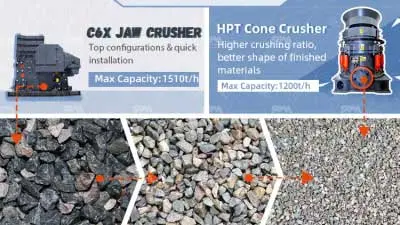
Gold-bearing quartz is highly abrasive. The primary stage must be handled by a heavy-duty Jaw Crusher. It uses compressive force to shatter large boulders reliably.
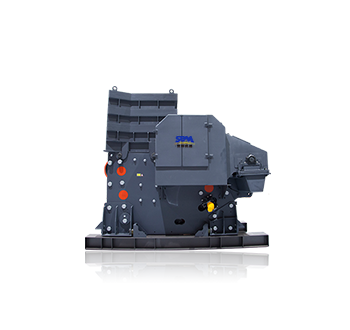
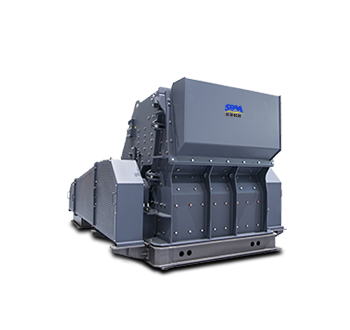
- Engineering Warning: Never deploy an impact crusher for the primary crushing of hard gold ore. The severe abrasiveness of the rock will destroy the blow bars within hours, leading to unacceptable downtime and exorbitant wear part costs.

Stage 2 & 3: Secondary and Tertiary Crushing (Precision Sizing)
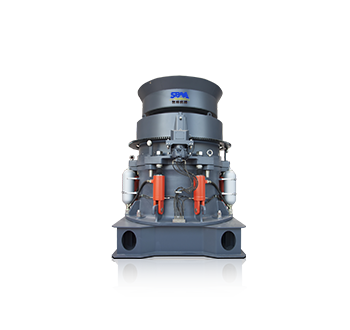
To achieve the fine feed size necessary for optimal cyanidation, multi-stage crushing with Hydraulic Cone Crushers is the industry standard.
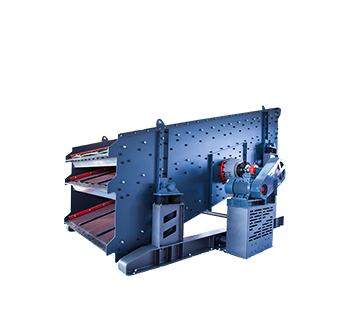
- Cone crushers are uniquely designed to handle abrasive hard rock. By utilizing advanced multi-cylinder hydraulic cone crushers in a closed circuit with high-precision vibrating screens, you ensure that no oversized particles escape the crushing loop.
- This closed-circuit design guarantees a strictly controlled, fine product that maximizes the exposed gold surface area for the cyanide solution.

4. Field Insight: Optimizing Liberation in Central Asia
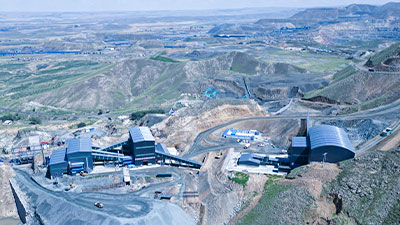
During a recent equipment optimization project for a high-grade gold mine in Central Asia, the operator was struggling with a stagnant cyanidation recovery rate of 82%.
Upon analyzing their flowsheet, the SBM engineering team discovered their tertiary crushing stage was inefficient, allowing too much +18mm material to pass through. By upgrading their circuit with a high-performance SBM multi-cylinder hydraulic cone crusher and re-calibrating the screen meshes, we reduced the final crushed product size down to a strict -12mm.
This simple but highly effective reduction in particle size drastically improved the degree of mineral liberation. Within one month of the upgrade, the plant's overall gold recovery rate surged from 82% to 89.5%, yielding a massive increase in pure profit with minimal operational disruption.
Frequently Asked Questions (FAQs)
Q1: What is the ideal particle size for gold cyanidation?
A: While it varies depending on the specific geology of the ore, most hard rock gold cyanidation processes require the ore to be reduced to a highly fine state (often 80% passing 75 microns) eventually. The goal of the crushing plant is to prepare the feed as fine as physically possible—typically reducing it to 10mm-12mm—to make the final liberation process highly efficient.
Q2: Why shouldn't I use an impact crusher for primary gold ore crushing?
A: Gold ore, especially when hosted in quartz, contains high levels of silica, making it extremely abrasive. Impact crushers rely on high-speed kinetic impacts using metal blow bars. When processing abrasive ores, these blow bars wear out exceptionally fast, resulting in crippling maintenance costs. A jaw crusher, which uses compressive force, is the only reliable choice for primary hard rock crushing.
Q3: How does closed-circuit crushing improve gold recovery?
A: A closed-circuit setup routes any crushed stone that is still too large (oversized) back into the cone crusher for a second pass. This strict screening ensures that 100% of the material moving forward to the cyanidation process meets the precise size requirement, preventing "locked" gold from slipping through and being lost in the tailings.
Maximize Your Gold Recovery Today
Do not let an inefficient crushing circuit trap your profits inside waste rock. Achieving the perfect particle size for cyanidation requires robust, precision-engineered crushing equipment.
Contact the SBM engineering team today for a comprehensive audit of your gold ore crushing circuit. We will help you design a closed-circuit crushing solution that guarantees maximum mineral liberation and highest possible recovery rates.


 Get Solution
 Send Message