





Summary: Chromite beneficiation involves multiple stages, typically including Crushing, Grinding, Classification, Concentration, and Dewatering....
Chromite ore is a crucial raw material for the production of chromium, which is widely used in various industries such as stainless steel manufacturing, chemical production, and refractory applications. The beneficiation process of chromite ore aims to separate the valuable chromite minerals from the associated gangue materials, enhancing the chromium content and making it suitable for further processing. This article will comprehensively analyze the chromite ore beneficiation process based on the provided flowchart, covering each stage from raw ore handling to the production of chromite concentrate.

Objectives of Chromite Beneficiation
Chromite ores vary widely in composition, texture, and grain size depending on their geological origin. Generally, chromite occurs in ultramafic and mafic igneous rocks, often associated with serpentine, olivine, magnetite, and silicate gangue minerals.
The primary goals of chromite beneficiation are:
- Increase Cr₂O₃ content to meet market specifications (usually >40% for metallurgical grade).
- Remove impurities such as silica, alumina, magnesium oxide, and iron oxides.
- Achieve optimal particle size distribution for downstream processing.
- Maximize recovery of chromite minerals.
Chromite Ore Beneficiation Process Flow
Chromite beneficiation involves multiple stages, typically including Crushing, Grinding, Classification, Concentration, and Dewatering. The choice of techniques depends on ore characteristics and desired product specifications.
1. Raw Ore Handling
The chromite ore beneficiation process begins with the handling of raw ore. The raw ore, which is typically mined from open - pit or underground mines, is first fed into a feeder. The feeder's role is to regulate the flow of the raw ore, ensuring a steady and controlled supply to the subsequent crushing stage. This is a crucial initial step as it sets the foundation for the entire beneficiation process, preventing over-or under-feeding of the crushing equipment.
2. Crushing Stage
2.1 Primary Crushing
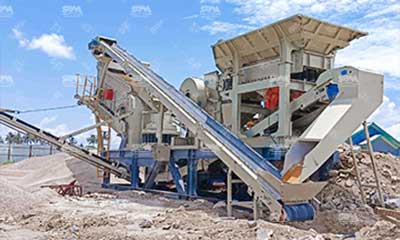
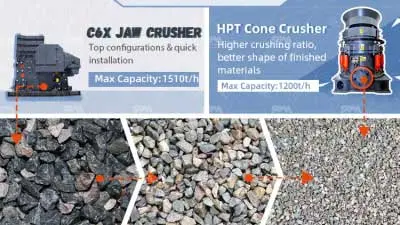
The raw ore from the feeder is then directed to a PE jaw crusher for primary crushing. The PE jaw crusher is a robust piece of equipment that uses a compressive force to break the large chunks of raw ore into smaller pieces. It has a wide feed opening and can handle relatively large particles. The crushing action in the jaw crusher occurs as the moving jaw compresses the ore against the fixed jaw, reducing its size. The output of the primary crusher is typically in the range of several tens of millimeters in size, which is then ready for further processing in the secondary crushing stage.
2.2 Secondary Crushing
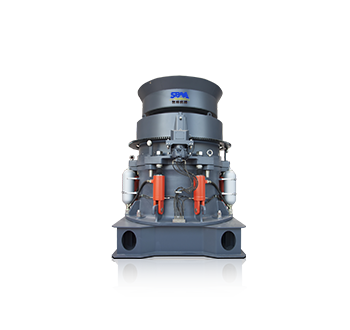
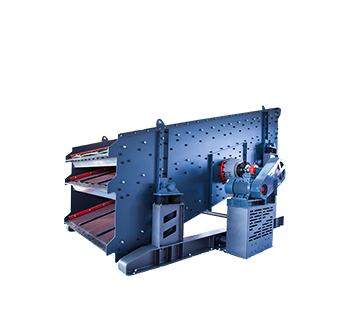
After primary crushing, the ore is fed into a cone crusher for secondary crushing. The cone crusher further reduces the size of the ore particles by applying a combination of compression and shear forces. It has a conical crushing chamber with a moving mantle and a fixed concave. The ore is crushed as it passes through the gap between the mantle and the concave, resulting in a more uniform particle size distribution. The product from the cone crusher is then screened using a vibrating screen. The vibrating screen separates the crushed ore into different size fractions, with particles larger than 20 mm being returned to the cone crusher for re - crushing, and particles within the desired size range (less than 3 mm in this case) being sent to the next stage of the process.

3. Grinding
The screened ore with a size less than 3 mm is fed into a ball mill for grinding. The ball mill is a cylindrical device filled with steel balls. As the mill rotates, the steel balls tumble and crush the ore particles, reducing them to a fine powder. The grinding process is essential for liberating the chromite minerals from the gangue materials. The degree of grinding is carefully controlled to ensure that the chromite minerals are fully liberated without over - grinding, which can lead to increased energy consumption and the formation of fine particles that are difficult to separate.
4. Classification
After grinding, the ore slurry from the ball mill is fed into a spiral classifier. The spiral classifier uses the difference in the settling velocity of particles of different sizes in a liquid medium to separate them. The larger and heavier particles settle faster and are carried away by the spiral conveyor at the bottom of the classifier, while the finer particles remain in the liquid suspension and are discharged as the overflow. The underflow from the spiral classifier, which contains the coarser particles, is usually returned to the ball mill for further grinding, while the overflow, containing the finely ground particles, proceeds to the concentration stage.
5. Concentration Stage
5.1 Jigging
The finely ground ore from the spiral classifier overflow is first fed into a jigger. The jigger is a gravity-separation device that operates based on the difference in the specific gravity of the chromite minerals and the gangue materials. Chromite has a relatively high specific gravity compared to most gangue minerals. In the jigger, a pulsating water flow is applied, causing the heavier chromite particles to settle to the bottom while the lighter gangue particles remain in the upper layers. The bottom product from the jigger is the chromite-rich concentrate, which is sent to the concentrate silo, while the middle ore and tailings are further processed.
5.2 Spiral Chute Separation
The middle ore from the jigger is fed into a spiral chute. The spiral chute is another gravity-separation device that uses the combined effects of gravity, centrifugal force, and friction to separate particles. As the ore slurry flows down the spiral chute, the heavier chromite particles move towards the inner side of the chute and are collected as the concentrate, while the lighter gangue particles move towards the outer side and are discharged as tailings. The concentrate from the spiral chute is also sent to the concentrate silo, and the middle ore can be further processed.
5.3 Shaking Table Separation
The middle ore from the spiral chute and other intermediate products are fed into shaking tables for further separation. Shaking tables are highly effective in separating fine-grained particles based on their specific gravity, shape, and size. The shaking table has a sloping surface that vibrates, causing the particles to move in a zig - zag pattern. The heavier chromite particles move more slowly and are concentrated at the lower end of the table, while the lighter gangue particles move more quickly and are discharged at the upper end. Multiple shaking tables may be used in series to achieve a higher degree of separation and to produce a high-quality chromite concentrate.
6. Dewatering Stage
6.1 Thickening
The chromite concentrate from the concentration stage contains a significant amount of water. To reduce the water content, the concentrate is first fed into a thickener. The thickener is a large, cylindrical tank where the concentrate slurry is allowed to settle under the influence of gravity. As the particles settle, the clear water on the top is decanted, and the thickened concentrate at the bottom is discharged. The thickener helps to increase the solids content of the concentrate from typically around 20 - 30% to 40 - 60%.
6.2 Vacuum Filtering
After thickening, the thickened concentrate is fed into a vacuum filter. The vacuum filter uses vacuum pressure to draw water through a filter medium, leaving behind a filter cake of chromite concentrate. The vacuum filtering process further reduces the water content of the concentrate to a level suitable for storage and transportation, typically around 8-12%. The resulting chromite concentrate is then sent to the concentrate silo for final storage.
7. Tailings Disposal
The tailings from the various separation stages, which mainly consist of gangue materials, are collected and disposed of in an environmentally responsible manner. Tailings can be stored in tailings dams or subjected to further treatment to recover any remaining valuable minerals or to reduce their environmental impact. In some cases, tailings may be reprocessed using additional separation techniques to increase the overall recovery of chromite from the raw ore.
Process Optimization and Challenges
Process Optimization
To improve the efficiency and economic viability of the chromite ore beneficiation process, several optimization measures can be taken. These include optimizing the crushing and grinding parameters to achieve the best liberation of chromite minerals while minimizing energy consumption. The selection and adjustment of separation equipment parameters, such as the water flow rate in the jiggers and the vibration amplitude of the shaking table, can also significantly affect the separation efficiency. Additionally, the use of advanced process control systems can help to monitor and adjust the process in real-time, ensuring stable operation and high-quality product output.
Challenges
The chromite ore beneficiation process also faces several challenges. One of the main challenges is dealing with the variability of raw ore quality. Chromite ore deposits can have significant variations in mineralogy, grade, and particle size distribution, which can affect the performance of the beneficiation process. Another challenge is environmental protection. The beneficiation process generates large amounts of tailings, which need to be properly managed to prevent environmental pollution. Additionally, the use of water in the process can be a concern in water-scarce regions, and efforts are needed to develop water-saving technologies and recycling systems.
The chromite ore beneficiation process is a complex and multi - stage operation that involves a series of physical separation techniques to extract valuable chromite minerals from raw ore. Each stage, from raw ore handling to the production of chromite concentrate and tailings disposal, plays a crucial role in ensuring the overall efficiency and effectiveness of the process. By understanding the principles and operations of each stage, as well as addressing the challenges and opportunities for optimization, the chromite ore beneficiation industry can continue to improve its performance and contribute to the sustainable supply of chromium for various industrial applications.


 Get Solution
 Send Message