








Summary: A comprehensive technical guide to dust and noise control in quarry and aggregate plants. Covers source suppression, precision atomization, pulse bag dust collectors, vibration isolation, and compliance strategies for stationary and mobile crushing operations....
Aggregate crushing, screening, conveying, and stockpiling operations inevitably generate large volumes of fugitive dust and persistent industrial noise. These two core environmental issues not only violate local environmental protection regulations but also threaten on-site worker health, reduce equipment service life, and trigger neighborhood complaints. For modern quarry and aggregate plant operators, effective dust and noise control is no longer an optional upgrade but a mandatory requirement for legal production, sustainable operation, and long-term profitability.
Many traditional plants rely solely on simple water spraying and basic sound insulation, which fail to meet updated EPA, EU Stage V, and local construction industry environmental standards. This article systematically analyzes the core sources of dust and noise in quarry and aggregate production and provides practical, cost-effective engineering solutions covering source control, process optimization, equipment upgrading, and daily operation management. All strategies balance environmental compliance, production efficiency, and operational cost, suitable for stationary crushing plants, mobile quarry sites, and construction waste recycling lines.

1. Main Sources of Dust & Noise in Aggregate Plants
To achieve targeted control, operators must first clarify the high-frequency pollution points throughout the aggregate production circuit.
Primary Dust Sources
- Crushing zones: High-speed impact and extrusion of stone materials in jaw, cone, and impact crushers produce massive fine dust particles.
- Screening & transfer points: Vibration screening and material falling between conveyors generate fugitive dust, the most diffused pollution source in the whole plant.
- Stockpile & haulage areas: Open material piles and vehicle traveling on unpaved quarry roads cause wind-blown dust.
- Material unloading & feeding links: Drop height and unbuffered feeding lead to secondary dust flying.
Primary Noise Sources
- Mechanical operation noise: High-frequency operation of crushers, vibrating screens, and fans produces continuous noise above 90dB.
- Material impact noise: Collision and friction between stones and equipment liners create impact noise.
- Vibration transmission noise: Equipment vibration transmits to foundations and steel structures, forming resonance noise.
- Vehicle & auxiliary equipment noise: Dump trucks, loaders, and diesel generator sets produce intermittent high-decibel noise.
2. Practical Dust Reduction Solutions for Quarry Operations
Scientific dust control follows the principle of source suppression + closed containment + end purification + auxiliary stabilization, avoiding single and inefficient water-spray-only solutions.
2.1 Source Dust Suppression & Closed Containment
Enclosing high-dust areas is the most cost-effective foundational measure. Install fully sealed housing for crushers and vibrating screens, and adopt high-performance rubber sealing strips and baffled chutes at all transfer points to block dust diffusion at the source. Optimize the material falling buffer structure to reduce drop height and avoid violent material splashing. For mobile crushing plants, adopt integral sealed covers to adapt to flexible site operations.

2.2 Optimized Water Mist & Wet Suppression Systems
Traditional coarse water spraying easily causes material moisture overload, affecting screening efficiency and aggregate quality. Modern precision atomization systems adopt 10–100 micron fine mist nozzles, which can efficiently capture PM2.5 and PM10 dust particles without wetting materials excessively. Install fixed spray devices at feeding ports, crushing chambers, and screening outlets, and equip mobile spray cannons for stockpile and road dust control to realize full coverage dust suppression.
2.3 Industrial Dust Collector End Purification
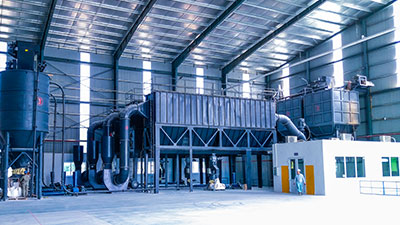
For sites with strict environmental standards, pulse bag dust collectors are the mainstream end-treatment equipment, with a dust removal efficiency of over 99%. Equip independent dust collection pipelines for each dust-producing node to collect concentrated dust-laden air. Reasonably control filtration wind speed and adopt wear-resistant filter materials such as PTFE membrane and polyester needle felt to adapt to high-abrasion stone dust, ensuring long-term stable operation of the system.
2.4 Chemical Dust Suppressants & Site Management
In arid areas with insufficient water resources, environmentally friendly polymer and hygroscopic salt dust suppressants can be applied on stockpiles and haul roads. These chemicals form a durable protective crust on the material surface to prevent wind erosion and long-term dust flying. In addition, cover open stockpiles with dust-proof nets, regularly water and harden plant roads, and clean floating dust to reduce secondary pollution.
2.5 Process Optimization to Reduce Dust Generation
Match the crushing and screening process reasonably to avoid over-crushing, which reduces excess fine dust production. Adopt graded crushing and closed-circuit screening processes to stabilize material flow, prevent sudden material surges, and fundamentally lower fugitive dust emission intensity.
3. Effective Noise Reduction Methods for Aggregate Crushing Plants
Noise control focuses on three dimensions: source noise reduction, transmission isolation, and personnel protection, realizing comprehensive noise attenuation without affecting production capacity.
3.1 Equipment Source Noise Reduction
Replace and upgrade high-noise old equipment with low-noise optimized crushers and vibrating screens. Install rubber buffer liners and wear-resistant impact plates inside crushing chambers to absorb stone impact energy and reduce collision noise. Optimize equipment operation parameters to avoid no-load high-speed operation and abnormal vibration caused by uneven feeding.
3.2 Vibration Isolation & Foundation Optimization
Equipment vibration is the main cause of resonance noise. Install professional rubber damping pads and spring vibration isolators at the bottom of crushers and screens to cut off vibration transmission paths. Reinforce equipment foundations and separate the foundation of main noise sources from factory buildings and roads to avoid structural resonance and amplify noise.
3.3 Sound Insulation & Noise Absorption Barriers
Build closed acoustic insulation rooms for main crushing and screening equipment, and lay sound-absorbing materials on the inner wall. Set up professional sound insulation barriers, earth berms, and green belts on the plant boundary to form a multi-layer noise isolation zone, effectively blocking noise outward transmission and reducing impact on surrounding residential areas.
3.4 Auxiliary System Noise Control
Install silencers for fans, dust collectors, and diesel generator sets to reduce airflow and mechanical noise. Standardize vehicle access routes, limit driving speed in the plant, and reduce horn and running noise. Arrange reasonable equipment operation schedules to avoid concentrated high-noise operation during rest periods.
4. Common Mistakes in Dust & Noise Control
- Blind excessive water spraying: Causes high material moisture, screen blockage, reduced aggregate quality, and increased operating costs.
- Single end-treatment equipment: Ignoring source sealing and process optimization leads to poor long-term control effect and frequent equipment failure.
- Neglecting vibration noise: Only focusing on equipment noise while ignoring foundation resonance results in unobvious overall noise reduction effect.
- Irregular daily management: Uncovered stockpiles, unhardened roads, and untimely dust cleaning cause repeated pollution.
5. Long-Term Operation & Compliance Suggestions
Excellent environmental protection effect relies on standardized long-term operation rather than temporary rectification. Aggregate plant operators should formulate daily inspection and maintenance systems for dust and noise reduction equipment, regularly check nozzle status, dust collector filter bag wear, vibration isolator aging, and sound insulation structure integrity. Adjust control schemes according to seasonal changes, material characteristics, and production load to ensure stable compliance with local environmental emission standards throughout the year.
Conclusion
Dust and noise pollution in quarry and aggregate production are systematic problems caused by process, equipment, and management. Single remediation measures cannot achieve stable compliance. Only by adopting a comprehensive solution of source control, process optimization, equipment upgrading, and standardized management can aggregate plants effectively reduce environmental pollution, avoid regulatory penalties, improve on-site operation environment, and extend equipment service life.
As a professional aggregate and mining equipment manufacturer, SBM provides one-stop environmental protection crushing and screening solutions, including sealed production lines, efficient dust removal systems, vibration and noise reduction configurations, and customized plant layout design. If you need to optimize the environmental protection configuration of your aggregate production line to meet local emission standards, contact our engineering team for a free tailored solution and budget evaluation.
FAQ about Dust and Noise Control
Q1: What is the most efficient way to reduce dust in aggregate crushing plants?
The best effect comes from a combined solution: closed equipment sealing + precision atomization dust suppression + pulse bag dust collector end purification, which balances dust removal efficiency and production efficiency without affecting aggregate quality.
Q2: How to reduce quarry noise without reducing production capacity?
Adopt source vibration isolation, equipment buffer noise reduction, and boundary sound insulation barriers. This physical noise reduction method will not change the production process and effectively control noise transmission while ensuring normal plant output.
Q3: Can mobile crushing plants realize standard dust and noise control?
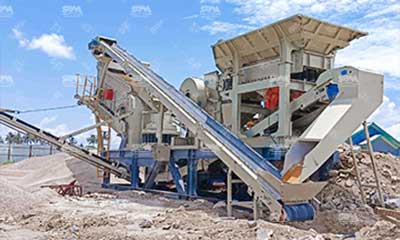
Yes. Modern mobile crushing stations support integrated sealed covers, mobile fog cannons, and damping vibration reduction systems, which can meet temporary construction and recycling site environmental protection requirements.


 Get Solution
 Send Message