






Summary: The crushing stage directly constrains the output capacity, finished‑product quality, production cost and economic benefits of an aggregate production line. Here are 6 tips to improve crusher efficiency in aggregate operation....
In aggregates production, crushers serve as the core equipment of the entire crushing plant. The operational efficiency of crushers directly determines the hourly output of qualified aggregates, as well as the energy consumption per ton, wear parts consumption, and final product gradation and shape.
Many quarry and aggregate plants invest heavily in high-end machinery, yet their actual production capacity consistently falls short of design specifications.
Why?
In most cases, the issue is not with the machine itself, but rather with significant room for optimization in operation, maintenance, and process integration.
1.Why Does Crushing Efficiency Directly Determine the Overall Profitability of Aggregate Plants?
The crushing stage directly constrains the output capacity, finished‑product quality, production cost and economic benefits of an aggregate production line, mainly reflected in four key points:
1.1 Crusher Efficiency Sets the Throughput Ceiling
In aggregate crushing plant, the overall throughput is strictly determined by its weakest link. Once crushing efficiency drops at any crushing stage, the capacity of the entire line suffers—leaving downstream screening equipment, belt conveyors, and stockpiling systems running idle.
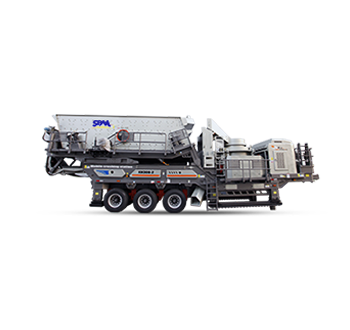
Crushing efficiency is not merely a single-machine metric; it is a system-wide KPI. This is why SBM emphasizes the matching and seamless integration of complete crushing and screening plants.
1.2 Crusher Efficiency Directly Determines Final Product Quality
Crushing efficiency isn't just about speed—it directly affects particle shape and gradations:
Flakiness and Elongation Index: Insufficient crushing ratios or improper laminated crushing increase the presence of elongated and flaky particles.
Gradation Stability: High-efficiency crushing produces consistent, well-graded aggregates that meet strict market specifications.
Fines Content Control: When fine crushing efficiency aligns with screening capacity, the 0–5mm manufactured sand/dust content stays within optimal limits—preventing quality degradation and avoiding material waste caused by over-crushing.
1.3 Crusher Efficiency Accounts for the Highest Per-Ton Production Cost
In the cost composition per ton of aggregate production, the crushing operations typically dominates:
Wear Parts (Wear Cost): Wear parts (e.g., blow bars, mantle, jaw plates) account for 40%–60% of total crushing costs. Inefficient crushing equipment results in excessive idle impacts and accelerated wear for the same production tonnage.
Energy Consumption: Crushing is the primary power consumer, typically driving 50%–70% of total plant electricity usage. For the same output, low-efficiency crushers require longer run times, translating directly into higher kWh/ton energy bills.
1.4 Crusher Efficiency Drives Plant Matching & ROI
From equipment selection, stage reduction ratios to operational controls, the design of the crushing plant should fully consider the crushing efficiency to achieve system optimization, lower total cost of ownership (TCO), and ensure rapid ROI.

2. How to Improve Crusher Efficiency in Aggregate Operation?
2.1 Optimizing Feeding Management
2.1.1 Ensuring Uniform and Continuous Feeding
A crusher's peak throughput capacity relies directly on the stability of the material flow. Intermittent or unstable feeding causes severe load fluctuations - leading to frequent overload trips or wasting significant electrical power during idle running.
To ensure uniform and continuous feeding, here are some things to do:
- Equip a vibrating feeder with a Variable Frequency Drive upstream of the coarse crusher to dynamically adjust the feeding speed based on real-time main motor load feedback.
- Maintain feeding speed within an optimal range to match the operational rhythm of the moving jaw or eccentric shaft.
- Keep the equipment load factor consistently within the optimal 85%–90% range, preventing frequent idling and thermal stress on electrical systems.
2.1.2 Pre-screening
Raw material often contains a substantial portion of particles already at the target size. Feeding these particles directly into the crushing chamber wastes crusher capacity, fills the inter-particle voids with buffer material, increases energy consumption, and accelerates liner wear. Thus, pre-screening is needed.
Best practices for pre-screening:
- Install a grizzly feeder ahead of primary crushing to divert pre-sized fines via a bypass belt directly to downstream processing stages or stockpiles.
- For sticky raw materials with high clay or moisture content, pre-screening can also scalp out mud, effectively preventing clogging in the crushing cavity.
Field Data: Effective pre-screening increases effective crusher throughput by 15%–20% while extending wear liner service life by approximately 30%.

2.2 Choose the Right Crusher and Configuration
2.2.1 Matching Crusher Types to Material Characteristics
Different crushers are excels for different operating conditions. Selecting machinery without evaluating raw material physical properties- such as compressive strength, abrasiveness index (Ai), and maximum feed size - is the primary driver of low operational efficiency and high maintenance costs.
| Crusher Type | Crushing Stage | Suitable Material | Key Features |
|---|---|---|---|
| Jaw Crusher | Coarse crushing | High hardness, high abrasiveness | Simple structure, high throughput capacity |
| Gyratory Crusher | Coarse crushing | High hardness, high abrasiveness | Engineered for large and ultra-large crushing plants |
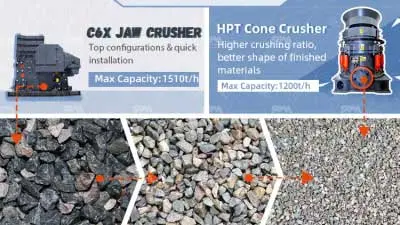
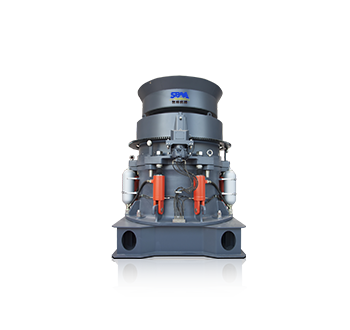
| Cone Crusher | Medium & fine crushing | Medium-to-high hardness | High crushing ratio, high efficiency |
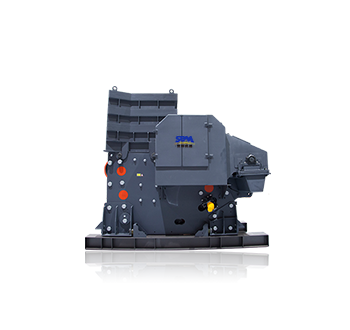
| Impact Crusher | Medium & fine crushing | Medium-to-low hardness | Excellent particle shape, reduced fines content |
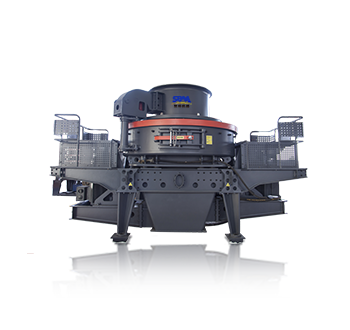
| Vertical Shaft Impact Crusher | Fine crushing & shaping | Low, medium & high hardness | Optimal output particle shape, premium manufactured sand |
2.2.2 Aggregate Crushing Plant Configuration
Large-scale aggregate production lines typically utilize a multi-stage process—Primary Crushing + Secondary/Tertiary Crushing + Shaping—to ensure each crusher operates within its optimal reduction ratio range.
Typical Circuit Configurations
Hard Rock (e.g., Granite, Basalt, Quartzite):
Jaw Crusher (Primary) → Single-Cylinder Hydraulic Cone Crusher (Secondary) → Multi-Cylinder Hydraulic Cone Crusher / VSI Sand Maker (Tertiary & Shaping)
Medium-to-Soft Rock (e.g., Limestone, Sandstone, Dolomite):
Jaw Crusher (Primary) → Impact Crusher (Secondary/Fine) → VSI Sand Maker (Shaping)
Get Latest Price of SBM Crushers
2.3 Optimize Operating Parameters of Crushers
2.3.1 Precise Setting and Dynamic Adjustment of Closed Side Setting (CSS)
The Closed Side Setting (CSS) dictates the maximum output particle size and controls total crusher throughput.
If the CSS is too tight, it will trigger excessive inter-particle crushing and over-grinding, increasing energy consumption and causing frequent equipment overload trips.
If the CSS is too wide, it will produce oversized aggregate that exceeds quality specifications, placing immense re-circulating load pressure on closed-circuit screening systems.
Provided that downstream screening capabilities and final product specs are met, maintain the CSS near the upper threshold of its designed operating range. This maximizes volumetric throughput while minimizing power consumption (kWh/ton).
2.3.2 Optimizing Eccentric Shaft Speed and Stroke
Eccentric speed (RPM) and stroke length collectively control how frequently material is compressed and how quickly it moves down through the crushing chamber.
Raising RPM within the rated design limit increases crushing cycles per unit time, which boosts production rates and improves particle cubicity.
However, the speed should be controlled at a reasonable range. Otherwise, it prevents crushed material at the bottom of the cavity from discharging freely under gravity, leading to material packing, power spikes, and chamber choking.
2.4 Maintaining "Choke Feeding" in the Crushing Chamber
The material fill rate within the crushing cavity profoundly impacts overall efficiency. For jaw crushers and cone crushers, maintaining Choke Feeding (keeping the cavity completely full) is the essential foundation for achieving peak operational performance.
2.4.1 Why Choke Feeding is So Important?
Enables Inter-Particle (Laminated) Crushing: A full cavity forces rock-on-rock crushing rather than rock-on-metal impact, dramatically boosting crushing efficiency and volumetric yield.
Extends Wear Part Service Life: Distributes material force evenly across the crushing chamber, eliminating localized liner wear and maximizing wear parts longevity (mantle, concave, jaw plates).
Improves Product Shape & Consistency: Yields higher cubic particles, reduces flakiness, and produces a far more uniform aggregate gradation.
2.4.2 How to Achieve Choke Feeding?
- Install a material level sensor above the feed opening to automatically regulate upstream vibrating feeder speeds and prevent empty running.
- Keep the crushing cavity continuously buried under feed material to eliminate idling and severe mechanical vibration.
- Ensure uniform material distribution to avoid uneven wear caused by off-center feeding.

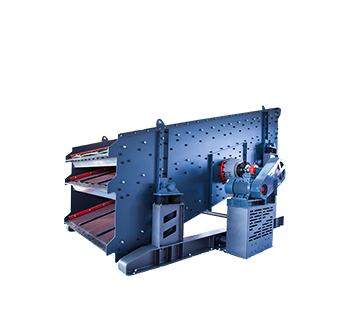
2.5 Enhancing Screening and Closed-Circuit Efficiency
Crushing efficiency is closely tied to screening performance. If screening system efficiency falls short, fully sized aggregate cannot be separated in time—it leads to excessive "over-crushing" and redundant recirculation.
- Select appropriate screen mesh (e.g., polyurethane or rubber screens) based on material characteristics.
- Keep the closed-circuit circulating load ratio within the optimal 20%–30% range. An excessively high return ratio indicates inefficient reduction ratios in upstream crushing stages, wasting power on return conveyors and crusher drive systems.
- Maintain a screen deck inclination typically between 15°–20°. Excessive slope reduces screening precision and leads to oversize carryover, while insufficient slope slows material travel speed and reduces screening efficiency.
- Regularly clear clogged screen apertures and and promptly replace worn screen meshes to maintain high screening efficiency.

2.6 Equipment Maintenance
Proactive equipment maintenance is essential for minimizing unplanned downtime and maintaining optimal crushing efficiency in aggregate operation over the long term.
2.6.1 Conduct Regular Equipment Inspections
Perform a thorough inspection of crushing equipment before daily startup and after shutdown. Pay close attention to the condition of wear parts (such as jaw plates, mantles, concaves, and blow bars) and replace worn ones promptly. This prevents unexpected catastrophic failures and keeps the aggregate crushing line running stably and efficiently.
2.6.2 Lubrication
Proper lubrication is vital to guaranteeing smooth mechanical operation, reducing friction, and extending equipment service life of crushers and auxiliary equipment in aggregate crushing plants.
Select Climate-Appropriate Lubricants: Choose grease or lubricating oil grades based on operating ambient temperature and regional climate conditions. Ensure seasonal oil changes (summer/winter grades) are performed on schedule.
Maintain System Cleanliness: Thoroughly clean bearings and bearing housings to remove contaminants, sludge, and metal debris prior to refilling or flushing lubricant systems.

Conclusion
Maximizing crusher efficiency in aggregate production is not simply a matter of upgrading to higher-power machinery. It is a comprehensive systems engineering project that encompasses optimized feeding management, proper equipment selection, precise operating parameters, choke-fed chamber control, and routine maintenance.
If you are currently facing operational challenges—such as production capacity falling short of design benchmarks, high energy consumption per ton, or premature wear part failure—SBM engineers are here to help. Contact us today for a free processing line bottleneck diagnosis and a tailored equipment upgrade solution.


 Get Solution
 Send Message