




In modern gold mining, environmental compliance and water conservation are no longer optional—they are strict prerequisites for obtaining operating permits. For gold cyanidation plants (CIL/CIP), managing cyanide-bearing tailings presents massive environmental and geotechnical risks.
As a result, Dry Tailings Stacking (DTS)—also known as filtered tailings management—has become the gold standard for sustainable gold processing plants. Dry tailings stacking (DTS) is a tailings management method in which cyanidation tailings are mechanically dewatered to roughly 15–20% moisture, conveyed as a filter cake, and stacked and compacted in lifts instead of being discharged as a slurry into a dam. The circuit is built around three core equipment systems—a high-rate thickener, one or more filter presses, and a conveying-and-stacking system—alongside cyanide detoxification and filtrate-return circuits to ensure safe, closed-loop operation. Capital cost (CAPEX) for a 1,000 t/d DTS equipment system typically falls in the $2.0–$4.5 million range, while operating cost (OPEX) averages $1.80–$3.20 per tonne of tailings, with high-pressure filtration and reagent detoxification driving both.
This guide provides an engineering breakdown of the core equipment required for a DTS circuit, estimated CAPEX and OPEX benchmarks, and the strategic return on investment (ROI) for gold mine operators.
1. Why Gold Cyanidation Plants Are Shifting to Dry Stacking
Before examining the machinery and costs, it is critical to understand why EPC contractors and mine owners are abandoning conventional tailings storage facilities (TSFs) for DTS systems:
- Cyanide Detoxification & Containment: Filtering tailings removes up to 85%–90% of the process water, dramatically reducing the volume of cyanide-laden liquid entering the storage area and preventing seepage into local water tables.
- Maximum Water & Reagent Recovery: In arid mining regions (such as West Africa, Nevada, Australia, or the Andes), recovering barren solution from the tailings means recycling both scarce water and residual sodium cyanide directly back into the leaching circuit.
- Elimination of Dam Failure Risks: Dewatered filter cakes (containing 15%–20% moisture) are compacted into stable, self-supporting landforms, eliminating the risk of liquefaction and dam breaches.
- Smaller Footprint: Dry stacks can be built steeper and higher than wet dams, reducing land acquisition costs and simplifying final mine reclamation.
2. Core Equipment in a Gold Plant DTS Circuit
A Dry Tailings Stacking system is an integrated dewatering and material handling line placed immediately after the cyanide detoxification circuit (e.g., INCO SO2/Air or hydrogen peroxide process).


The standard equipment lineup includes:
A. High-Rate Thickener (Primary Dewatering)
- Function: Receives detoxified slurry (typically 30%–40% solids by weight) and uses flocculants to accelerate settling, producing a thickened underflow of 55%–65% solids.
- Why it matters: Pre-thickening reduces the volumetric load on the downstream filters, allowing you to use smaller, less expensive filtration equipment.
- Key Specs: Bridge-mounted or center-column drive, automated rake lifting mechanism, and flocculant dosing system.
B. Slurry Buffer Tanks & High-Pressure Feed Pumps
- Function: Agitated surge tanks keep the thickened underflow suspended while heavy-duty centrifugal or positive displacement pumps feed the filters at high pressure (typically 6 to 16 bar).
C. Filter Press (Secondary / Final Dewatering)
For fine-ground gold cyanidation tailings (often P80 = 75 μm or finer), Chamber Filter Presses or Membrane Filter Presses are overwhelmingly preferred over vacuum belt filters due to their superior cake dryness.
- Membrane Filter Press: Features inflatable diaphragms that squeeze the filter cake after the initial fill cycle, reducing moisture content to 15%–20% (and as low as 12%–15% for granular ores) while shortening cycle times.
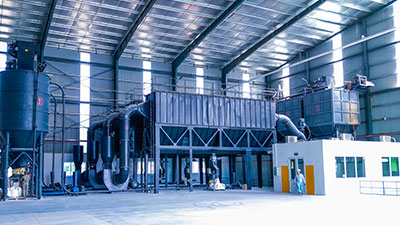
- Automation: Equipped with automatic plate shifters, high-pressure cloth washing systems, and drip trays (bomb-bay doors) to prevent filtrate contamination.
D. Cake Handling & Stacking Conveyors
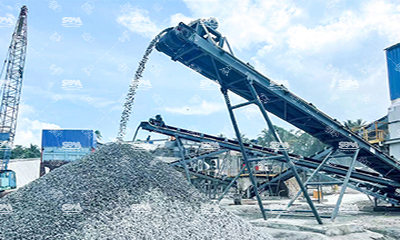
- Discharge & Transfer Conveyors: Heavy-duty belt conveyors positioned beneath the filter presses catch the discharged filter cakes and transport them out of the filtration building.
- Overland & Grasshopper Conveyors: For transporting dewatered tailings from the plant to the stacking site over distances ranging from 100m to several kilometers.
- Radial Stacker / Mobile Spreader: Distributes the filter cake evenly across the tailings storage cell for compaction by bulldozers or vibratory rollers.
3. Estimated Equipment Cost (CAPEX) Breakdown
The capital cost of a DTS plant depends heavily on plant throughput (Tons Per Day - TPD), ore mineralogy (clay content severely impacts filtration rates), and the distance to the stacking site.
Below are benchmark equipment cost estimates for complete DTS systems in gold cyanidation plants:
| Plant Capacity (TPD / TPH) | Core Equipment Configuration | Estimated Equipment CAPEX (USD) |
|---|---|---|
| Small-Scale Plant 300 – 500 TPD (~12 – 21 TPH) |
• 1x High-Rate Thickener (Ø 8m - 12m) • 1x Automatic Chamber Filter Press (150 - 250 m²) • Short Transfer & Stacking Belt Conveyors |
$850,000 – $1,600,000 |
| Medium-Scale Plant 1,000 – 1,500 TPD (~42 – 65 TPH) |
• 1x High-Rate Thickener (Ø 15m - 20m) • 2x Recessed/Membrane Filter Presses (300 - 500 m² each) • Overland Conveyor (100m+) & Radial Stacker |
$2,000,000 – $4,500,000 |
| Large-Scale Plant 3,000 – 5,000+ TPD (~125 – 210+ TPH) |
• 1–2x Heavy-Duty Thickeners (Ø 24m - 35m) • 3–5x Automatic Membrane Filter Presses (600 - 1,000 m²) • Tripper / Long-Distance Overland & Mobile Stacking System |
$5,500,000 – $12,000,000+ |
(Note: Equipment CAPEX estimates cover core mechanical, hydraulic, and automation packages; civil works, site installation, buildings, and chemical detoxification reagents vary by location. High clay or sericite content in the gold ore slows down filtration kinetics, requiring larger filtration areas and increasing initial CAPEX by 20%–35%.)
4. Operating Costs (OPEX) & Financial Payback
While a DTS system requires a higher upfront equipment investment than pumping wet slurry to a dam, its operational economics are compelling over the life of the mine.
Typical DTS Operating Costs ($1.80 – $3.20 / tonne total):
- Filtration, Thickening & Detoxification OPEX: $1.30 – $2.20 per dry tonne of tailings. This covers electricity for high-pressure feed pumps and air compressors, flocculants, cyanide detoxification reagents, and periodic replacement of filter cloths and plates.
- Conveying & Compaction OPEX: $0.50 – $1.00 per dry tonne, depending on overland conveyor length and earthmoving fleet requirements at the dry stack.
How DTS Pays for Itself (ROI Drivers):
- Reagent & Water Savings: Recovering 85%+ of process water reduces fresh makeup water costs and cuts lime and cyanide consumption, often saving $0.50 – $1.50 per tonne of ore processed.
- Elimination of Dam Raises: Wet tailings dams require continuous, multi-million-dollar downstream/upstream embankment raises every few years. Dry stacking eliminates this recurring sustaining CAPEX.
- Faster Permitting & Lower Closure Bonds: Environmental regulators frequently require significantly lower financial reclamation bonds for dry stacks compared to wet impoundments, freeing up millions in working capital.
5. Engineering Checklist: Sizing Your DTS System
Because gold ores vary drastically in particle size distribution and clay content, sizing a filter press and thickener without laboratory testing is a major engineering risk.
Before requesting a quotation for a Dry Tailings Stacking system, prepare the following parameters:
- Tailings Throughput: Dry metric tons per day (TPD) or per hour (TPH).
- Slurry Characteristics: Feed pulp density (% solids) and specific gravity (SG) of the dry solids.
- Particle Size Distribution (PSD): Specifically the P80 grind size and the percentage of -20 μm slimes/clays.
- Target Cake Moisture: Usually 15%–20% depending on local geotechnical requirements.
- Transport Distance: Distance and elevation change from the filtration plant to the dry stack area (to size the overland belt conveyors).
Need a Custom Dry Tailings Stacking Solution?
Designing an efficient dewatering and stacking circuit requires precise coordination between High-Rate Thickeners, Automatic Filter Presses, and Long-Distance Belt Conveyors.
Submit your plant's TPD capacity, slurry parameters, or laboratory filtration test data. Our engineering team will provide a customized DTS flowsheet, equipment sizing calculation, and comprehensive budget quotation tailored to your gold processing plant.



 Get Solution
 Send Message
