





Summary: Learn how to select and optimize primary, secondary and tertiary crushing for maximum efficiency and cost savings in mining and aggregates....
Crushing is a critical process in the mining, construction, and recycling industries. It involves breaking down large rocks into smaller, more manageable pieces to facilitate further processing or to produce aggregate materials. The crushing process is typically divided into three stages: primary, secondary, and tertiary crushing. Each stage serves a specific purpose and employs different types of equipment to achieve the desired particle size and shape. This article provides an in-depth analysis of these three crushing stages, their functions, the equipment used, and their significance in the overall crushing process.

Primary, secondary, and tertiary crushing represent a sequential process that transforms large raw materials into smaller, usable products. Each stage has a distinct role:
- Primary crushing reduces oversized material to a manageable size;
- Secondary crushing further refines the particle size and shape;
- Tertiary crushing produces the final product with precise size control.
1. Primary Crushing
Primary crushing is the first stage in the crushing process, where large, raw materials are reduced from their original size to a more manageable dimension. The primary crusher handles the largest feed particles, often ranging from several hundred millimeters to over a meter in diameter, depending on the material source. The primary goal of this stage is to break down oversized materials into smaller pieces that can be further processed in subsequent stages.


Common types of primary crushers include jaw crushers, gyratory crushers, and impact crushers.
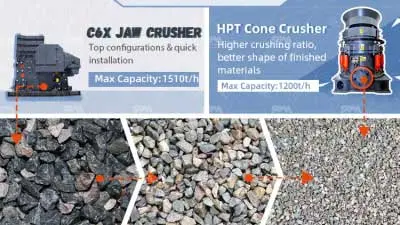
- Jaw crushers are widely used for their simplicity, reliability, and ability to handle hard and abrasive materials such as granite, basalt, and ore. They operate by squeezing the material between a fixed jaw plate and a moving jaw plate, which reciprocates to apply compressive force.
- Gyratory crushers, on the other hand, are more suitable for high-capacity operations and are often used in mining applications. They consist of a cone-shaped crushing surface that gyrates within a fixed outer shell, continuously crushing the material as it moves downward.
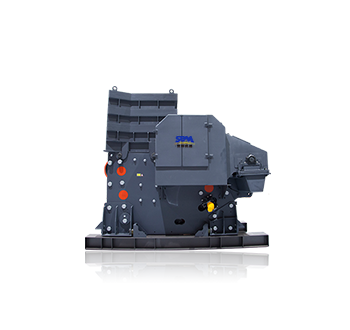
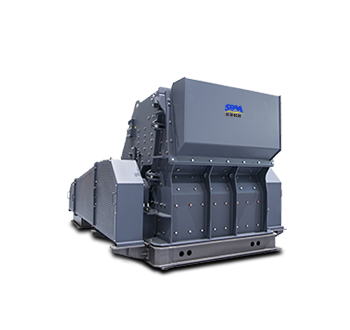
- Impact crushers, while less common in primary crushing, are effective for softer materials like limestone and concrete, using high-speed rotating impellers to strike and shatter the feed.
The output size of primary crushing typically ranges from 100 to 300 millimeters, although this can vary based on the specific application and the type of crusher used. The key consideration in primary crushing is to produce a uniform product that can be efficiently fed into the secondary crushing stage without causing blockages or excessive wear on downstream equipment.
2. Secondary Crushing
Secondary crushing follows the primary stage and further reduces the material size from the output of the primary crusher. At this stage, the feed material is usually between 50 and 200 millimeters, and the objective is to break it down into particles ranging from 10 to 50 millimeters. Secondary crushing not only reduces particle size but also helps to shape the particles, improving their uniformity and suitability for various applications.

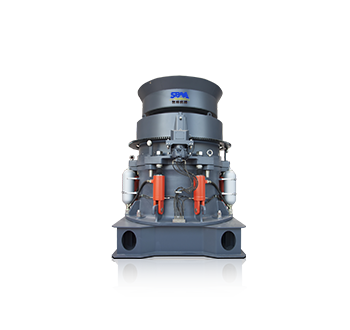
Cone crushers are the most commonly used equipment in secondary crushing, especially for hard and medium-hard materials. They operate on a similar principle to gyratory crushers but with a steeper crushing chamber, allowing for finer reduction. Impact crushers are also frequently employed in secondary crushing, particularly for materials that require a more cubical shape, such as limestone and recycled concrete. Unlike cone crushers, impact crushers use the force of impact rather than compression to break the material, resulting in better particle shape but potentially higher wear rates.
The choice between cone and impact crushers in secondary crushing depends on several factors, including the material properties, desired product size, and production requirements. For example, cone crushers are preferred for high-capacity operations with hard materials, while impact crushers are better suited for producing high-quality, cubical aggregates for construction applications.
3. Tertiary Crushing
Tertiary crushing is the final stage in the crushing process, where the material is reduced to the final desired particle size. This stage typically processes material from the secondary crusher, which is usually between 10 and 50 millimeters, and produces particles ranging from a few millimeters down to fine dust, depending on the application.
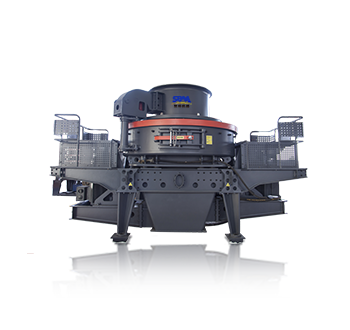
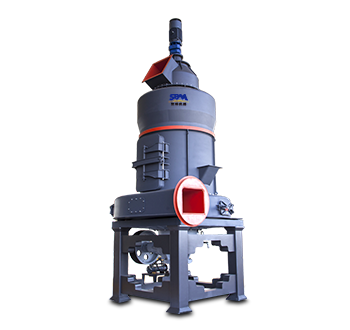
Tertiary crushers are designed for fine reduction and shaping, ensuring that the final product meets strict size and quality specifications. Common types of tertiary crushers include cone crushers (often with a shorter, steeper crushing chamber than secondary cone crushers), vertical shaft impact (VSI) crushers, and hammer mills. VSI crushers are particularly effective for producing high-quality, cubical aggregates and are widely used in the production of sand and gravel for concrete and asphalt. They operate by accelerating the material to high speeds and then impacting it against a stationary surface or other particles, resulting in precise particle size control and excellent shape.
In some cases, a quaternary crushing stage may be added for ultra-fine grinding, but this is less common and typically reserved for specialized applications such as mineral processing for fine-grained ores.

Interrelationship and Process Optimization
The three stages of crushing are interconnected, with each stage relying on the previous one to provide properly sized material. A well-designed crushing circuit ensures that each crusher operates within its optimal capacity, minimizing energy consumption and wear while maximizing product quality. For example, if the primary crusher produces oversized material, it can overload the secondary crusher, leading to inefficiencies and increased maintenance costs. Conversely, if the primary crusher reduces the material too much, it may increase the load on the secondary and tertiary stages, reducing their effectiveness.
Modern crushing plants often utilize automated control systems to monitor and adjust the feed rate, crusher settings, and material flow throughout the process. These systems help to optimize production by maintaining consistent particle sizes, reducing downtime, and improving overall efficiency. Additionally, the selection of crusher types and configurations depends on the specific material properties, such as hardness, abrasiveness, and moisture content, as well as the desired end product specifications.
By understanding the functions and applications of each stage, operators can design and operate crushing circuits that are efficient, cost-effective, and capable of meeting the demanding requirements of various industries, from construction and mining to aggregate production and mineral processing. As technology continues to advance, new crusher designs and control systems will further enhance the performance and sustainability of these critical crushing stages.


 Get Solution
 Send Message