


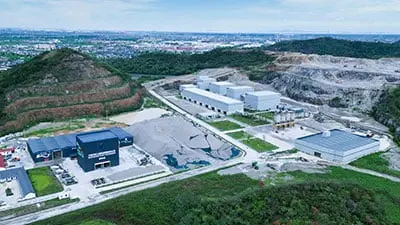
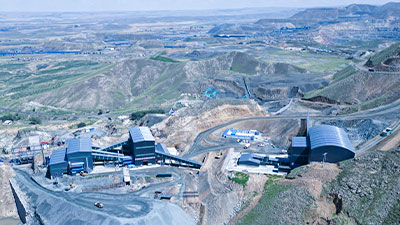
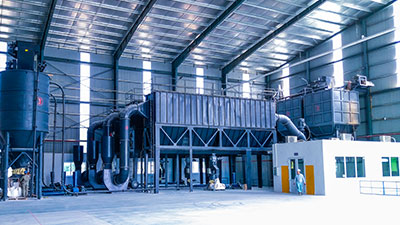
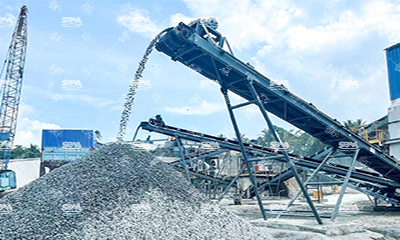



Summary: Based on three SBM Inner Mongolia magnetite projects with 400t/h, 500t/h and 1,000t/h throughput, 800mm max feed size and 0–15mm final product, this paper summarizes process design, equipment criteria and core operational parameters for engineers and purchasers to build or upgrade magnetite crushing plants....
If you are planning or upgrading a magnetite crushing and beneficiation plant — whether you are facing efficiency bottlenecks in an existing line, preparing for a greenfield project, or comparing solution capabilities from different equipment suppliers — you can find applicable reference solutions from SBM's three magnetite crushing and beneficiation project cases in Inner Mongolia cited in this article.
Common Issues in Magnetite Crushing and Beneficiation Plants
Before planning a magnetite crushing and beneficiation plant, one reality must be accepted upfront: magnetite is hard (Mohs 5.5–6.5), highly abrasive, and brings three near-universal headaches — rapid wear, high energy consumption, and difficult particle-size control. It is under these demanding conditions that SBM delivered tailored solutions for three magnetite projects of varying scale (400 t/h, 500 t/h, and 1,000 t/h) for a client in Inner Mongolia, resolving each bottleneck in turn.
Phase 1: 400 TPH Magnetite Crushing and Beneficiation Technical Upgrade Project
Existing Problems——
Unreasonable process design with mismatched three-stage crushing operations. The jaw crusher and cone crusher frequently experienced mechanical failures, and inadequate after-sales service from the original supplier severely affected the stable operation of the production line.
SBM Retrofit Solution——
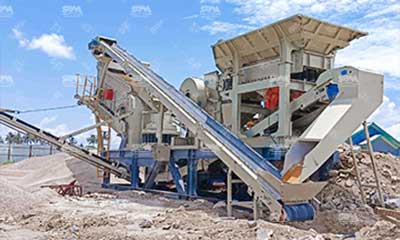
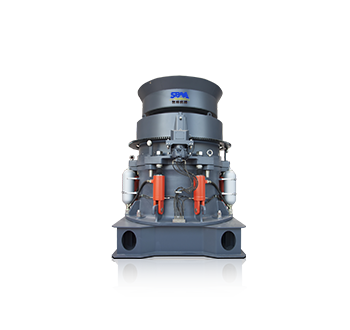
In the primary crushing stage, a PEW jaw crusher replaced the original jaw crusher, resolving the jamming issue in primary crushing. One HST cone crusher replaced the original cone crusher, improving the reduction ratio in the secondary crushing stage, thereby reducing the load on tertiary crushing and screening operations, and optimizing the overall crushing ratio distribution of the production line.
.jpg)
Phase 2: 500 TPH Greenfield Magnetite Crushing and Beneficiation Project
Project Overview——
- Feed size:0-800mm
- Product size:-15mm
- Design capacity:500TPH
SBM Solution——
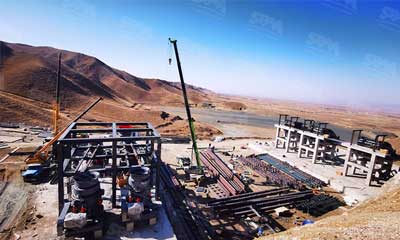
Topographical surveys and material sampling analyses were completed prior to formal project construction, serving as the basis for process design.
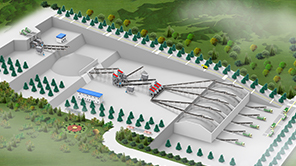
The plant adopts a "three-stage two closed-circuit" crushing process: Feed (0–800mm) → F5X Vibrating Feeder (feeding) → C6X Jaw Crusher (primary crushing) → HST Cone Crusher (secondary crushing) → HPT Cone Crusher (tertiary crushing) → S5X Vibrating Screen (screening) → Finished product (–15mm) / Oversize returned to tertiary crushing, forming a closed crushing circuit. This process effectively controls final product size and is well-suited for magnetite beneficiation scenarios with strict particle size requirements.
Equipment Selection Considerations: Magnetite is a medium-to-high hardness ore; therefore, equipment with high crushing force, wear resistance, and strong load-bearing capacity is typically selected.
.jpg)
Phase 3: 1000 TPH Large-Scale Magnetite Crushing and Beneficiation Project
Core Challenge——
Maintaining production line stability under high-capacity requirements.
SBM Solution——
The project is configured with SBM's series of high-performance main stone crushing machines.
- Primary crushing:C6X160 Jaw Crusher. Maximum feed size of 1,600mm, suitable for oversized raw magnetite ore.
- Secondary/Tertiary crushing:HST450 Cone Crusher. High processing capacity and production efficiency, suitable for the secondary crushing configuration required by the project's 1,000t/h capacity.
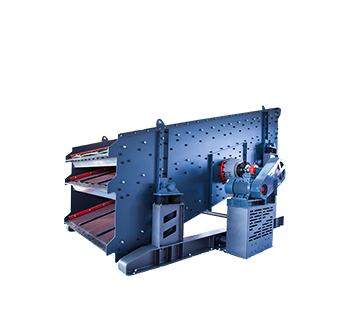
- Screening:S5X3680 Vibrating Screen. Large-scale vibrating screen with high throughput, equipped with a super-energy exciter for high screening efficiency.
.jpg)
How to Select the Right Stone Crushing Machines for a Magnetite Crushing and Beneficiation Project?
Step 1: Clarify Material Parameters
- Abrasivity index
- Compressive strength
- Maximum feed size
- Clay content
- Moisture content
Step 2: Determine the Process Route
Three-stage crushing is widely used in mineral processing and comes in two configurations: open circuit and closed circuit. Among these, the three-stage closed circuit — where check screening is placed after the tertiary crusher to form a recirculating loop — is the industry-standard configuration, as it reliably caps the top product size and ensures a consistent feed to downstream grinding. This process works across the full scale spectrum — from small to large concentrators — delivering an overall reduction ratio of approximately 40–200, accepting feed sizes up to 1,000 mm, and, in closed circuit, producing a crushed product of 12 mm or finer, meeting the mill-feed requirements of most plants with strong economic returns.
Step 3: Key Stone Crushing Machines Selection Recommendation
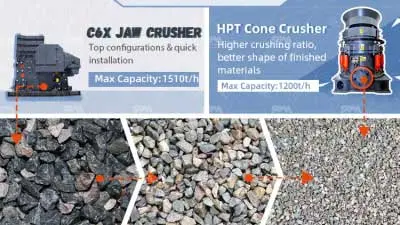
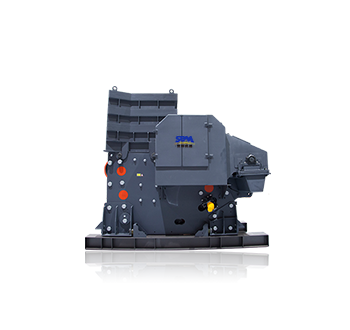
- Primary crushing:SBM C6X Jaw Crusher Series — large feed size capacity, high crushing efficiency
- Secondary crushing:SBM HST Cone Crusher Series — suited for medium-to-high hardness ores with high secondary reduction ratio requirements
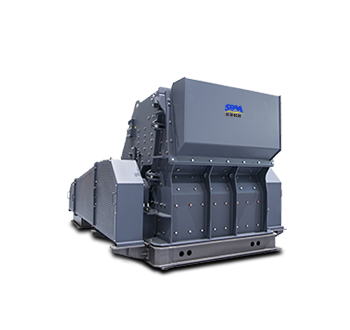
- Tertiary crushing:SBM HPT Cone Crusher Series — suited for medium-to-high hardness ore tertiary crushing, excellent product shape
- Screening:SBM S5X Vibrating Screen Series — precise particle size control, high screening efficiency
.jpg)
Why Does a Magnetite Crushing Solution Require Customized Design?
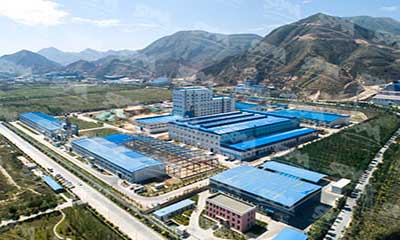
As observed across the three-phase Inner Mongolia projects, although all three production lines process magnetite, each line has a different equipment configuration because:
1.Different topographical conditions determine different process flow layouts.
2.Different target capacities result in fundamentally different equipment selections.
3.Different raw material properties — even within the same ore type, magnetite from different mining areas varies in parameters such as hardness and abrasivity.
Magnetite crushing and beneficiation is not simply a matter of stone crushing machine. As demonstrated by SBM's three-phase Inner Mongolia projects, what truly determines the long-term stable operation of a production line is whether the supplier can provide a complete capability loop encompassing process design, equipment selection, and full lifecycle service.
SBM has been deeply engaged in the metallic mining sector for over 30 years, accumulating extensive project experience in crushing and beneficiation projects for mainstream ore types including iron ore, copper ore, gold ore, and lead-zinc ore. The brand's key stone crushing machines have been validated through long-term operation under high-intensity working conditions across numerous production lines. More importantly, SBM provides clients not just with stone crushing machines, but with a complete integrated crushing solution for metal ores, helping clients achieve stable and efficient production.
If you are planning a magnetite or other metal ore crushing and beneficiation project, please contact the SBM technical team for a dedicated customized solution.


 Get Solution
 Send Message