





Summary: Manganese ore beneficiation production line integrates crushing, grinding, classification, magnetic separation, gravity separation, and dewatering....
Manganese ore, a critical raw material for steelmaking, battery manufacturing, and various industrial applications, requires efficient beneficiation to upgrade its grade and meet market specifications.
Manganese ore beneficiation aims to separate valuable manganese minerals from gangue (unwanted materials) through a series of physical and mechanical processes. The production line integrates crushing, grinding, classification, magnetic separation, gravity separation, and dewatering, tailored to the characteristics of manganese ore often fine-grained, with variable mineral liberation and gangue composition.
Key Stages of the Manganese Ore Beneficiation Production Line
1. Crushing Section
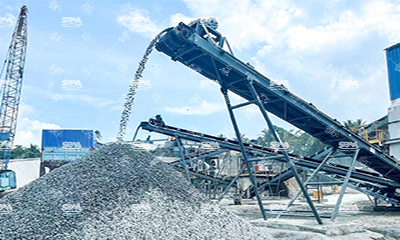
The crushing stage is pivotal for reducing raw manganese ore to a particle size that enables efficient mineral liberation in subsequent grinding. This section employs a closed-circuit crushing circuit to achieve uniform particle size distribution.
- Feeder: A vibrating or apron feeder is used to meter the raw ore into the crushing circuit. It ensures a steady, controlled feed rate, preventing overloading of crushers and maintaining process stability.
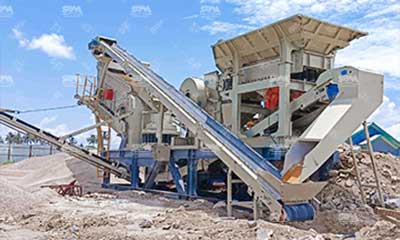
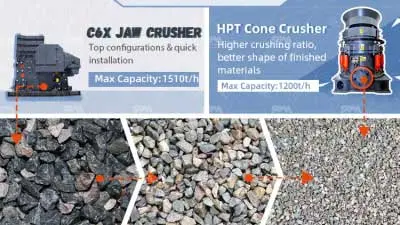
- PE Jaw Crusher (Primary Crushing): As the first stage of size reduction, the PE jaw crusher utilizes compressive force via reciprocating jaw plates to reduce raw ore (typically <1000 mm) to <150 mm. Its robust design makes it suitable for handling hard, abrasive manganese ore, delivering high throughput with minimal downtime.
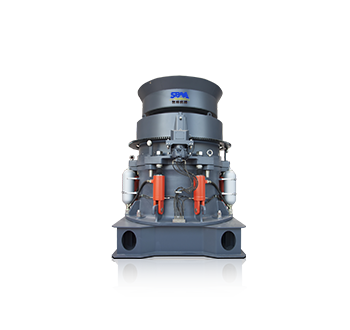
- Cone Crusher (Secondary Crushing): The cone crusher operates with a rotating mantle within a stationary concave, applying both compressive and shearing forces to further reduce the ore to <25 mm. Compared to jaw crushers, it produces a more cubical product shape and narrower particle size distribution, which is optimal for downstream grinding.
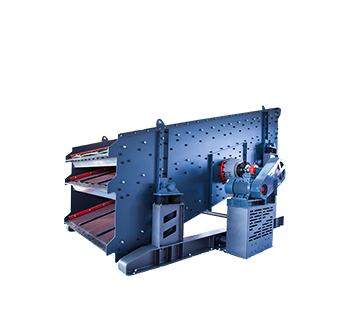
- Vibrating Screen: A multi-deck vibrating screen classifies the crushed ore. Oversized particles (>25 mm) are recirculated to the cone crusher (forming a closed circuit), while undersized particles pass to the small size ore bin for grinding. This configuration maximizes crushing efficiency and ensures consistent feed size for the mill.

2. Grinding and Classification Section
Grinding and classification work synergistically to liberate manganese minerals from gangue at the microscale. This section employs a closed-circuit grinding circuit to balance fineness and energy efficiency.
- Small Size Ore Bin & Feeder: The crushed ore is stored in a surge bin and fed into the mill by a screw or belt feeder, maintaining a constant material flow. This prevents mill starvation or overloading, optimizing grinding kinetics.
- Ball Mill: The ball mill is a rotating cylindrical vessel partially filled with steel balls (typically 20–50 mm in diameter). As the mill rotates, the balls cascade and impact the ore, reducing it to a slurry with particles <75 μm. This comminution process is critical for liberating manganese minerals embedded within gangue particles, with liberation efficiency directly influencing downstream recovery.
- Spiral Classifier: Post-grinding, the slurry is directed to a spiral classifier, which separates particles based on settling velocity. Coarse particles (>75 μm) are returned to the ball mill for regrinding, while fine particles (<75 μm) proceed to beneficiation. This closed circuit minimizes overgrinding, reduces energy consumption, and ensures the ore is ground to the optimal fineness for mineral separation.
3. Beneficiation Section
This stage employs a combination of magnetic separation and gravity separation to concentrate manganese minerals, leveraging their physical properties (magnetism, density) relative to gangue.
- Screening Sieve: A high-frequency screening sieve removes coarse impurities or unground particles from the ground slurry. This step ensures the feed to the separator is of uniform particle size, enhancing separation efficiency.
- High Gradient Magnetic Separator (HGMS): Manganese minerals (e.g., manganite, psilomelane) often exhibit paramagnetic or ferromagnetic properties. The HGMS generates a high-intensity magnetic field (>1.5 T) using a matrix of ferromagnetic wires, attracting and separating magnetic manganese minerals from non-magnetic gangue (e.g., quartz, feldspar). This process can upgrade manganese grade from 20–30% to 45–55%, depending on ore type.
- Shaking Table (Gravity Separation): For manganese ores with significant density differences (manganese minerals ~4.5–5.0 g/cm³ vs. gangue ~2.6–3.0 g/cm³), shaking tables are employed. These tables utilize differential motion and water flow to separate particles by density, concentrating manganese minerals in the concentrate zone while rejecting gangue as tailings. This step is particularly effective for recovering fine-grained manganese minerals missed by magnetic separation.
4. Dewatering and Product Handling Section
This final stage processes the manganese concentrate slurry into a low-moisture product suitable for storage, transport, or further processing.
- Thickener: The manganese concentrate slurry is fed into a lamella or circular thickener, where solid particles settle under gravity. Polymer flocculants are often added to accelerate settling, increasing the slurry’s solids content from ~10–20% to ~50–60%. This reduces the volume of material requiring filtration, lowering operational costs.
- Vacuum Filter: A rotary vacuum filter is used to dewater the thickened concentrate. It employs vacuum pressure to draw water through a filter cloth, producing a filter cake with moisture content <15%. This step is critical for meeting transportation and storage requirements.
- Concentrate Silo: The dewatered manganese concentrate is stored in a cone-bottom silo, which facilitates discharge and prevents material buildup. The silo ensures a continuous supply of concentrate for loading or downstream processes (e.g., pelletizing).
- Slurry Pump & Circulating Water: Heavy-duty slurry pumps transfer abrasive slurries between process stages, while a water recycling system captures and reuses water from thickeners, filters, and tailings. This reduces freshwater consumption by >80%, making the process environmentally sustainable.
Process Advantages and Optimization
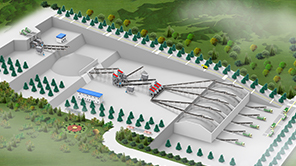
The manganese ore beneficiation production line illustrated offers several advantages:
- Integration of Multiple Technologies: By combining crushing, grinding, magnetic separation, and gravity separation, the line can handle various manganese ore types, from oxidic to siliceous ores.
- Energy and Resource Efficiency: Closed-circuit crushing and grinding, along with water recycling, reduce energy and water consumption, making the process economically and environmentally sustainable.
- Flexibility and Scalability: The modular design of equipment allows for adjustments based on ore characteristics and production demands, enabling both small-scale and large-scale operations.
The manganese ore beneficiation production line represents a comprehensive and efficient approach to upgrading manganese ore. Each stage—crushing, grinding, classification, beneficiation, and dewatering—plays a vital role in ensuring high manganese recovery and concentrate grade. By leveraging advanced equipment and integrated process design, this production line meets the industry’s need for sustainable and cost-effective manganese ore beneficiation, supporting the global demand for this essential mineral.


 Get Solution
 Send Message