





Summary: This article focuses on the practical configuration needs of limestone crushing plants, outlining the four commonly used configuration options in the industry along with their applicable conditions and equipment selection logic, and provides countermeasures for issues that may arise during configuration — helping limestone crushing plant operators determine the suitable equipment combination based on their own operating conditions....
Limestone is the most widely used materials in the aggregate, cement, metallurgy, and chemical industries. Unlike high-hardness rocks such as granite and basalt, limestone features medium-to-low hardness with strong equipment compatibility, allowing jaw crushers, impact crushers, and cone crushers to handle its crushing process effectively. Nevertheless, broader equipment adaptability leads to greater configuration complexity, leaving many project investors struggling to select a targeted, reasonable crushing solution. There is no one-size-fits-all equipment list for optimal limestone crushing configuration. The ideal solution is a tailored equipment combination that fully considers product granularity requirements, material conditions, production capacity and budget, and maximizes investment returns and operational efficiency while meeting standard process specifications. Drawing on practical industry experience, this article elaborates on four mainstream and implementable configuration schemes for commercial limestone crushing plants.
Click Here to Cet Limestone Crushing Solution

I. Factors Affecting Limestone Crushing Configuration
The following key factors influence equipment configuration selection for limestone crushing plants:
1、Product requirements
The end use of crushed limestone products directly determines the complexity of the process flow. Sand and aggregate production requires discharge classified by particle size, with indicator requirements for particle shape, clay content, crushing value, etc., and the process must include complete crushing and screening/classification stages; when used as cement raw material or metallurgical flux, the raw material only needs to be crushed to a feed size acceptable to the next process, with low particle shape requirements, and the process can be simplified; manufactured sand requires adding a sand-making and shaping stage on top of aggregate production.
2、Material characteristics
Limestone is generally low in hardness and abrasiveness, but properties may vary significantly between different mining locations within the same mining area, and clay content and moisture content can affect screening efficiency and material clogging risk.
3、Capacity scale and site conditions
Equipment specifications and stage configurations differ significantly depending on scale. Projects with long mining operation cycles and large scale are better suited to stationary production lines, which are more economical in full lifecycle costs; projects with short production cycles or limited site space are better suited to mobile production lines.

II. Mainstream Configuration Options for Limestone Crushing Plants
In actual limestone crushing projects, adapted process solutions have gradually taken shape for different operating conditions. Each option corresponds to different product requirements, material conditions, and capacity scenarios. Investors can compare against their own situation to select the most suitable limestone crushing solution.
Option 1: Jaw Crusher + Impact Crusher
Applicable scenarios: Conventional limestone aggregate production with low material hardness, low abrasiveness, and low clay content
Process flow: Vibrating feeder → Jaw crusher (primary crushing) → Impact crusher (secondary and fine crushing) → Vibrating screen
Equipment selection logic:
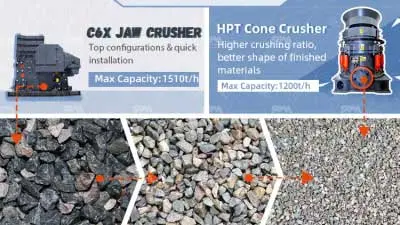
For the primary crushing stage, a jaw crusher is selected, using the compression crushing principle to handle large blasted raw material. The jaw crusher feed opening size needs to cover the maximum raw material size to avoid shutdowns caused by large-block jamming. Taking the SBM C6X jaw crusher as an example, as a professional primary crusher, its maximum feed size can reach 1,200 mm, with capacity covering 80–1,510 t/h, meeting the primary crushing needs of small-to-medium to large limestone crushing production lines.
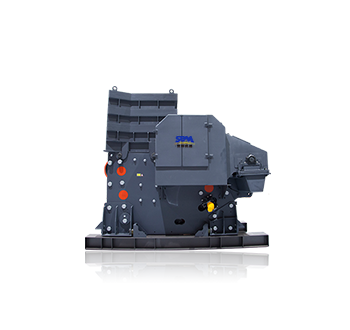
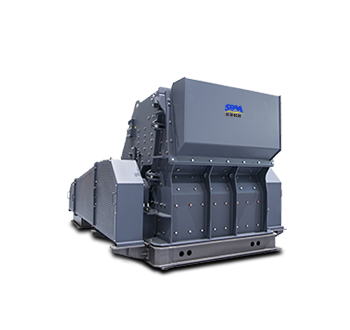
For secondary and fine crushing, an impact crusher is selected, using the high-speed impact crushing principle to complete secondary crushing and provide a certain degree of shaping. The blow bars strike the material at high speed, and the material is repeatedly crushed by impact between the blow bars and impact plates, producing finished products with nearly cubic particle shape and low flaky and elongated content. The SBM CI5X impact crusher, with its involute-type high-efficiency large crushing chamber design, delivers better finished particle shape, meeting high-quality aggregate production requirements.
Option characteristics: Simple process structure — two-stage crushing meets conventional limestone aggregate production needs; relatively low investment and operating costs; excellent finished particle shape.
Applications:

Option 2: Jaw Crusher + Cone Crusher
Applicable scenarios: Limestone raw material containing siliceous interlayers, flint nodules, or other hard impurities, with higher hardness and abrasiveness, making crushing more difficult than ordinary limestone
Process flow: Vibrating feeder → Jaw crusher (primary crushing) → Cone crusher (secondary and fine crushing) → Vibrating screen
Equipment selection logic: The core reason for switching to a cone crusher in the secondary and fine crushing stage lies in the difference in crushing principles. Impact crushers rely on high-speed impact crushing, with blow bars in direct contact with the material, so the wear rate depends on material abrasiveness; cone crushers adopt the inter-particle compression crushing principle, offering stronger adaptability to abrasive materials and longer wear parts life. Under choke‑fed conditions, cone‑crushed products are generally cubic‑shaped yet generate a higher proportion of fine‑grained material compared with impact crushers.
When limestone raw material contains hard impurities, material hardness and abrasiveness increase. If the impact crusher continues to be used for secondary and fine crushing, blow bar wear will intensify, leading to frequent shutdowns for parts replacement and reduced production efficiency. After switching to a cone crusher, wear parts last longer — although the unit investment is higher than an impact crusher, the full lifecycle operating cost is lower.
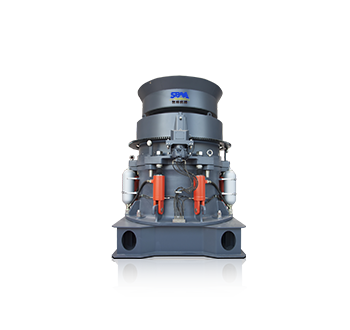
SBM HPT/HST cone crushers are professional hard-material crushing equipment, suitable for crushing various metallic and non-metallic ores.
Option characteristics: Compared with impact crushers, cone crushers offer longer wear parts life, making them suitable for conditions with large fluctuations in hardness and abrasiveness. When processing limestone raw material containing hard impurities such as silica, where frequent wear parts replacement on impact crushers disrupts continuous production, a cone crusher is the more reasonable alternative.
Applications:

Option 3: Jaw Crusher + Impact Crusher/Cone Crusher + Sand Maker
Applicable scenarios: Need to simultaneously produce aggregate and manufactured sand, or customers have strict requirements for finished product quality
Process flow: Vibrating feeder → Jaw crusher (primary crushing) → Impact crusher/Cone crusher (secondary and fine crushing) → Closed-circuit screening → Vertical shaft impact crusher (shaping/sand making) → Vibrating screen classification
Equipment selection logic:
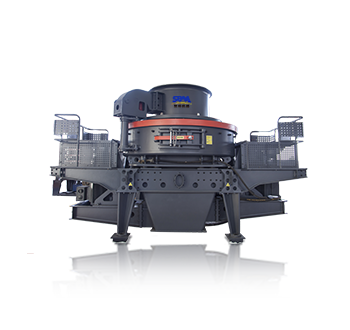
On the basis of the primary and secondary/fine crushing in Option 1 or Option 2, a sand maker is added as the sand-making and shaping stage. Adopting the “rock‑on‑rock” crushing mode, materials collide against each other, which greatly reduces direct impact on metallic wear parts and delivers relatively low wear‑part consumption. Meanwhile, aggregate shaped by the sand making machine has a more spherical particle shape and more reasonable gradation, meeting downstream high-quality sand and aggregate material requirements.
Option characteristics: Rich product structure — can simultaneously supply aggregate and manufactured sand; aggregate particle shape quality improves significantly after shaping; suitable for projects with diversified product structures or high aggregate quality requirements.
Applications:

Option 4: Mobile Crushing Station
Applicable scenarios: Small-to-medium capacity, non-fixed mining areas, temporary projects, or desire to reduce civil construction investment and achieve rapid production start-up
Process flow: Onboard feeder + crushing + screening modules, flexibly selected and combined according to functions such as primary crushing, secondary and fine crushing, shaping/sand making, and screening
Equipment selection logic:
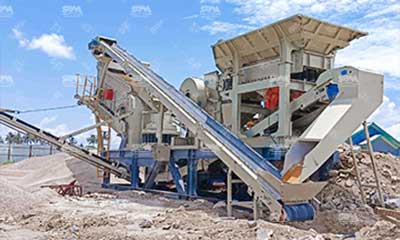
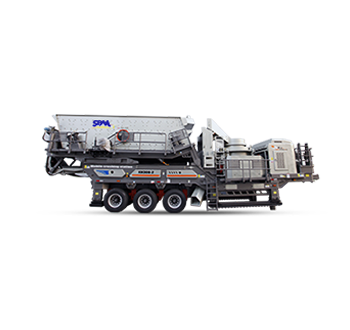
Mobile crushing stations adopt modular design, integrating feeding, crushing, and screening on an onboard chassis. The core advantages are no need for complex civil foundations — equipment is ready to use upon arrival, with rapid commissioning and flexible relocation. Functional modules can be flexibly configured according to production needs, divided into primary crushing mobile stations, secondary/fine crushing mobile stations, shaping/sand-making mobile stations, screening mobile stations, etc., with strong interchangeability — they can be used independently or combined to complete the production process.
The SBM NK mobile crushing station is equipped with high-performance dedicated host equipment, with capacity covering 100–500 t/h, suitable for small-to-medium limestone mobile crushing needs; the MK semi-mobile crusher and screen can achieve a single production line capacity of up to 800 t/h, meeting larger limestone crushing capacity needs, balancing stationary production line processing capacity with mobile flexibility.
Option characteristics: Foundation-free installation design and investment, short construction period, rapid commissioning; flexible relocation and small footprint, suitable for crushing projects with limited site space and tight schedules.
Applications:

Option Comparison and Selection Recommendations
| Option | Crushing Equipment | Applicable Material | Product | Scale | Stationary/Mobile |
| Option 1 | Jaw crusher + Impact crusher | Conventional limestone, low hardness, low abrasiveness | Aggregate | Medium-large scale | Stationary |
| Option 2 | Jaw crusher + Cone crusher | Limestone containing hard impurities | Aggregate | Medium-large scale | Stationary |
| Option 3 | Jaw crusher + Impact/Cone crusher + Sand maker | Various limestones | Aggregate + Manufactured sand | Medium-large scale | Stationary |
| Option 4 | Mobile crusher | Various limestones | Aggregate | Small-medium scale | Mobile |
III. Common Problems and Countermeasures in Limestone Crushing Production Line Configuration
1、Insufficient/excessive crushing stage configuration
The number of crushing stages needs to be determined based on the overall crushing ratio and the final product. Insufficient configuration may lead to inadequate crushing and non-compliant products; excessive configuration may lead to over-crushing, which likewise affects product quality.
Countermeasure: Determine the final aggregate particle size, calculate the crushing ratio, and configure the number of crushing stages accordingly.
2、No pre-screening for material containing clay and fines
If fines and clay enter the crusher directly, they occupy capacity without participating in crushing, and cause crushing chamber blockage and screen mesh clogging, affecting the overall production efficiency of the line.
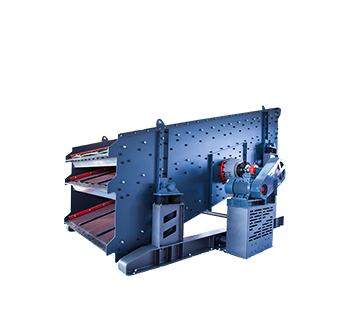
Countermeasure: Add a pre-screening stage before primary crushing to bypass fine material. Use grizzly screens for scalping coarse run of mine material; for secondary fine material screening, high open area polyurethane screen panels help reduce screen blinding.
3、Screening capacity mismatched with crushing capacity
When the upstream crushing capacity is large, screening throughput is high but if specification configuration is insufficient, the final capacity cannot be achieved and product quality is affected.
Countermeasure: The screening equipment processing capacity should match the crushing capacity, with an appropriate margin to allow flexible adjustment during production.
4、Insufficient environmental protection measures
Dust and noise pollution not considered at the solution design stage. If forced to suspend production for retrofitting due to insufficient environmental measures after commissioning, costs are high and difficulty is great.
Countermeasure: Add pulse jet dust collectors, water spray dust suppression systems, dust covers, and other devices at the configuration stage, which can ensure environmental compliance while improving finished product cleanliness, achieving the dual goals of environmental protection and product quality.

IV. FAQ
Q1: How many crushing stages does limestone crushing generally require?
Conventional limestone aggregate production lines are mainly two-stage: jaw crusher primary crushing + impact crusher/cone crusher secondary and fine crushing.
Q2: Impact crusher or cone crusher for limestone secondary and fine crushing?
Judge based on material hardness and abrasiveness. For ordinary limestone, choose an impact crusher — large crushing ratio, low investment, good finished particle shape; for limestone containing silica or flint nodules with higher abrasiveness, choose a cone crusher — longer service life and more continuous, stable production.
Q3: Does limestone crushing require a sand maker?
It depends on the product structure. If only supplying aggregate, no configuration is needed; if manufactured sand output is required, or customers have strict particle shape requirements for aggregate, a sand maker can be added for shaping and sand making.
Q4: What crusher should a small limestone crushing plant choose?
For small-scale capacity, prioritize the mobile crushing station option — no civil construction, rapid commissioning. A two-stage crushing option can also be selected based on actual capacity.
Click Here to Cet Limestone Crushing Solution
Conclusion
Limestone crushing plant configuration needs to precisely match product requirements, material conditions, and capacity scale. For general materials, the jaw crusher + impact crusher two-stage configuration can cover most conventional aggregate production scenarios. For special production situations and requirements, flexibly select the appropriate option based on actual conditions.
SBM offers a complete limestone crushing product line ranging from jaw crushers, impact crushers, cone crushers, and vertical shaft impact crushers to mobile crushing stations, covering the full process of primary crushing, secondary/fine crushing, sand making and shaping, and screening. If you have limestone crushing needs, feel free to contact us for customized solutions and quotations.


 Get Solution
 Send Message