


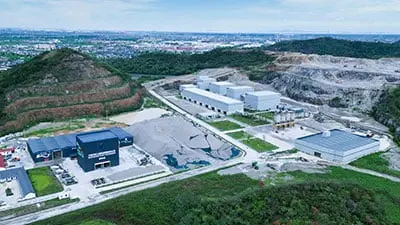
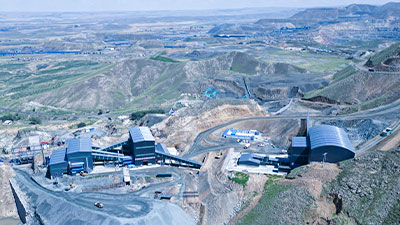
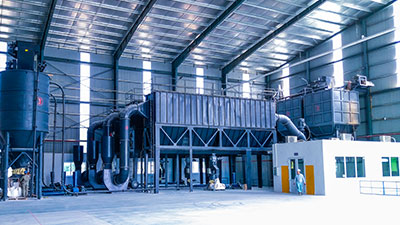
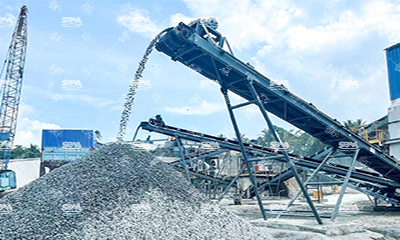
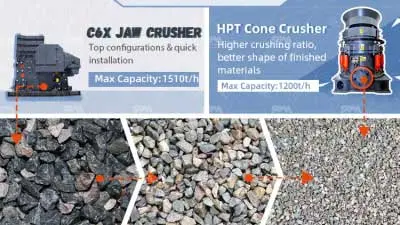


Summary: SBM andesite crushing plant in Indonesia processes 800mm feed to Class A aggregates. C6X jaw + HPT cone crushers handle high abrasiveness with multi-stage closed-circuit design for superior cubical shape....
With the rapid expansion of infrastructure projects across Java, Sumatra, and Kalimantan, high-quality andesite aggregate has become the backbone of Indonesia’s construction boom. However, andesite is known for its high toughness and abrasive nature, which can cause excessive wear and tear on inferior machinery.
This article explores how a high-efficiency production line integrates SBM technology to deliver premium aggregates for Indonesia’s most demanding road and bridge projects.
1. The Challenge: Overcoming Andesite's Abrasiveness
Andesite typically has a compressive strength ranging from 150 to 250 MPa. In Indonesian quarries, operators often face two main issues:
- High Replacement Frequency: Traditional crushers suffer from rapid liner wear, leading to high maintenance costs.
- Product Shape: High-speed road projects in Indonesia require a low "flakiness" index, which is difficult to achieve with standard impact crushers in hard rock.
2. The Optimized Solution: A Multi-Stage Crushing Circuit
For hard and abrasive materials like Indonesian andesite, SBM engineers implemented a scientifically balanced multi-stage circuit designed to distribute the crushing ratio across three distinct phases, maximizing liner life and product quality.
Stage 1: Primary Crushing – The Power of the C6X Jaw Crusher
The journey begins with the raw andesite boulders (up to 800mm). In this stage, the goal is high-volume reduction with minimal stress on the machine frame.
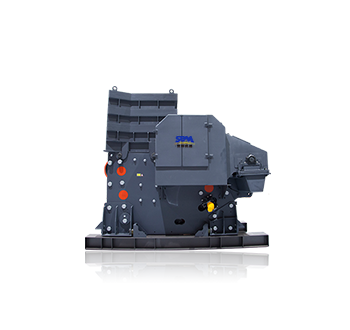
- Non-Welded Bolted Structure: Unlike traditional welded jaws that often crack under the intense vibrations of andesite crushing, the C6X110 features a modular, non-welded frame. This "flexible" design is essential for the high-temperature, high-stress environments found in Indonesian quarries.
- Optimized Kinematics: The large stroke and high-positioned pivot point allow the C6X to "grab" large boulders instantly, reducing the recirculation load for the secondary stage and increasing primary capacity by 25%.

Stage 2: Secondary Crushing – Precision with HPT Cone Crusher
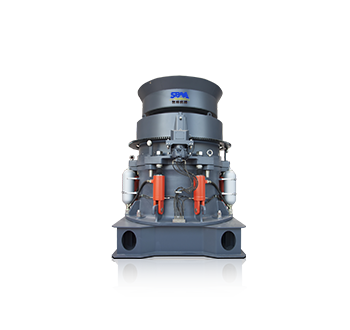
The material is then fed into a surge pile before entering the HPT Multi-Cylinder Hydraulic Cone Crusher. This is where the magic of "Lamination Crushing" happens.
- Inter-particle Crushing Technology: Instead of relying on a single impact, the HPT utilizes high swing frequency and a specialized crushing cavity. Under high pressure, stones are crushed against each other. This process selectively breaks weaker, flaky stones, resulting in a superior cubical product that meets Indonesia’s strict Bina Marga Class A aggregate standards.
- Smart Automation (PLC System): The HPT cone crusher is equipped with an advanced PLC control system that monitors the oil temperature, pressure, and motor load in real-time. If uncrushable material (like tramp iron) enters, the hydraulic cylinders instantly lift the mantle to prevent damage and automatically reset to the original setting.

Stage 3: Tertiary Shaping & Fines Control (Optional VSI6X)
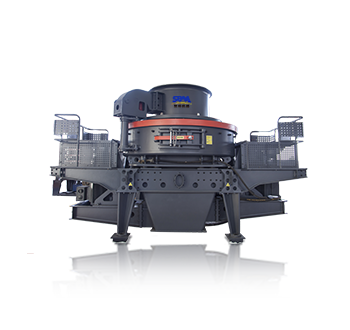
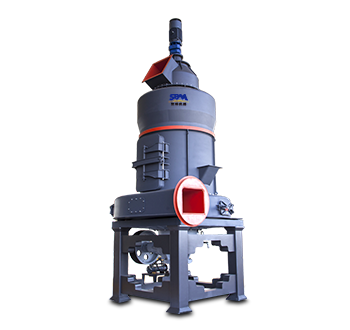
In projects requiring high-quality manufactured sand (M-Sand) for concrete, a third stage utilizing the VSI6X Series Sand Maker is added.
- Rock-on-Rock Principle: By using the andesite to crush itself within the VSI chamber, wear costs on metallic parts are reduced by up to 40%.
- Gradation Tuning: This stage allows for the precision tuning of the "fineness modulus," ensuring the final sand is perfect for high-strength concrete used in Jakarta's skyscraper projects.

The "Closed-Circuit" Advantage
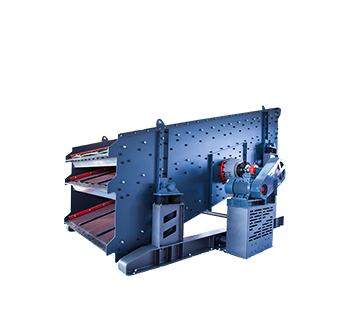
The entire plant operates on a Closed-Circuit (CC) system. Any oversized material from the final vibrating screen is automatically returned to the HPT cone crusher for a second pass.
- Zero Waste: This ensures that 100% of the output falls within the customer's required size ranges (e.g., 10-20mm or 20-30mm).
- Efficiency: By controlling the return feed, the system maintains a "choke-fed" condition in the cone crusher, which is the secret to achieving the highest quality stone shape.
Technical FAQ: Andesite Crushing in Indonesia
Q: Why avoid Impact Crushers for andesite?
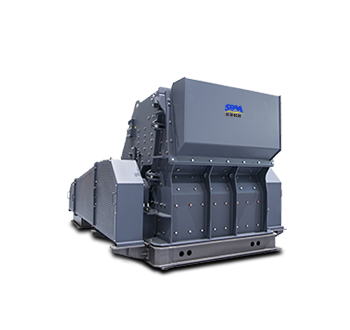
Answer: While impact crushers produce good shapes, the high silica content in andesite causes the blow bars to wear out in a matter of days. A Cone Crusher is the more cost-effective choice for long-term operations.
Q: What is the most popular capacity for Indonesian quarries?
Answer: Most commercial quarries in Indonesia operate in the 200TPH to 400TPH range, which balances capital investment with high-volume market demand.
Q: Can SBM equipment handle the high rainfall in Indonesia?
Answer: Yes. Our electrical systems are IP55/IP65 rated, and the hydraulic stations are fully enclosed to prevent contamination from tropical rain and mud.
Engineering Your Competitive Edge in Indonesia
As Indonesia continues its ambitious path of national development, from the Trans-Sumatra Toll Road to the modernization of Java’s infrastructure, the quality of your aggregate will define the success of your business. The Andesite Crushing Plant case study demonstrates that success in this market isn't just about "breaking rocks"—it’s about optimizing every stage of the process to minimize wear and maximize output.
By choosing the C6X Series Jaw Crusher and HPT Multi-Cylinder Cone Crusher, Indonesian quarry owners are doing more than just buying machinery; they are investing in a high-performance system that turns the toughest volcanic rock into premium "Class A" aggregate. With reduced maintenance costs and superior product shape, our clients are consistently winning government contracts and outperforming their competition.


 Get Solution
 Send Message