




Summary: A comprehensive comparison of ball mills with SAG mills, rod mills, Raymond mills, and Vertical Roller Mills (VRM). Includes a detailed selection guide based on ore type, feed size, and product fineness....
In industrial mineral comminution, ball mills serve as the ultimate fine and secondary grinding workhorse, achieving extreme reduction ratios down to 0.074 mm (200 mesh) for hard, abrasive ores. When compared to primary SAG mills, rod mills, Raymond mills, and Vertical Roller Mills (VRM), ball mills offer unmatched versatility and mechanical reliability, though dry roller mills provide higher energy efficiency (20–30% energy savings) for soft-to-medium non-metallic minerals.

Industrial Grinding Mill Comparison Matrix
The table below provides a side-by-side comparison of ball mills against primary tumbling mills and dry powder grinding technologies across feed size, product fineness, specific energy consumption, and mineral applications:
| Grinding Mill Type | Primary Grinding Mechanism | Max Feed Size | Product Fineness Range | Energy Efficiency & Consumption | Best Fit Mining Applications |
|---|---|---|---|---|---|
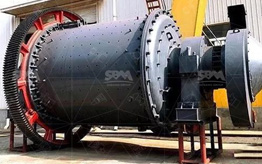
| Ball Mill | Impact & Attrition via steel ball media (30–45% volume) | < 25 mm | 0.074 – 0.4 mm (35 – 200 mesh) | Standard consumption; high durability on hard ores | Secondary/tertiary wet grinding for copper, gold, iron, and flotation circuits |
| SAG Mill (Semi-Autogenous) | Self-grinding ore impact with low steel ball charge (4–15%) | < 300 mm (ROM) | 1 – 3 mm | High power requirement; eliminates secondary crushing stage | Primary coarse grinding for high-capacity hard rock mining (SABC circuits) |
| Rod Mill | Line contact impact via tumbling steel rods | < 50 mm | 0.83 – 4.75 mm (4 – 20 mesh) | Uniform particle sizing with minimal over-grinding | Coarse grinding, sand preparation, and gravity concentration plants |
| Raymond Mill | Roller pressure and grinding ring friction | < 30 mm | 0.044 – 0.125 mm (120 – 325 mesh) | High energy efficiency; dry closed-circuit classifying | Non-metallic minerals (barite, calcite, limestone, talc) |
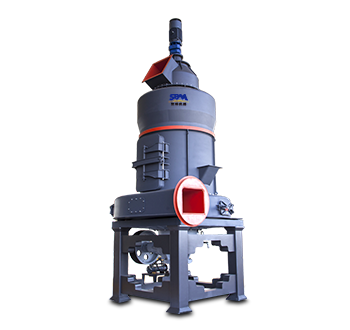
| Vertical Roller Mill (VRM) | Hydraulic roller crushing on a rotating grinding table | < 50 mm | 0.033 – 0.08 mm (200 – 400+ mesh) | 20–30% lower energy consumption vs. ball mill | Large-scale dry cement raw meal, slag, bentonite, and ultrafine powders |
Ball Mill vs. Alternative Grinding Technologies
1. Ball Mill vs. SAG Mill
- Role in Circuit: SAG mills handle primary comminution directly receiving Run-of-Mine (ROM) ore from primary crushers. Ball mills follow SAG mills to perform secondary fine grinding.
- Grinding Media: SAG mills utilize the larger rocks themselves as grinding media assisted by a minor ball charge (4–15%). Ball mills rely completely on dense steel or alloy ball charges (30–45% mill volume).
- Target Output: SAG mills produce coarse discharge (1–3 mm), whereas ball mills reduce feed down to liberation sizes required for flotation or leaching (< 74 microns).
2. Ball Mill vs. Vertical Roller Mill (VRM)
- Energy Efficiency: VRMs utilize hydraulic roller compaction, saving up to 20–30% electrical energy compared to tumbling ball mills in dry mineral grinding.
- Moisture Tolerance: VRMs integrate hot air drying within the mill, handling feed moisture up to 10–15%, whereas wet ball mills require slurry management and dry ball mills require pre-dried feed.
- Ore Hardness Limit: Ball mills remain superior for extreme ore hardness (Mohs > 6.5) and high abrasive index materials where VRM roller tires would suffer excessive wear.
3. Ball Mill vs. Raymond Mill
- System Footprint: Raymond mills integrate crushing, grinding, air classification, and powder collection into a single vertical footprint, eliminating external classifiers required by ball mills.
- Product Quality: For non-metallic minerals like limestone, gypsum, and dolomite, Raymond mills deliver narrow particle size distribution with lower operational CAPEX for small-to-medium dry processing plants.
How to Select the Right Grinding Technology?
Choosing the optimal grinding mill requires a rigorous evaluation of ore mechanical properties, feed particle size distribution, moisture content, target liberation mesh, and overall plant economics:
- Select a Ball Mill if: You are processing hard, highly abrasive metallic ores (such as gold, copper, iron ore, or lead-zinc ores) in a wet processing circuit. Ball mills are ideal when the feed size is already reduced below 25 mm and your target product requires precise fine liberation down to 74–44 microns (200–325 mesh) for downstream flotation or leaching. They are the go-to choice for high ore hardness conditions where mechanical durability and predictable grinding media consumption are paramount.
- Select a SAG + Ball Mill Circuit (SABC) if: You operate a large-scale, high-capacity mining project (1,000 to 5,000+ TPH) handling direct Run-of-Mine (ROM) ore with rock sizes up to 300 mm. An SABC circuit is optimal if you want to bypass capital-intensive secondary and tertiary cone crushing circuits, reduce overall plant footprint, and achieve maximum volumetric throughput in hard-rock gold, copper, and molybdenum megaprojects.
- Select a Vertical Roller Mill (VRM) if: You are setting up a large-scale dry powder production line for non-metallic minerals (such as limestone, calcium carbonate, cement raw meal, slag, or bentonite) requiring 200 to 400+ mesh fineness. VRM is the best choice when raw materials contain up to 10–15% moisture (as it integrates flash drying within the mill using waste heat) and when minimizing electrical power consumption per ton ($/ton) is your primary operational objective (saving 20–30% energy compared to dry ball mills).
- Select a Raymond Mill if: You manage a small-to-medium dry grinding plant (5 to 30 TPH) processing soft-to-medium hard non-metallic minerals (Mohs hardness $< 6.0$, such as barite, talc, gypsum, and calcite) to 80–325 mesh. Raymond mills provide the most cost-effective option if you seek a low initial CAPEX, a compact footprint integrating crushing, grinding, and air classification, and a turnkey setup with low installation complexity.
- Select a Rod Mill if: You require coarse, highly uniform grinding (0.83 to 4.75 mm / 4 to 20 mesh) with minimal over-grinding or slimes generation—such as in manufactured silica sand preparation, gravity concentration feed, or pre-grinding before fine ball milling.
Frequently Asked Questions
Q: What are the key differences between ball mills and SAG mills for mineral grinding?
A: SAG (Semi-Autogenous Grinding) mills are primary grinding units that use large ore rocks mixed with a small charge of steel balls (4–15%) to reduce run-of-mine ore directly from up to 300 mm down to 1–3 mm. Ball mills are secondary or tertiary fine grinding units using steel balls (30–45% charge) to grind smaller feed rocks (less than 25 mm) down to fine particles below 0.074 mm (200 mesh) for flotation or leaching circuits.
Q: Can you compare ball milling efficiency with other grinding methods for mining applications?
A: Ball mills remain the most reliable choice for wet, highly abrasive, and hard metallic ores. However, for dry processing and non-metallic minerals, Vertical Roller Mills (VRM) and Raymond mills offer higher energy efficiency, saving 20–30% electrical power compared to traditional ball mills while integrating drying and air classification in a single unit.
Q: Is a SAG mill used before or after a ball mill in mineral processing?
A: A SAG mill is installed before a ball mill in a standard SABC (SAG Mill, Ball Mill, Pebble Crusher) circuit. The SAG mill handles coarse primary grinding, while the ball mill receives the discharge for fine secondary grinding.





 Get Solution
 Send Message