





Summary: A comprehensive guide on selecting the right stone crusher for quarry operations, covering material analysis, crushing stages, and equipment types like jaws, cones, and HSI crusher...
Selecting the right stone crusher is the single most critical decision you will make for your quarry operation. A well-matched crusher configuration runs smoothly with minimal downtime and low wear costs, while a poorly chosen one becomes a constant drain on profits—plagued by bottlenecks, frequent breakdowns, and substandard product quality.
This comprehensive guide walks you through the systematic process of crusher selection, from understanding your material to matching equipment across multiple crushing stages.

1. Understanding Your Material
Before browsing any equipment catalog, you must thoroughly understand the rock you will be processing. The physical characteristics of your feed material dictate virtually every subsequent decision.
Key Material Properties
Hardness and Abrasiveness
The hardness of your rock determines which crusher types are economically viable. Materials are generally classified as:
- Hard and abrasive (granite, basalt, river pebble): Require compression crushers with high-manganese steel components
- Soft to medium-hard (limestone, sandstone): Can be processed by impact crushers
- Soft and non-abrasive (coal, gypsum): Suitable for hammermills or sizers
The Mohs hardness scale and abrasive index provide quantitative measures. If chemical analysis reveals substantial free silica or other abrasive minerals, crushers using impact or attrition principles are usually ruled out unless the material is extremely soft.
Moisture Content and Clay Content
Dry rock is straightforward, but moisture and clay create complications. When material contains more than 10-15% moisture or significant clay:
- Compression crushers (jaws, cones) may clog due to packing
- Screens may blind, reducing efficiency
- Sizers or impact crushers with large openings become preferable
Feed Size and Desired Output
The relationship between your largest feed lumps and required product size determines the reduction ratio needed—and consequently, how many crushing stages your plant requires.
The maximum feed dimension must be smaller than the crusher's receiving opening. A crusher whose receiving opening is marginally large enough for the largest lumps will experience frequent bridging and blockages.
2. Understanding Crushing Stages
Most quarry crushing operations are organized in stages, each with specific equipment and objectives.
| Stage | Purpose | Typical Feed Size | Typical Output Size |
|---|---|---|---|
| Primary | Reduce blasted rock to conveyor-friendly size | Up to 1500mm | 100–350mm |
| Secondary | Produce base materials or prepare for fine crushing | 100–350mm | 30–100mm |
| Tertiary | Create finished aggregates or sand | 30–100mm | 5–40mm |
| Quaternary | Ultra-fine sizing(rare) | <40mm | <10mm |
The primary crusher is often the largest and most expensive single equipment item. A mistake here can only be remedied by replacement—an almost always costly procedure.
3. Crusher Types and Their Applications
Jaw Crushers
Best for: Primary crushing of all rock types, from soft limestone to hardest granite
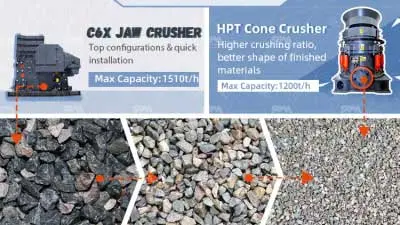
Jaw crushers are the undisputed workhorses of primary crushing. They operate on simple compression principles: a movable jaw compresses material against a stationary jaw. As the material moves down the wedge-shaped chamber, it is fractured until small enough to exit through the bottom opening.
Advantages:
- Highest reliability and ability to handle large feed sizes
- Lowest wear costs when used appropriately
- Simple structure and maintenance
- Reduction ratios of 6:1 (up to 8:1 in some applications)
Limitations:
- Produce somewhat flaky product due to compression along natural crack edges
- Cannot achieve fine output sizes alone
- Not suitable for producing final products meeting specifications
Selection tip: For capacities under 100 tons per hour, jaw crushers are typically more economical than gyratory alternatives. Above 100 tph, the comparison becomes closer.

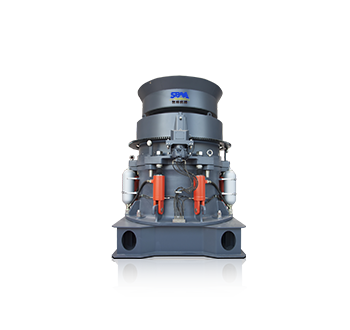
Cone Crushers
Best for: Secondary, tertiary, and quaternary crushing of hard, abrasive materials.
Cone crushers use compression between a rotating mantle and a fixed concave liner. They employ "lamination crushing" principles—rock-on-rock compression that produces excellent particle shape.
Advantages:
- Excellent for producing cubical, high-quality aggregates
- Adjustable output size with consistent gradation
- Lower wear costs than impact crushers in hard rock
- Reduction ratios of 4:1 to 6:1
Limitations:
- Higher initial investment
- More complex maintenance requirements
- Cannot accept very large feed sizes
- Must be choke-fed for optimal performance
- Not suitable for clay or sticky materials
Selection tip: Standard-head cones are typically used in secondary stages; short-head cones in tertiary and quaternary applications.

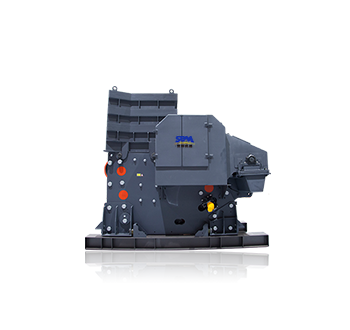
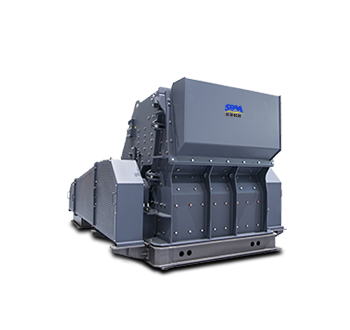
Horizontal Shaft Impact (HSI) Crushers
Best for: Primary crushing of softer rock (limestone), secondary crushing of various materials, recycling applications.
HSI crushers use high-speed rotors with blow bars to hurl material against impact aprons. Stone breaks along natural cleavage lines, producing excellent cubical shapes.
Advantages:
- High reduction ratios (up to 20:1 or even 40:1 in double-rotor configurations)
- Superior cubical product shape
- Ability to handle contaminated materials (rebar, wire mesh in recycling)
- Effective for materials with clay or moisture
Limitations:
- Higher wear costs with abrasive materials
- Blow bars require regular replacement
- Not economical for hard, abrasive rock like granite
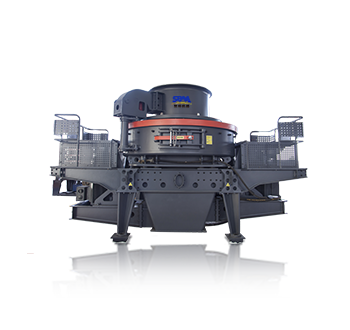
Vertical Shaft Impact (VSI) Crushers
Best for: Tertiary crushing, manufactured sand production, shaping aggregates
VSI crushers accelerate material to high velocity and throw it against anvils or rock linings. In "autogenous" (rock-on-rock) configuration, they are suitable for any hardness.
Advantages:
- Produce perfectly cubical sand and aggregates meeting strict concrete/asphalt standards
- Low operating cost per ton over time
- Excellent for shaping micro-cracked secondary crusher product
Limitations:
- Sensitive to feed consistency
- Wear parts require regular attention
- Less effective on extremely hard rock in shoe-and-anvil configurations

Specialized Crushers
Gyratory Crushers
Similar to cone crushers but with steeper chamber and different design. Used for high-capacity primary applications (typically 2000+ tph) where material is very hard and abrasive. Often built into ground cavities for direct truck loading.
Roll Crushers
Compression-type crushers using counter-rotating drums. Excellent for producing chip stone with minimal fines. Reduction ratios of 3:1 (double roll) to 6:1 (triple roll). Well-suited for extremely hard and abrasive materials.
Hammer Crusher
Use swinging hammers and grate screens to control product size. Best for materials with low abrasion characteristics.
4. Key Selection Factors
1. Capacity Requirements
Your required production rate heavily influences crusher size selection. However, never select a primary crusher based solely on meeting average capacity requirements.
The 25% Reserve Rule: The primary crusher's rated capacity (at required discharge setting) should exceed the plant's average requirement by at least 25%. This reserve compensates for:
- Variations in feed consistency
- Loading and transportation delays
- Occasional bridging or blockages
- Startup and shutdown periods
2. Product Specifications
Different applications demand different product characteristics:
- Concrete aggregate: Requires cubical shape, specific gradation
- Asphalt aggregate: Needs cubical particles, controlled fines
- Road base: Accepts more variation but requires good interlock
- Manufactured sand: Demands excellent shape and consistent gradation
The more stringent your specifications, the more crushing stages and specialized equipment (particularly VSIs for shaping) you will need.
3. Operating Environment
Consider where your quarry operates:
- Remote locations: May require self-contained units with diesel power
- Harsh climates: Need equipment designed for extreme temperatures
- Urban fringe: Require dust and noise suppression
- Constrained sites: Benefit from mobile or compact designs
4. Integration with Quarry Operations
Your crusher selection must coordinate with:
- Drilling and blasting patterns (which determine maximum feed size)
- Loading equipment size (shovel or loader bucket capacity)
- Haul truck dimensions and access
A pit-portable primary crusher that can follow the quarry face reduces truck haul costs and improves efficiency.
5. Decision Framework by Application
Scenario A: Hard, Abrasive Rock (Granite, Basalt)
| Stage | Recommended Equipment | Rationale |
|---|---|---|
| Primary | Jaw crusher | Handles large feed; lowest wear costs |
| Secondary | Cone crusher | Lamination crushing handles hardness economically |
| Tertiary | Cone or VSI | Cone for aggregates, VSI for sand/shaping |
Impact crushers in hard rock applications suffer rapid blow bar wear that destroys profit margins. Compression crushers are essential.
B: Soft to Medium Rock (Limestone, Sandstone)
| Stage | Recommended Equipment | Rationale |
|---|---|---|
| Primary | Jaw or Impact crusher | Jaw for simplicity, Impact for higher reduction |
| Secondary | HSI or Impact | Impact crusher for cubical shape, cone if abrasive |
| Tertiary | VSI or HSI | Shaping and fine production |
Primary impact crusher excel in limestone quarries, achieving 20:1 reduction while minimizing fines.
C: Wet, Sticky, or Contaminated Material
| Stage | Recommended Equipment | Rationale |
|---|---|---|
| Primary | HSI | Non-clogging; handles moisture |
| Secondary | HSI | Handles contamination; produces cubical product |
| Tertiary | VSI (with care) | Possible if material is dry enough |
Compression crushers will clog with sticky materials. Impact crushers and sizers are preferred.
D: Recycling Applications (Concrete, Asphalt)
| Stage | Recommended Equipment | Rationale |
|---|---|---|
| Primary | HSI or jaw with pre-screen | Handles rebar; prescreen removes dirt |
| Secondary | HSI | Breaks RAP without degrading aggregate |
| Tertiary | VSI (for shaping) | Optional for high-spec products |
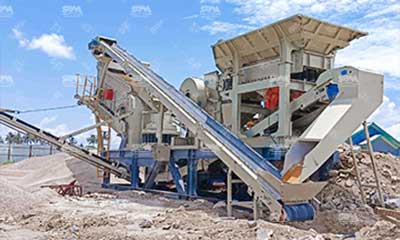
Mobile impact crushers with integrated screens are ideal for RAP and RCA production, breaking chunks without destroying aggregate gradation.
6. Mobile vs. Stationary Plants
Your plant configuration choice affects crusher selection:
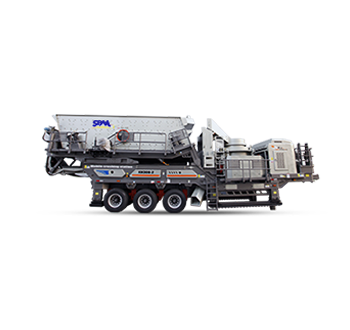
Mobile Plants:
- Crusher moves with quarry face, reducing haul costs
- Ideal for short-term contracts or frequent moves
- Space constraints may limit crusher size
- Often used in recycling and smaller quarries
Stationary Plants:
- Higher capacity potential
- More flexibility in crusher configuration
- Lower operating costs per ton at large scale
- Require longer haul distances
Semi-mobile or pit-portable primary crushers offer a compromise—moving periodically as the face advances.

7. Common Selection Mistakes to Avoid
- 1. Choosing based on initial cost alone—A cheaper crusher that wears out faster or consumes more power costs more over its lifetime.
- 2. Ignoring material testing—Assuming all limestone is soft can lead to catastrophic equipment failure.
- 3. Undersizing the primary crusher—Lack of reserve capacity creates plant-wide bottlenecks.
- 4. Mismatched stages—A jaw crusher feeding an undersized secondary cone creates system-wide inefficiency.
- 5. Using impact crushers for abrasive rock—Rapid wear destroys profitability.
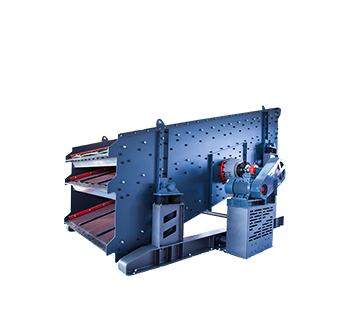
- 6. Neglecting scalping screens—Removing fines before the crusher reduces wear and increases capacity.
A Systematic Approach to Crusher Selection
Choosing the right stone crusher for your quarry is not about finding a single "best" machine—it's about engineering an integrated process flow that matches your specific material, production goals, and economic constraints.
Follow this systematic approach:
- 1. Characterize your material thoroughly (hardness, abrasiveness, moisture, feed size)
- 2. Define your production requirements (capacity, product specifications, gradations)
- 3. Determine crushing stages based on reduction needed
- 4. Select appropriate crusher types for each stage based on material compatibility
- 5. Size equipment properly with adequate reserve capacity
- 6. Consider the complete system—feeders, screens, conveyors, and plant configuration
- 7. Evaluate total cost of ownership—not just purchase price
The right crusher configuration—whether a simple jaw-cone circuit for hard rock or a multi-stage impact plant for aggregates—will deliver consistent performance, manageable wear costs, and profitable operation for years to come.


 Get Solution
 Send Message