





Summary: This guide explores the strategic importance of ESG and regulatory compliance, paired with a practical 5-point checklist to ensure your project is operationally ready from day one....
In today's mining and aggregates industry, ESG (Environmental, Social, and Governance) has evolved from a corporate buzzword into the very foundation of the "License to Operate." Institutional investors, government regulators, and local communities no longer evaluate projects solely on tons per hour (TPH). They scrutinize carbon footprints, safety records, and resource efficiency. For many operators, the journey to a stronger ESG profile begins not in the boardroom—but on the quarry floor.
Modernizing crushing and screening circuits is one of the most direct and impactful ways to translate ESG commitments into measurable operational results. Strategic equipment upgrades deliver tangible benefits across all three pillars of ESG: reducing environmental impact, enhancing worker safety, and demonstrating responsible governance.
Navigating the complex landscape of international mining regulations can determine whether a project achieves profitable launch or faces costly delays. This guide explores the strategic importance of ESG and regulatory compliance, paired with a practical 5-point checklist to ensure your project is operationally ready from day one.

How a Strategic Partner Simplifies Your Mining Compliance?
1. Data Integrity for Bankable Feasibility Studies (DFS)
Before a shovel even hits the ground, investors and banks require a Definitive Feasibility Study (DFS). To be "bankable," this study must rely on accurate, verifiable technical data.
We assist our clients by providing high-fidelity simulations and technical specifications that align with international reporting standards such as JORC (Australia) and NI 43-101 (Canada). By delivering precise data on energy consumption, throughput rates, and metallurgical recovery, we help ensure your project’s economic model stands up to the scrutiny of financial auditors.
2. Meeting Environmental Mitigation Targets (ESIA)
The Environmental and Social Impact Assessment (ESIA) is often the most difficult permit to secure. Regulators demand proof that your operation will minimize its footprint on the local ecosystem.
Our equipment solutions are engineered to directly address these environmental "red flags":
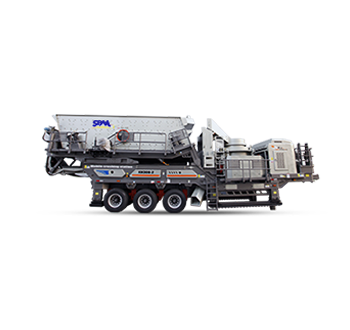
- Dust & Noise Abatement: Integrated dust suppression systems and acoustic enclosures for our mobile and portable plants ensure your site stays within strict decibel and air-quality limits.
- Water Stewardship: For regions with water scarcity or strict discharge regulations, our dry-processing and air-classification technologies eliminate the need for traditional wet-washing, removing the requirement for high-risk tailings dams.
3. Safety Compliance: Beyond "Standard" Requirements
Safety inspectors from agencies like MSHA (USA) or under AS/NZS (Australia/NZ) standards have the power to issue "stop-work" orders instantly.
We pre-engineer compliance into our machinery. From standardized guardrails and emergency stop-logic to ergonomic maintenance access and hydraulic clearing systems, our equipment reduces human exposure to "The Line of Fire." When an inspector walks onto your site, the visible safety features of our machinery signal a culture of Zero Harm, facilitating a smoother audit process.
4. Supporting the "Social License to Operate" (SLO)
In modern mining, you need the consent of the local community. A major part of this "Social License" is proving that your operation is reliable and won't cause local disruptions through catastrophic failures or pollution.
By providing highly reliable, low-maintenance equipment, we help you maintain a stable operational rhythm. A well-run, quiet, and clean site is the best way to build trust with local stakeholders and indigenous groups, ensuring that your social permit remains valid for the decades of the mine's life.
5. Local Content and Maintenance Compliance
Many countries now require a "Local Content" plan, proving that you have the local infrastructure to maintain the mine. Our global service network supports this by providing:
- Local Spare Parts Hubs: Ensuring you aren't violating "operational stability" clauses due to long lead times for critical components.
- Training Programs: We help train your local workforce on advanced machinery operation, fulfilling your social commitment to local skill development.
5 Point Pre-Mining Compliance Checklist
Ensuring your project meets global standards before the first crush.

1. Resource & Economic Validation (The "Bankable" Check)
- Reporting Standards: Is your ore reserve report compliant with international codes like JORC (Australia) or NI 43-101 (Canada)?
- DFS Accuracy: Does your Definitive Feasibility Study (DFS) include verified data on energy consumption per ton, water usage, and expected metallurgical recovery rates?
- Equipment Sizing: Have your crushers and mills been sized based on actual ore hardness (Wi/Ai tests) to prevent underperformance in the first year?
2. Environmental Impact & Mitigation (The "Green" Check)
- Dust & Noise Limits: Does your site layout meet the decibel (dB) and particulate matter (PM10/PM2.5) limits defined in your ESIA (Environmental and Social Impact Assessment)?
- Water Management: If operating in water-stressed areas, have you explored Dry Processing or closed-loop water recycling to meet local water-permit requirements?
- Emissions Reporting: Do you have the sensors and data-logging tools required to report your carbon footprint for ESG compliance?
3. Health, Safety & Ergonomics (The "Human" Check)
- Guarding & Access: Does all machinery feature safety guarding, handrails, and emergency stops that meet local standards (e.g., MSHA, AS/NZS, or CE)?
- LOTO Readiness: Is the plant designed for Lockout-Tagout (LOTO) procedures to ensure maintenance crews are 100% safe during service?
- Remote Operations: Have you integrated remote monitoring to reduce the number of personnel required in high-risk zones (the "Line of Fire")?
4. Community & Social License (The "SLO" Check)
- Noise Abatement: For quarries near urban areas, have you installed acoustic enclosures to maintain your Social License to Operate (SLO)?
- Local Content: Do you have a plan for training the local workforce to operate and maintain the processing equipment, as required by many national mining acts?
- Visual Impact: Is your plant layout designed to minimize visual and light pollution for neighboring communities?
5. Lifecycle & Decommissioning (The "Future" Check)
- Closure Plan: Does your equipment selection support a low-impact decommissioning? (e.g., Mobile or Modular plants that can be easily removed and repurposed after the mine closes).
- Reclamation Bond: Have you provided the government with the necessary environmental bond for post-mining land rehabilitation?
- Total Cost of Ownership (TCO): Have you calculated the 10-year OPEX, ensuring the project remains profitable even if mineral prices fluctuate?
Compliance as a Competitive Advantage
Compliance should not be viewed as a burden; it is a competitive advantage. A compliant mine is a profitable, sustainable, and de-risked mine.
As your equipment partner, we provide more just heavy machinery. We provide the technical backing, environmental innovation, and safety excellence required to clear regulatory hurdles with confidence.
Are you preparing for a DFS or an upcoming environmental audit? Contact our engineering consultants today. Let us help you design a flowsheet that isn't just productive, but fully compliant with the highest global standards.


 Get Solution
 Send Message