






Summary: Achieve 15% higher gold recovery with optimized crushing-grinding circuits. Expert guide for small-scale mines on liberation, classification, and cyanidation efficiency....
For small-scale gold miners in regions like Ghana’s Ashanti belt or Sudan’s Red Sea Hills, increasing gold recovery rates is the single most effective way to transform a marginal operation into a highly profitable one.
Yet many operators lose 15% to 30% of their gold in tailings, not because their ore is poor, but because their crushing-to-grinding circuit is not optimized for maximum liberation. This engineering guide shows you how to restructure that critical link to boost your gold recovery rates by 15% or more.

1. The "Gold Liberation" Trap: Why Grind Size Matters
In the hard rock mines of West and East Africa, gold is often microscopically trapped within quartz veins or sulfide ores. To extract it, you must hit the metallurgical "Goldilocks Zone."
- The Danger of Under-Grinding: If the grind is too coarse, the gold remains encased in the host rock. Cyanide solutions or gravity water cannot dissolve or catch what they cannot touch.
- The Danger of Over-Grinding (Slimes): Conversely, grinding everything into ultra-fine "slime" creates a highly viscous, muddy slurry. This clay coats the free gold particles, causing them to wash away on shaking tables, and causes "carbon blinding" in CIL (Carbon-in-Leach) tanks, rendering your chemicals useless.
- The Solution: You must aim for a specific P80 target (the screen size that 80% of your material passes through). Our field data shows that for most Sudanese and Ghanaian hard rock, achieving a precise 75-micron (200-mesh) target can boost recovery rates significantly.
2. Closing the Loop: The Secret of the Crushing-Grinding Link
To increase your recovery by 15%, you must stop treating your crusher and your ball mill as isolated machines. They are a single, continuous system. Here is how to fix the broken link.
Step 1: Stop "Force-Feeding" Your Mill
Walk onto many small-scale mine sites, and you will see a primary jaw crusher feeding 40mm to 50mm rocks directly into a ball mill or wet pan mill. This is a massive metallurgical mistake. Mills are designed to grind, not crush. Force-feeding large rocks drastically reduces the mill's capacity and guarantees an uneven grind.
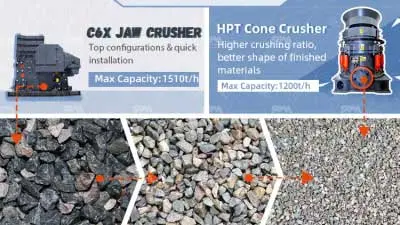
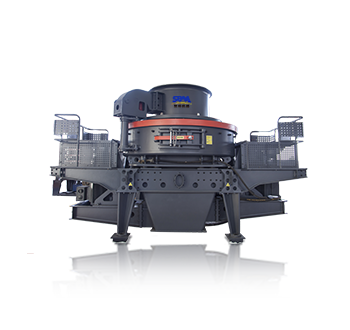
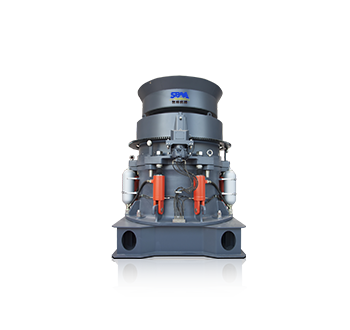
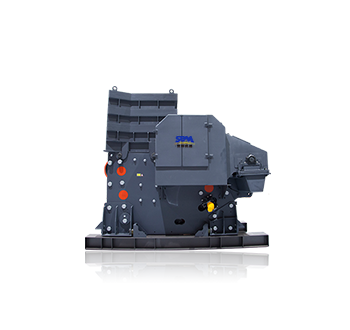
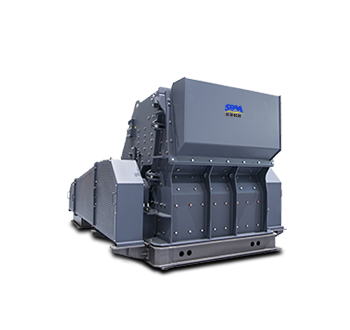
- The Fix: Introduce a secondary crushing stage (like a fine-head cone crusher or a high-efficiency VSI). Reducing the mill feed size from 50mm down to under 10mm reduces the physical workload on the mill by 30% and instantly increases your daily throughput.

Step 2: Implement a Closed-Circuit Classification Loop
Do not rely on a single, "open-circuit" pass through the mill. You must implement a classification system using a hydrocyclone or a spiral classifier in a closed loop with your mill.
- How it works: The classifier acts as a gatekeeper. It ensures that only the rocks that are "small enough" (the overflow) move forward to the recovery stage, while automatically forcing oversized, unliberated rocks (the underflow) back into the mill for re-grinding. This completely eliminates the problem of locked gold escaping into your tailings.

3. How Optimal Sizing Drives Cyanidation (Leaching) Efficiency
In regions relying heavily on cyanidation, the grind size dictates your chemical kinetics.
- Faster Leaching: Properly liberated gold dissolves into the cyanide solution much faster. A well-classified feed can reduce your required residence time in CIL tanks from 36 hours down to 24 hours, saving massive amounts of power and chemical costs.
- Carbon Blinding: If your circuit produces too many slimes (from over-grinding), that thick clay coats your activated carbon. This "blinding" prevents the carbon from adsorbing the dissolved gold, sending dissolved liquid gold straight to your tailings. A closed-loop classification system eliminates slimes, keeping your carbon highly active.

4. Supercharging Gravity Recovery
Not all gold needs to go to the cyanide tanks. Free-milling gold should be captured immediately using gravity concentrators.
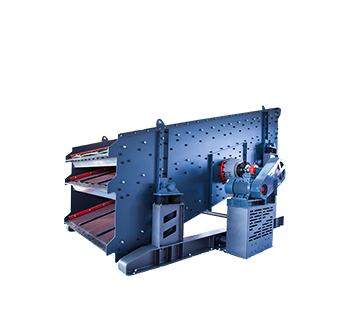
However, gravity concentrators require a very specific particle size range to work efficiently. If you feed them unclassified, chunky slurry, the coarse rocks will literally knock the fine gold particles out of the concentrator's riffles. By utilizing a closed-loop screen before the gravity circuit, you ensure the slurry density and particle size are mathematically perfect for capturing those heavy gold particles.
A Case from an Obuasi Site
Last year, a mid-sized site near Obuasi, Ghana, they were using a standard jaw crusher feeding directly into a small mill, yielding an unclassified output. Their overall recovery was stuck at 65%.
By introducing a secondary fine crusher and adjusting their classifier to a closed-loop system, they achieved a more uniform 75-micron grind.
The Result: Within the first month, their recovery rate jumped to 82% processing the exact same ore body. That 17% increase in daily gold production paid for the entire equipment upgrade in less than 90 days.
Free Technical Offer for Mine Owners
Is your gold staying in the rock? Don't let your profits wash away into the tailings pond. We specialize in helping mine owners in Ghana, Sudan, and Tanzania redesign their circuits for maximum liberation.
We are currently offering:
- Free Gold Liberation Flow-sheet Designs.
- Customized Crushing-Grinding Ratio Calculations.
- On-site Technical Audits for plant upgrades.
Contact our Engineering Team today to unlock your hidden yield.


 Get Solution
 Send Message