



As global demand for electric vehicles (EVs) and grid-scale energy storage continues to accelerate, securing a reliable supply of battery-grade lithium carbonate (Li2CO3) and lithium hydroxide (LiOH) has become a top priority for the mining sector. While lithium brine projects dominate parts of South America, hard-rock lithium deposits—primarily spodumene and lepidolite—account for a massive share of global supply due to faster project ramp-up times and higher concentrate grades.
Designing an efficient lithium ore processing plant requires precise mineralogical matching. Hard-rock lithium ores are notoriously abrasive, dense, and accompanied by complex silicate gangue minerals such as quartz, feldspar, and mica. Producing a marketable 5.5% to 6.0% Li2O spodumene concentrate (SC6) demands a carefully engineered flowsheet combining multi-stage comminution, Dense Media Separation (DMS), and selective froth flotation.
1. Major Hard-Rock Lithium Ore Types
Before selecting crushing or beneficiation equipment, engineers must evaluate the mineralogy and lithium oxide (Li2O) grade of the host pegmatite deposit:
- Spodumene (LiAlSi2O6): The most commercially important hard-rock lithium mineral, containing up to 8.03% theoretical Li2O. Coarse-grained spodumene responds well to Dense Media Separation (DMS), while fine-grained disseminated spodumene requires froth flotation.
- Lepidolite (K(Li,Al)3(Si,Al)4O10(F,OH)2): A lithium-bearing mica mineral with lower lithium content (typically 3.0%–4.5% Li2O) and higher fluorine/alkali levels. It is processed almost exclusively via fine grinding and froth flotation.
- Petalite (LiAlSi4O10): Often found alongside spodumene in pegmatites; valued in both battery chemical conversion and specialized glass-ceramics manufacturing.

2. Core Lithium Ore Processing Flowsheet
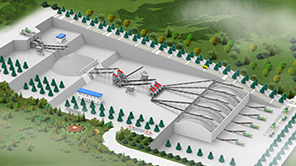
A modern hard-rock lithium concentrator typically operates through five integrated stages, moving from coarse liberation to fine chemical-grade concentration.
Stage 1: Three-Stage Crushing & Screening (Comminution)
Lithium-bearing pegmatites are extremely hard and abrasive (often exceeding 12–15 on the Bond Work Index). The crushing circuit must reduce run-of-mine (ROM) boulders down to a uniform feed size while minimizing over-crushing and sliming—which hurt downstream DMS and flotation recovery.
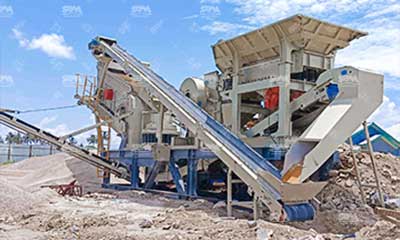
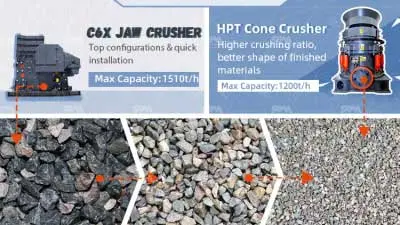
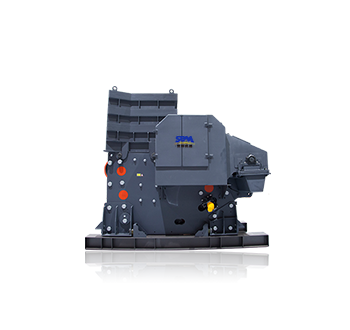
- Primary Crushing: A heavy-duty Jaw Crusher (such as a C6X or PEW Series) breaks down blasted ROM ore (-800 mm) to below 150–200 mm.
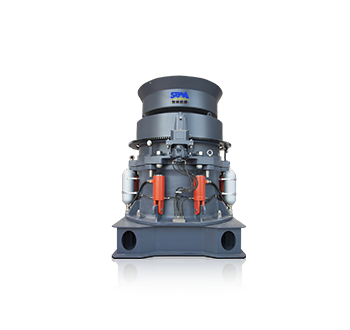
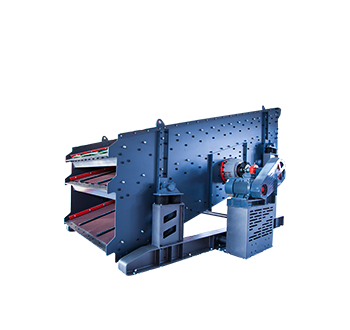
- Secondary & Tertiary Crushing: High-efficiency Hydraulic Cone Crushers (such as HST or HPT Series) operating in closed circuit with multi-deck Vibrating Screens reduce the ore to -12 mm or -15 mm for DMS feed, or -10 mm for ball mill feed.
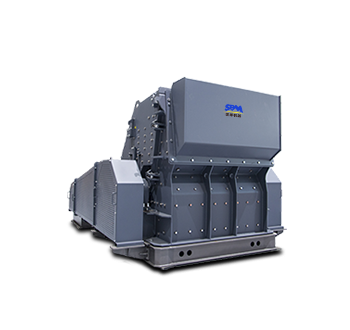
- High-Pressure Grinding Rolls (HPGR): Increasingly adopted in large-scale plants as a tertiary stage to induce micro-cracks along grain boundaries, improving lithium liberation and lowering downstream ball mill power consumption.

Stage 2: Dense Media Separation (DMS)
For coarse-grained spodumene deposits, Dense Media Separation is the most cost-effective pre-concentration or primary recovery method. Spodumene has a specific gravity of roughly 3.1–3.2 g/cm³, making it significantly heavier than quartz (2.65 g/cm³) and feldspar (2.55–2.75 g/cm³).
- Desliming: Crushed ore (-12 mm +0.5 mm) is washed on wet vibrating screens to remove fine slimes (-0.5 mm), which are routed directly to the grinding/flotation circuit.
- DMS Cyclone Separation: The deslimed feed is mixed with a ferrosilicon (FeSi) dense medium slurry calibrated to a specific gravity of ~2.70–2.90 g/cm³ and pumped into DMS cyclones.
- Sinks & Floats: Heavy spodumene sinks report to the underflow as a high-grade coarse concentrate (often achieving 5.5%+ Li2O directly), while lighter quartz and feldspar gangue float to the overflow and are rejected early—dramatically reducing the tonnage sent to expensive ball mills.
Stage 3: Grinding, Classification & Desliming
Fine-grained spodumene ore, lepidolite ore, and DMS middlings must be ground to liberate lithium minerals from silicate gangue.
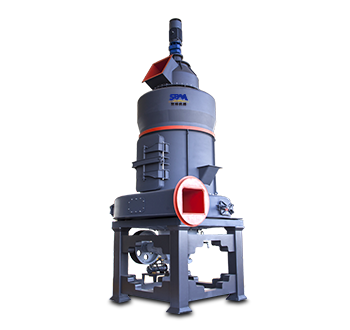
- Closed-Circuit Grinding: Overflow Ball Mills (often fitted with rubber or composite liners to prevent iron contamination) operate in closed circuit with Hydrocyclones to achieve a target grind fineness of 70%–80% passing -200 mesh (74 microns).
- Two-Stage Desliming: Lithium flotation is highly sensitive to ultra-fine clay and mica slimes (-10 microns), which consume excessive reagents and contaminate froth. Desliming hydrocyclones remove ultra-fines prior to reagent conditioning.
Stage 4: Froth Flotation & Magnetic Separation
Because spodumene, quartz, and feldspar share similar silicate surface properties, selective flotation requires strict pulp conditioning and pH control:
- High-Density Scrubbing & Conditioning: The deslimed pulp (at 50%–60% solids) is scrubbed with sodium hydroxide (NaOH) or sodium carbonate (Na2CO3) to clean fresh mineral surfaces and adjust pH to alkaline conditions (pH 8.5–9.5 for spodumene).
- Selective Flotation Circuit: Anionic fatty acid collectors (such as oleic acid or oxidized paraffin soap) selectively attach to spodumene surfaces, while depressants (starch or dextrin) suppress quartz and feldspar. A multi-stage circuit (Rougher → Scavenger → 2 to 3 stages of Cleaner flotation) upgrades the concentrate to 5.8%–6.2% Li2O.
- High-Intensity Magnetic Separation (WHIMS): Battery-grade lithium chemicals require ultra-low iron oxide (Fe2O3 < 0.8%). Wet High-Intensity Magnetic Separators remove iron-bearing minerals (tourmaline, biotite, garnet, and abraded mill iron) from the final concentrate.
Stage 5: Dewatering & Tailings Management
Final lithium concentrate is thickened in a High-Rate Thickener and dewatered via automatic Filter Presses to reduce moisture content below 8%–10% for bulk shipping. Tailings are dewatered using thickeners and dry-stack filter presses to maximize process water recycling (often exceeding 85% water recovery) and minimize tailings dam footprints.
3. Key Equipment Matrix for a Lithium Processing Plant
| Processing Stage | Core Equipment | Primary Function & Engineering Role |
|---|---|---|
| Primary Crushing | C6X / PEW Jaw Crusher | Breaks down hard pegmatite ROM boulders (-800 mm) with high fatigue resistance. |
| Fine Crushing | HST / HPT Cone Crusher & HPGR | Produces uniform -12 mm feed with minimal over-grinding and low liner wear. |
| Screening | YK Circular / S5X Vibrating Screen | Precision dry/wet sizing and desliming prior to DMS or ball milling. |
| Pre-Concentration | DMS Cyclone & Magnetic Drum Separator | Separates coarse spodumene by specific gravity and recovers ferrosilicon media. |
| Grinding & Sizing | Grid/Overflow Ball Mill & Hydrocyclones | Liberates fine spodumene/lepidolite crystals while preventing sliming and iron pickup. |
| Concentration | Mechanical Flotation Cells | Selectively floats lithium minerals from quartz/feldspar gangue to reach SC6 grade. |
| Impurity Removal | Wet High-Intensity Magnetic Separator (WHIMS) | Reduces Fe2O3 content to meet strict battery-grade chemical converter specs. |
| Dewatering | High-Rate Thickener & Chamber Filter Press | Produces low-moisture filter cake (<9%) and recycles process water. |
4. Critical Engineering Factors for Plant Design & ROI
- Minimizing Iron Contamination: Iron is a severe penalty element for lithium converters. Using ceramic or rubber mill linings, wear-resistant ceramic chute liners, and high-gradient magnetic separators protects concentrate value.
- Combating Abrasion & Wear Costs: Pegmatite quartz has a Mohs hardness of 7. Specifying high-manganese (Mn18Cr2 / Mn22Cr2) crusher liners and high-chrome grinding media is essential to control OPEX.
- Combined DMS + Flotation Flowsheets: Rather than relying solely on flotation, integrating an upstream DMS circuit rejects 30%–50% of barren waste rock early, cutting grinding energy consumption and reagent costs dramatically.
- Bench-Scale & Pilot Metallurgical Testing: Every pegmatite orebody exhibits unique mineral intergrowths and alteration levels. Conducting Heavy Liquid Separation (HLS) and locked-cycle flotation tests before finalizing equipment sizing prevents costly bottlenecks.
Planning a Hard-Rock Lithium Processing Plant?
Whether you are developing a greenfield spodumene project or upgrading an existing comminution and flotation circuit, our mineral processing engineers deliver complete turnkey solutions—from ore testing and 3D flowsheet design to heavy-duty crushing, grinding, and beneficiation equipment.
Contact our engineering team today for a customized lithium processing flowsheet and factory-direct equipment proposal.



 Get Solution
 Send Message
